
The summer of 2012 saw, inter alia, the 25th anniversary of Edinburgh’s South Side Community Education Centre. As part of the celebrations, the writing and art groups mounted a joint exhibition in the centre cafe on the theme The South Side 1986-87.

ODYSSEY by Iain Matheson
She comes to a standstill at the corner of Hill Street. The bus had been prompt, she had been late. By the timetable there’s not another due for half-an-hour – too long to wait when she has just this one day to see the Edinburgh sights. She wants to walk but doesn’t know the way. She picks a boy to ask but he’s already gone, poking furiously at a screen in his hand. An old man passes, bent double, his life’s belongings in a dozen plastic bags, his momentum unstoppable. She flags down another man carrying a banjo.
‘Excuse me please, I’m looking for Blackford Hill, do you know if I can walk there?’
Banjoman stops, stares into space. Finally his eyes close; his head makes a slow rotation, once to the left, once to the right, back to the centre. His eyes reopen and meet hers.
‘No such place.’
Banjoman’s voice resonates as from the foot of a mineshaft.
‘Oh dear, are you quite sure? I saw it on a map and thought I’d like to go there.’
‘Tourist maps. This is the only map you need.’
Banjoman props his instrument against the marbled wall at the corner of Hill Street and unbuckles a rucksack. He labours inside for almost a minute till he produces a coloured, crumpled sheet. He stretches it loudly between his hands to flatten it, then beckons her. At the top, florid green letters declare,’The Southside’. She looks for a moment and says,
‘Yes, I’ve visited some of these places today, McEwan Hall… and the birthplace
of Harry Potter. Now, if you could show me which road to take for Blackford Hill…’
‘No such place.’
Banjoman’s phrase, repeated, combines fate and triumph. He points to the map.
‘That’s all the places there are. It’s a map of the world.’
She looks at him, bewildered, she says, Sorry? although she knows she has heard correctly. A map of the whole world.
‘But what about the castle?’ Once more the slowly shaken head.
‘Or Princes Street – I’ve been there!’ A raised eyebrow joins in the motion.
‘What about the roads at the edge of this map – they can’t just stop?’
Banjoman’s head changes tack; now it nods, the same, slow, reptile’s move, once up, once down.
‘But what happens when people leave The Southside?’
‘They don’t leave.’
‘And how do other people get here?’
‘There’s no other people.’
‘What about travelling to work, going on holiday, buses – where do the buses go?’
‘All in people’s heads.’ The nodding head now comes with a smile, lips closed.
‘So – so there’s really nowhere else? Just – The Southside?’
Banjoman becomes animated, he raises an eyebrow and smiles and nods, all at once.
‘This is quite a shock. Do you think I could keep this map please?’
‘Take it, take it, I’ve plenty more.’
Banjoman nods twice to settle the matter. He struggles back into his rucksack, picks up his banjo and rejoins the flow of Southsiders on Nicolson Street. She stares at the map in her hands, appalled and secretly thrilled. Bowmont Place, Bernard Terrace, Middle Meadow Walk… singing inside she sets off to explore, the whole world at her feet.
* * * * * * *
As usual there were many creative writing activities at National Galleries Scotland. Shortly after the re-opening of the splendid Portrait Gallery I ran a five-week creative writing course on portraiture and character, which was repeated in the autumn. In August cartoonist Malcy Duff and I collaborated for the third time on Text & Image, a course that looks at the history of combining words and pictures, then introduces practical exercises on interpreting writing as drawing and drawing as writing; illustrating writing and captioning images, and presenting text as image. Experimentation is encouraged, and we also include some sound poetry, creative reading and performance.
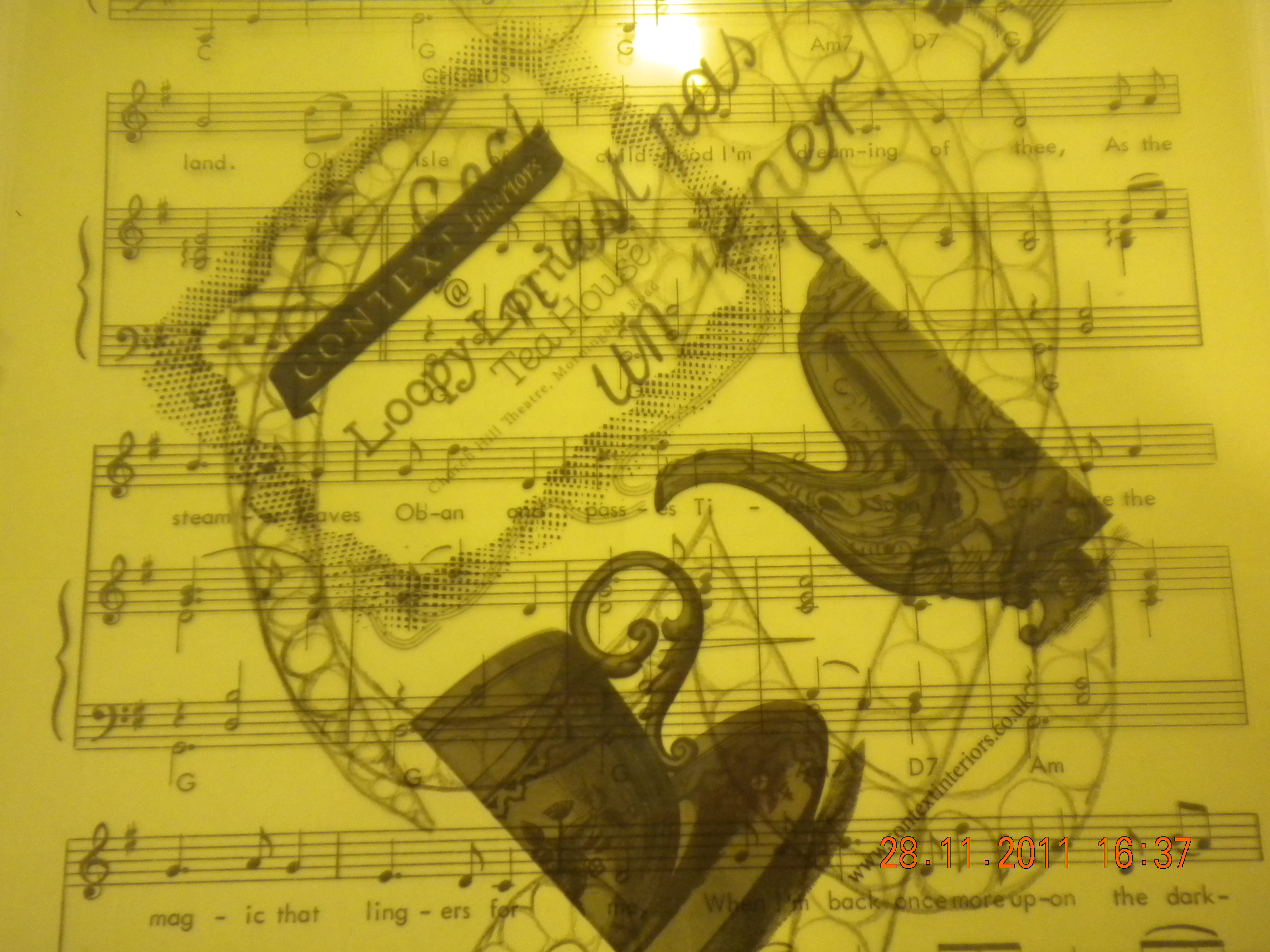
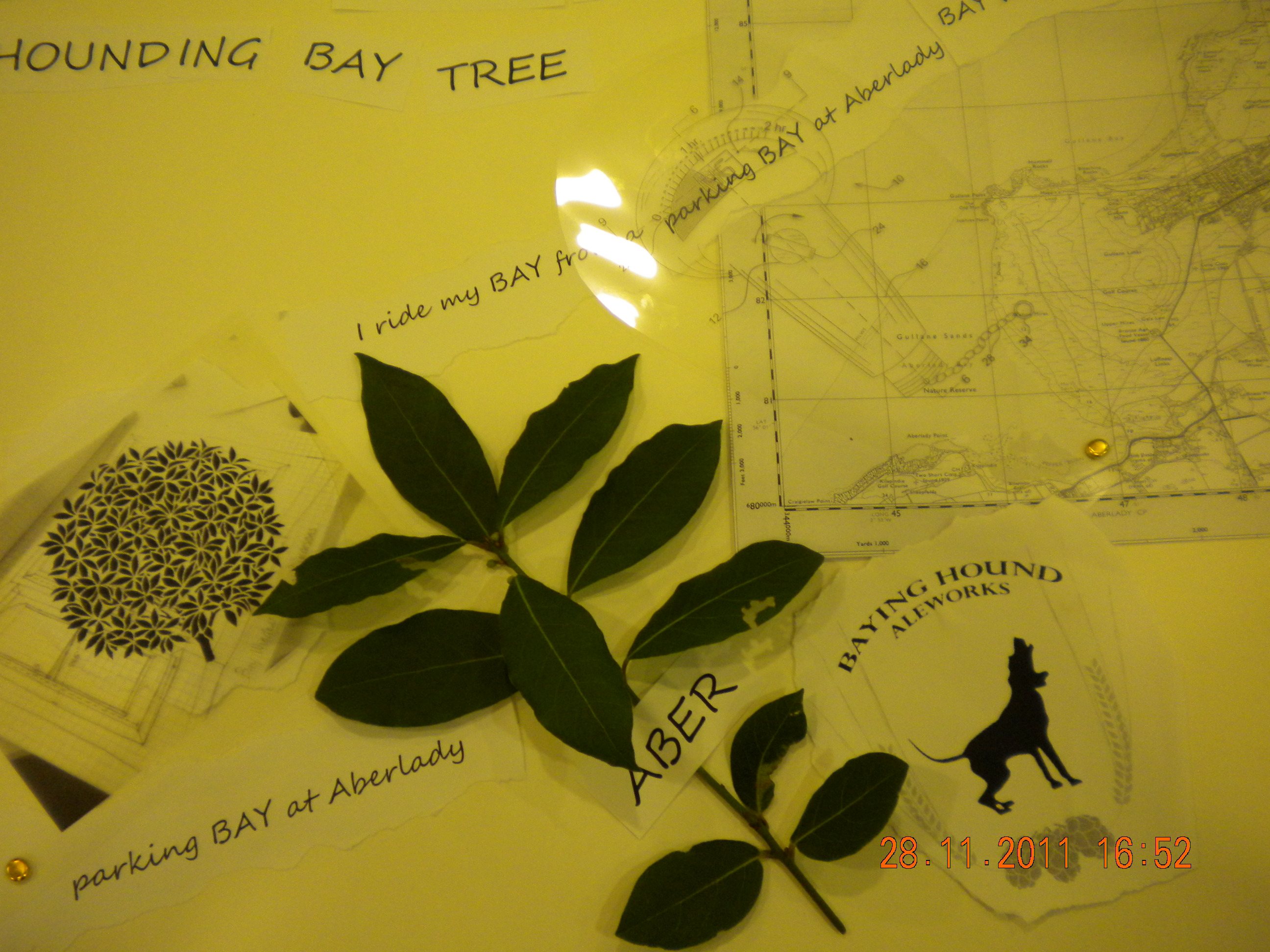
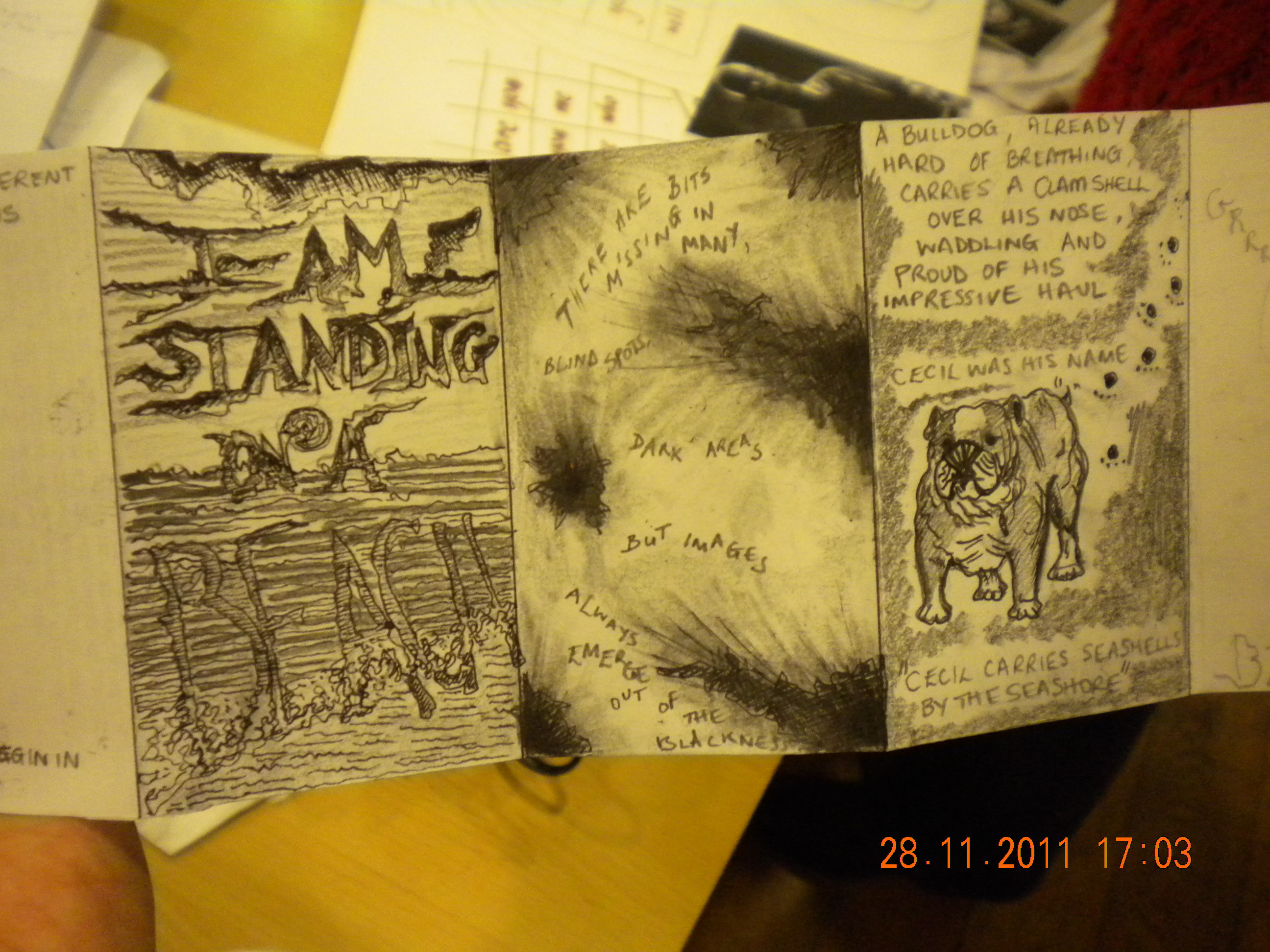
This time we were based out at the modern art galleries for two full days, and able to use the wonderful resources of their archive, including artist’s books by key figures of twentieth-century art, as well as the temporary Picasso and Modern British Art and Munch exhibitions.
It is always a delight to work with Words on Canvas, a group of very talented writers that meet fortnightly at the Galleries. This year some of us also participated in a collaboration between poets and craft makers on an exhibition for the Pittenweem Festival, Fife.
In August Southsiders and WoCers joined to give a well-received reading at the Captain’s Bar, as part of the Edinburgh Festival Fringe.
In the summer I was invited to lead a series of four monthly workshops at the Hermitage of Braid, to produce textual art for its newly-reclaimed walled garden. Given the sort of summer we had, or rather didn’t have, we were incredibly lucky to be able to work outside on all four occasions, three of them in pretty good weather.
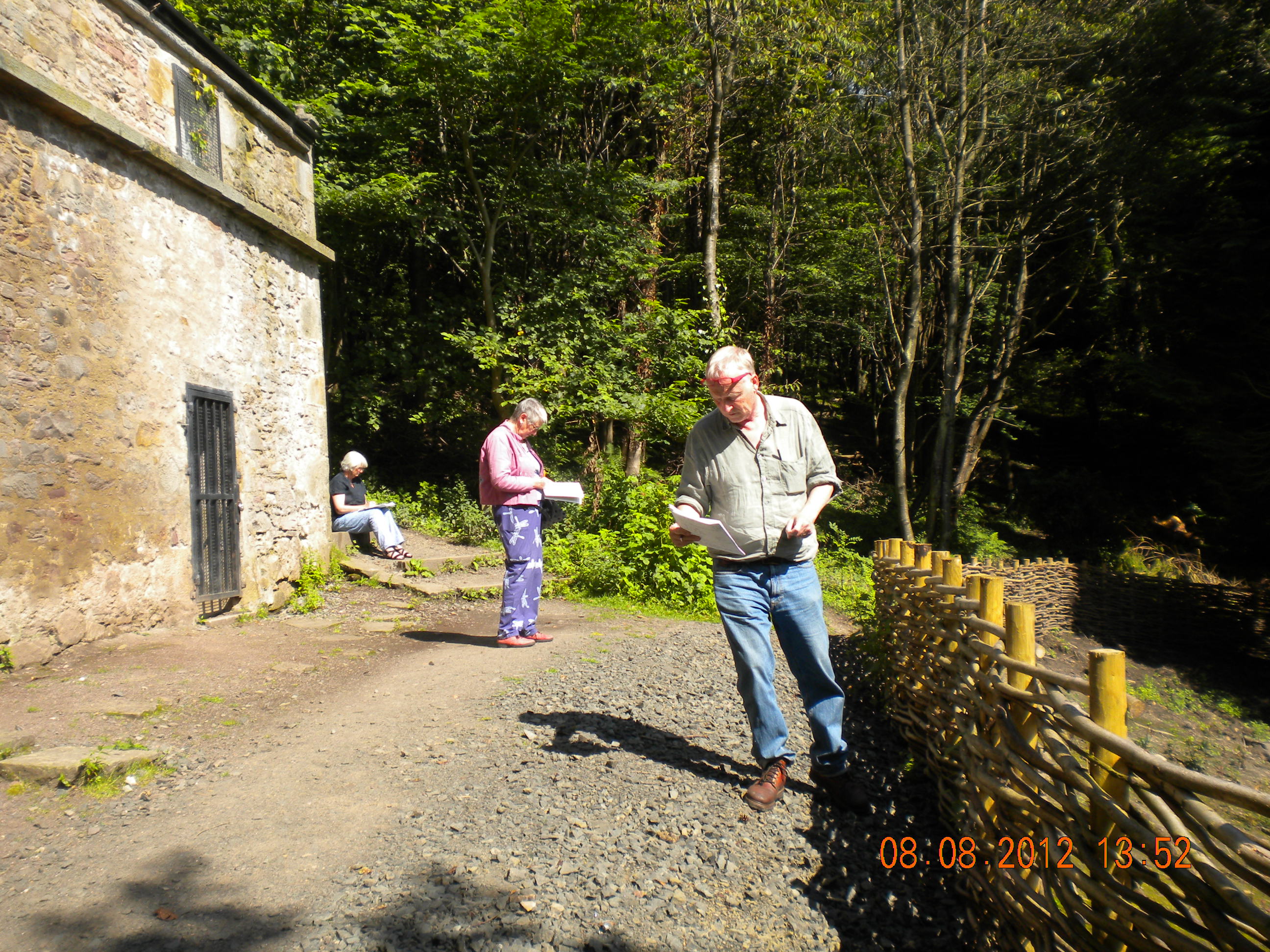

Juliet Wilson, who blogs as Crafty Green Poet, wrote a haiku which can be read by clicking the link.
BRAIDBURN SYMPHONY by Olga Wojtas
I take my seat and listen
To my left, the bass throb of the waterfall
To my right, the soft rippling through rocks
Stereophonic streaming
The pizzicato of jogging shoes
A scherzo of children’s giggles
The faintest fluttering of leaves
A yap
A yap
A yap
Fortissimo barking
Chorus of apologies
The faintest fluttering of leaves
The bass throb of the waterfall
The soft rippling through rocks
I wrote the following poem to mark the occasion.
Braid
On the Occasion of the Writing Workshops for the Walled Garden, Summer 2012
June’s birdsong is all but washed away
by the shout of the Braid in July
in a hurry through the Hermitage today
on its course along the lower side of the garden wall
to the shore of a firth making scarce more noise.
Out in the North Sea it mingles via the Humber
with the waters of Spen and Calder which return
to the burn that stitches the Pentlands to Portobello.
This is not the Water of Leith but of remembrance.
Above it all this sort-of summer sits a new Parnassus
on the top-most terrace where we are inspired
by coast-bound stream and breeze along the Braid,
whose water, like the brook Derwent at the bottom
of Wordsworth’s childhood garden, is ‘boxed’ but not here
‘stripped of his voice’, two centuries and thirty steps below
along the southern edge of an Edinburgh plot.
And if like that, could this not also be
the forest pool by which a goddess bathed
as a bewildered hunter chanced upon her and gawped;
or the bank where a visitor from across the Pond
planted lily of the valley with her betrothed
in memory of their first meeting here;
and a perpetual memorial to the woman who tried
to rescue her dog in a spate like this and was drowned?
The rest of the work produced is available to read in a folder at the Hermitage Visitor Centre, and some of it will find a permanent home in the garden, alongside sculpture and other artworks.
I always enjoy participating in others’ workshops. In March I joined a session led by Ken Cockburn to mark World Heritage Day. To tie in with this year’s theme, the Roman legacy in Scotland, Ken devised a series of writing walks on the seven hills of Edinburgh. I went on the one on Salisbury Crags. Ken’s account, and poems by myself and other participants, can be read here.
Elsewhere in 2012, I had wonderful holidays walking and writing in Swaledale, Yorkshire; and sea-bathing and eating in the south of France.
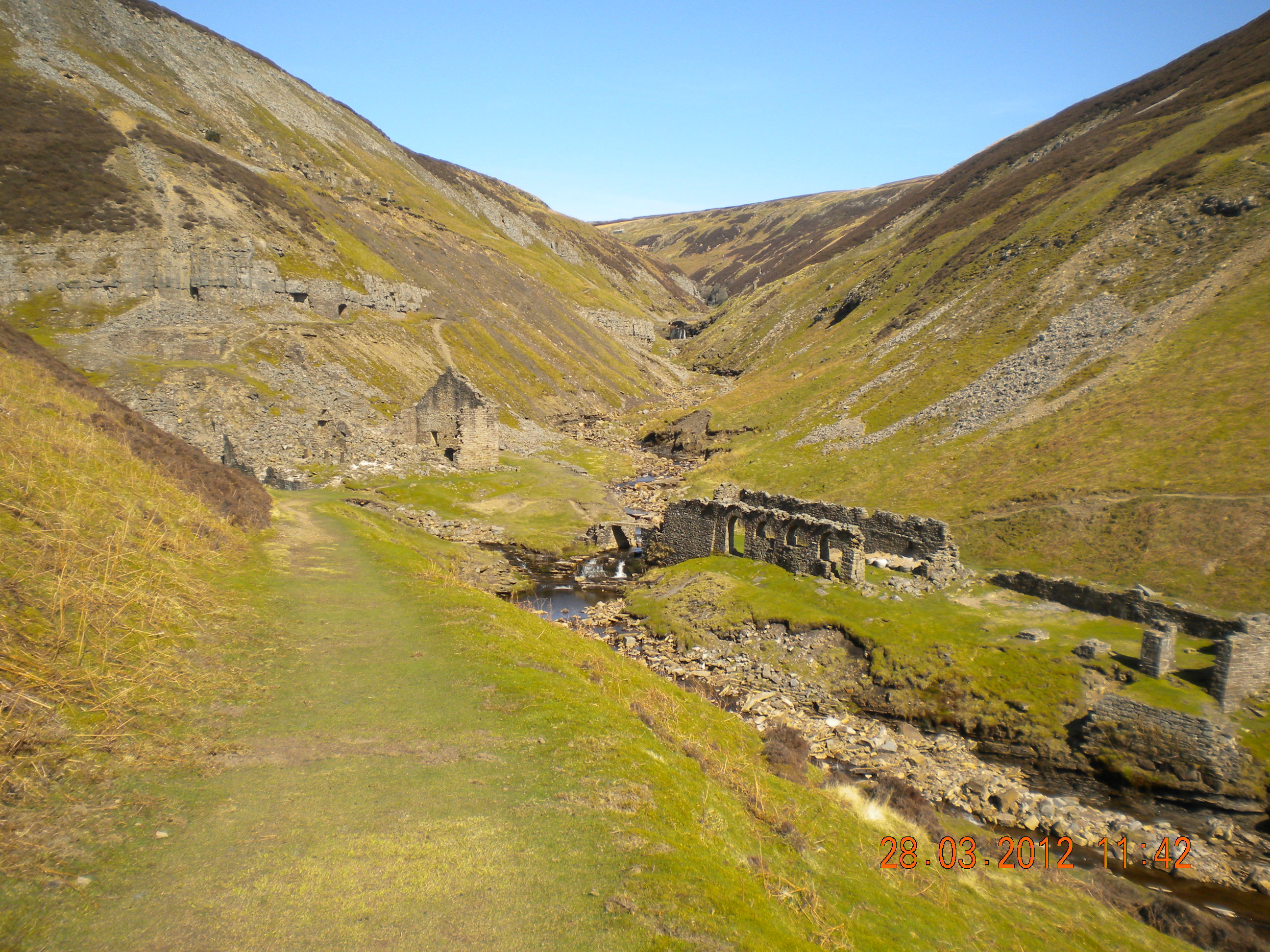
Scar
On the slant of Kisdon Hill
the song of a robin sears the whole air
substantial as the drystone walls
that brand the fields of Thwaite austere
and project their shadow on the meadow
– here angular, rectilinear, there
in a random, crazed geometry –
while underground levels invisibly divide
the land’s inside into seams and veins
directed at the artery
of this damaged country.
Yet along the inroads to the moor
stones from smelt-mill and lead-mine
crumble and return to screes
on the sides of Surrender’s* shallow valley
and in the steep ravine of Gunnerside Ghyll
where land formed from human hand
and the structures carved by nature
resolve in mutual cohabitation.
* The Surrender Mining Company is one of several that operated commercially in Swaledale in the eighteenth century. ‘Surrender’ is also a legal term internationally associated with the handing over of mining rights and land.
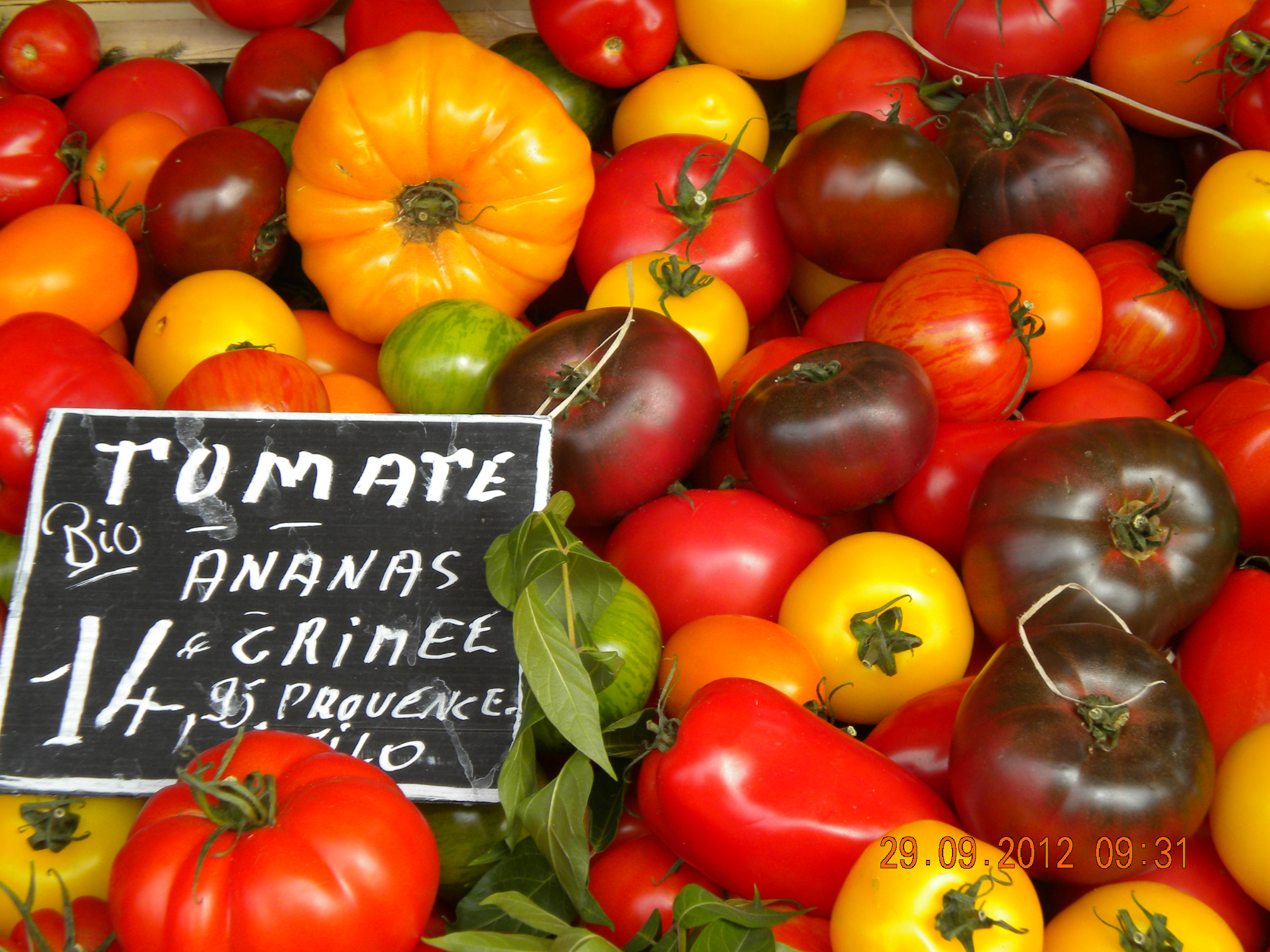
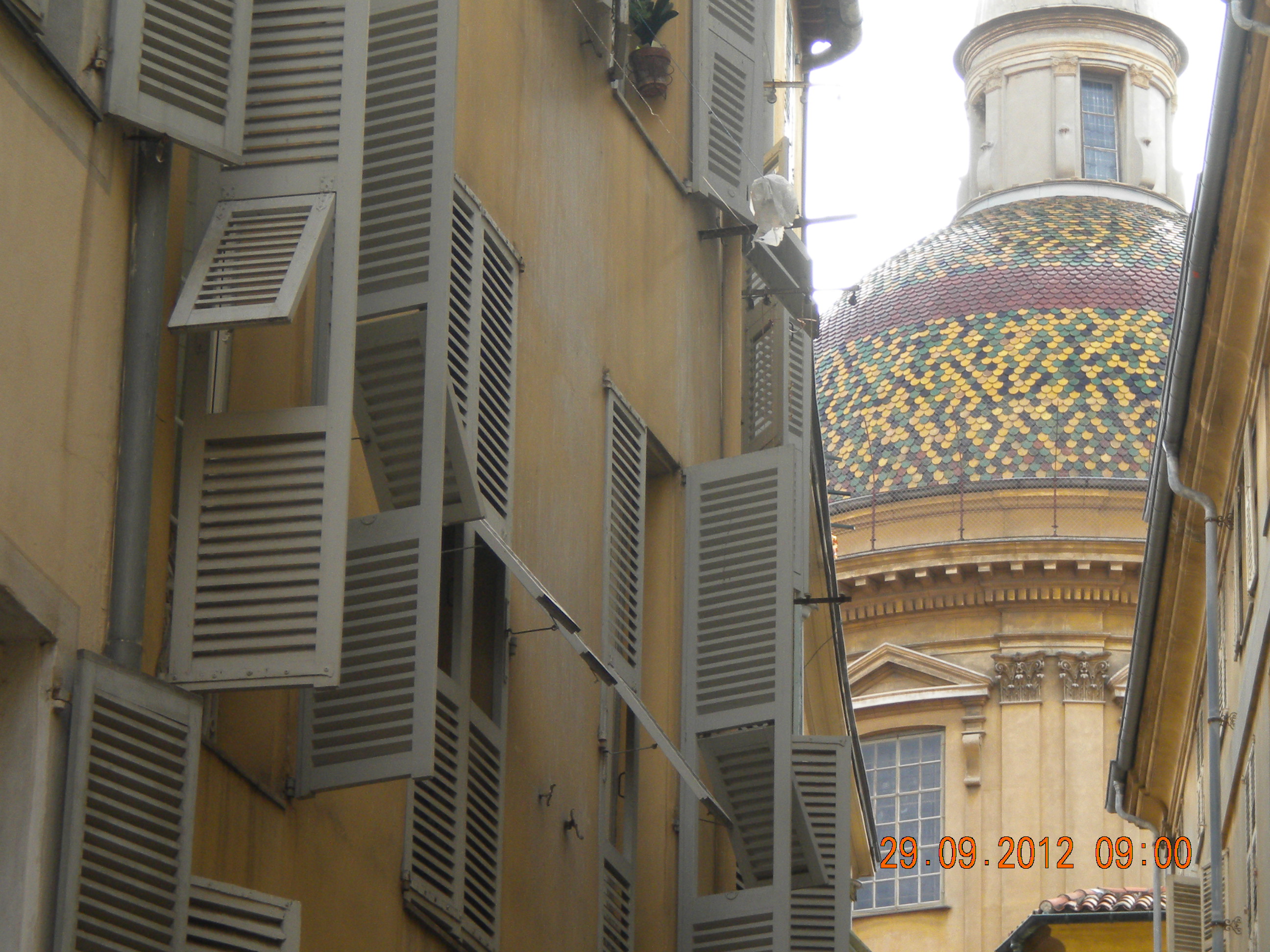
The former trip took place in the mini-heatwave at the end of March and the latter in the season of Alpine storms. In between the two, I watched more sport on TV than I ever thought imaginable. It started with the Tour de France, which I discovered on ITV 4 for the first time. Cycling + scenery = my kind of sport. Catching the mountain stages live in the afternoons was what I imagine playing a video game is like. Vicarious thrills, vicarious holiday, vicarious summer. The Tour was, of course, followed by the Olympics and Paralympics. I overcame my initial cynicism to treasure the winning smiles of Nicola Adams, the first woman to win an Olympic medal for boxing; Katherine Grainger, the rower who finally took gold after three games’ worth of silver, and Adam Hills on Channel 4’s The Last Leg. The night after it was all over, Will Self, interviewed by Jeremy Paxman, remained unconverted: ‘the Selfs are not welcome at the court of King Coe’. Airing that, then, was maybe an editorial misjudgment on the part of Newsnight.
On t’medals table
if Yorkshire wer a country
it’d ‘a come twelfth.


 helen boden literary arts