One of the best poetry collections I’ve read in the past year. A brilliantly eclectic and multi-faceted take on the subject, including collage-poems, and wonderful ekphrastic poems after Dante Gabriel Rosetti, Leonora Carrington, and intruiging less well-known studies: ‘There comes a point in every woman’s life / when she transmutes into The Spirit of the Storm . . . get out and find a fitting auditorium’. With spells and testaments to and of those historically accused of witchcraft, this builds to even more than the sum of its parts.
Happy Newish Year! Slowly working from snow-week towards Substack – for now here’s a fascinating blog and exhibition link on text/image indeterminacy from a poet & artist I admire
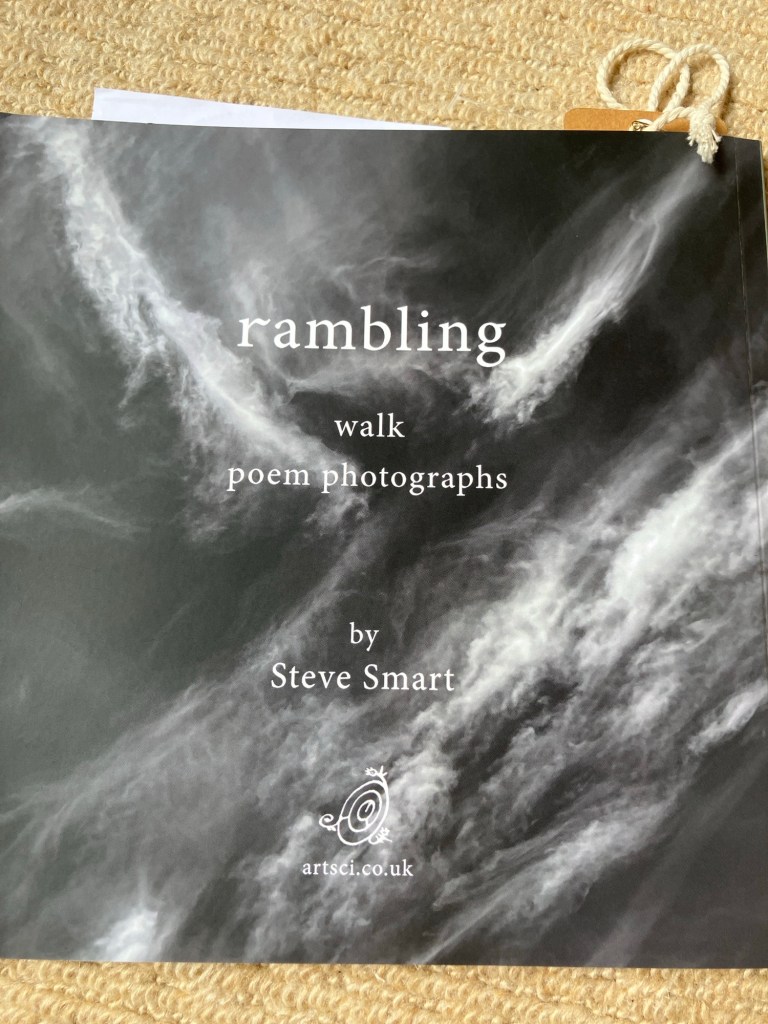
‘Memory / improvised of course / though back-lit in good faith’. Steve Smart’s newest publication, where visual and verbal images glance obliquely off each other, is giving me much joy (the tech challenge of trying to reblog WordPress on a given device not so much): it deserves to be wider read / seen / heard. I recommend checking it out as a diversion from whatever you need to turn away from this turn of season. Link to Steve’s blog here:
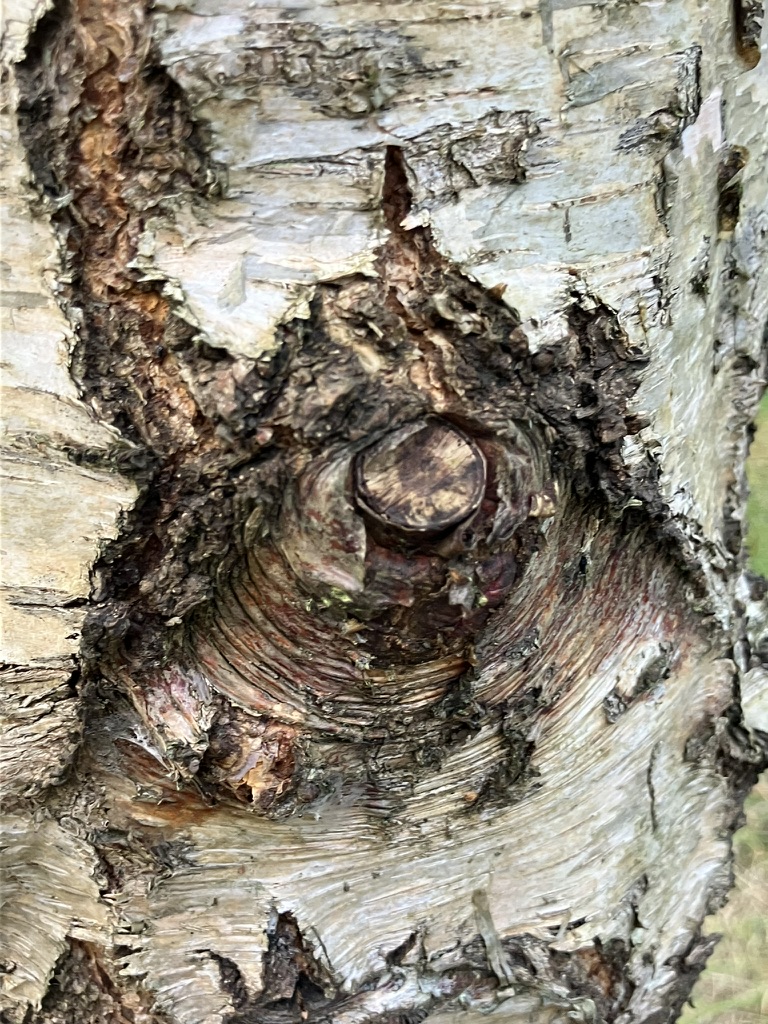
My autumnal ramblings, including in Craigmillar Castle Park for a new ArtWalkPorty project, Five Walks / Five Trees / Five Poems with Jonathan Baxter & Sarah Gittins, have been filtered, or refracted, through the lens of Steve’s work: this photograph of Birch bark is after one of his and its maybe-corresponding stanza: ‘A knurl, a knub unbranched / landscape grown in wood-skin / drawn Fuji-form in miniature / blemished into mountain.’
I haven’t been a-blogging much of late. I have been managing, or being managed by, burnout, and I’m trying to navigate my way around and through this. Also been editing – including David Costello’s Witness, for Red Squirrel Press, details reblogged below, do take a look – and thinking about making the shift to Substack, and what’s going to be a sustainable commitment to it for me.
And as we turn from midsummer again, here’s a moment in the Borders, reflective, balanced, almost abstract, the other evening:
A favourite way of bringing together my professional experience, personal interests & creative practice is to facilitate or lead poetry walks. I’ve enjoyed marking the centenary of Wilfred Owen’s excursions to the Pentland Hills with Craiglockhart Field Club; work for many health-care and active travel charities, organisations and clients; commissions for StAnza (virtually on the Fife Coastal Path during lockdown) and Push the Boat Out (IRL on the Meadows) poetry festivals; workshops for the Scottish Centre for Geopoetics. I love participating in these events when others lead them, too – experiencing their approach, and the opportunity to make new work myself by following the facilitator’s walking score, route & creative input.
Most recently, Juliana Capes’s descriptive tour of the immediate environs of the Byre Theatre at this year’s StAnza proved an amazing way to spend a Sunday afternoon in St Andrews. And last year my friend, storyteller & poet James Spence, recommended to me the monthly walks in Little France Park, Edinburgh, curated by Jonathan Baxter for ArtWalkPorty. Called Line Walk Mindful Drawing, most of the walking was done in silence, which is my preferred way of doing it: as chatter fades, walkers actually co-create a closer bond as they deepen their engagement with place, attending to the rhythms of footfall and breath, the attuning senses, the slowing down. Jonathan made all participants feel welcomed at the start and included at the end, though, and at the furthest point of the walk, there was a halt for refreshments and discussion.
We got to talking about the sometime plans to create a ‘Pentlands to Porty’ path along the course of the Braid and Figgate Burns, the possibility of which excited me when I moved out of town to settle beside the upper Braid thirteen years ago. (For a recent feasibility study, using the Burdiehouse Burn route from near Swanston-Joppa, see this.) My relocating here happened rather by chance, as I was also looking at flats in Portobello, unable to decide between hills and shore, and could easily have ended up at the latter. The decision I didn’t actively take proved to be the right one for me, able to ground myself at an easy walking distance from the Pentlands, on the edge of the city – never more so than during the lockdowns, when I had space aplenty for my permitted daily exercise, and was far luckier than many in Edinburgh, throughout the country and beyond.
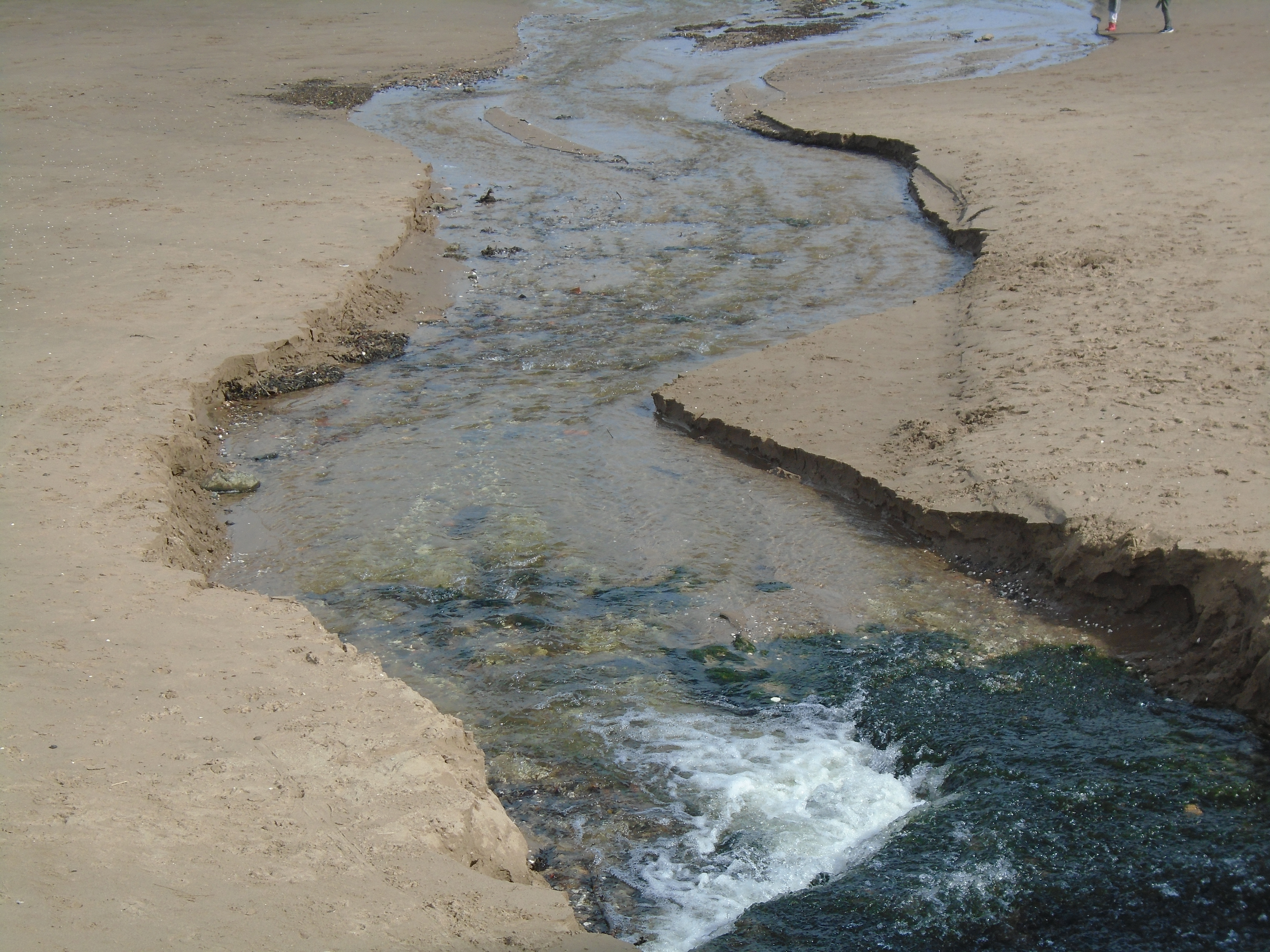
I have to some extent turned my back on the city and its shores, and towards the hills and the Borders, but the water that flows beside my home, changes its name, skirts the residential and industrial fringes of south Edinburgh, and flows into the Firth of Forth at Portobello is a strong part of my place-identity. Its narrative is omnipresent. As usual with the development of creative projects, the gestation of this one isn’t quite clear or linear, but it seemed ArtWalkPorty were interested in doing more work around the coast’s hinterland and feeder watercourses. After more walks and talks, the Braid Walk Project was born, curated by Jonathan, with artist-facilitators Sarah Gittens, James Spence and myself. ‘The story we’ll be telling, or rather, the story we’ll be walking, concerns our collective sense of what it means to live within a climate and ecological crisis, and how walking a watercourse might enable us to live that question now with rejuvenated purpose and joy’.
I’ve begun to make some word-art and word-play around Braid, and started journalling and photographing, as the four of us devise the walk, and weave the strands of our intended input. But we won’t fully know how the idea / image / metaphor will work / play out until we’re joined by the twenty people who can commit to the four walk and two workshop days, and their voices and experience combine along the course of, and join the song of, the Burn. Best commute ever for me; I’m excited to find out!
Braid / source
At the time of writing, the Eventbrite booking page says ‘sold out’ – check back later or contact Jonathan at the email address on the event description for more info if you’re interested.
Following the interest generated by an online talk we gave to the Scottish Centre of Geopoetics last year – and the large amount of material we covered but were not able to use when preparing it – Elizabeth Rimmer and I have developed a new project. Based around a poetics zine, it is called Ceasing Never– after a line from Keats’s 1816 sonnet ‘On the Grasshopper and Cricket’:
The Poetry of earth is never dead:
When all the birds are faint with the hot sun,
And hide in cooling trees, a voice will run
From hedge to hedge about the new-mown mead;
That is the Grasshopper’s—he takes the lead
In summer luxury,—he has never done
With his delights; for when tired out with fun
He rests at ease beneath some pleasant weed.
The poetry of earth is ceasing never:
On a lone winter evening, when the frost
Has wrought a silence, from the stove there shrills
More to follow shortly on a new poetry/walking project I’m really thrilled to be involved in; very best springtime and equinoctial wishes from Pentlandside for now.
On a recent, brief but brilliant, trip to the Arisaig / Morar area, I realised I have been holidaying in the Scottish Highlands for coming up (in 2023) for fifty years now.
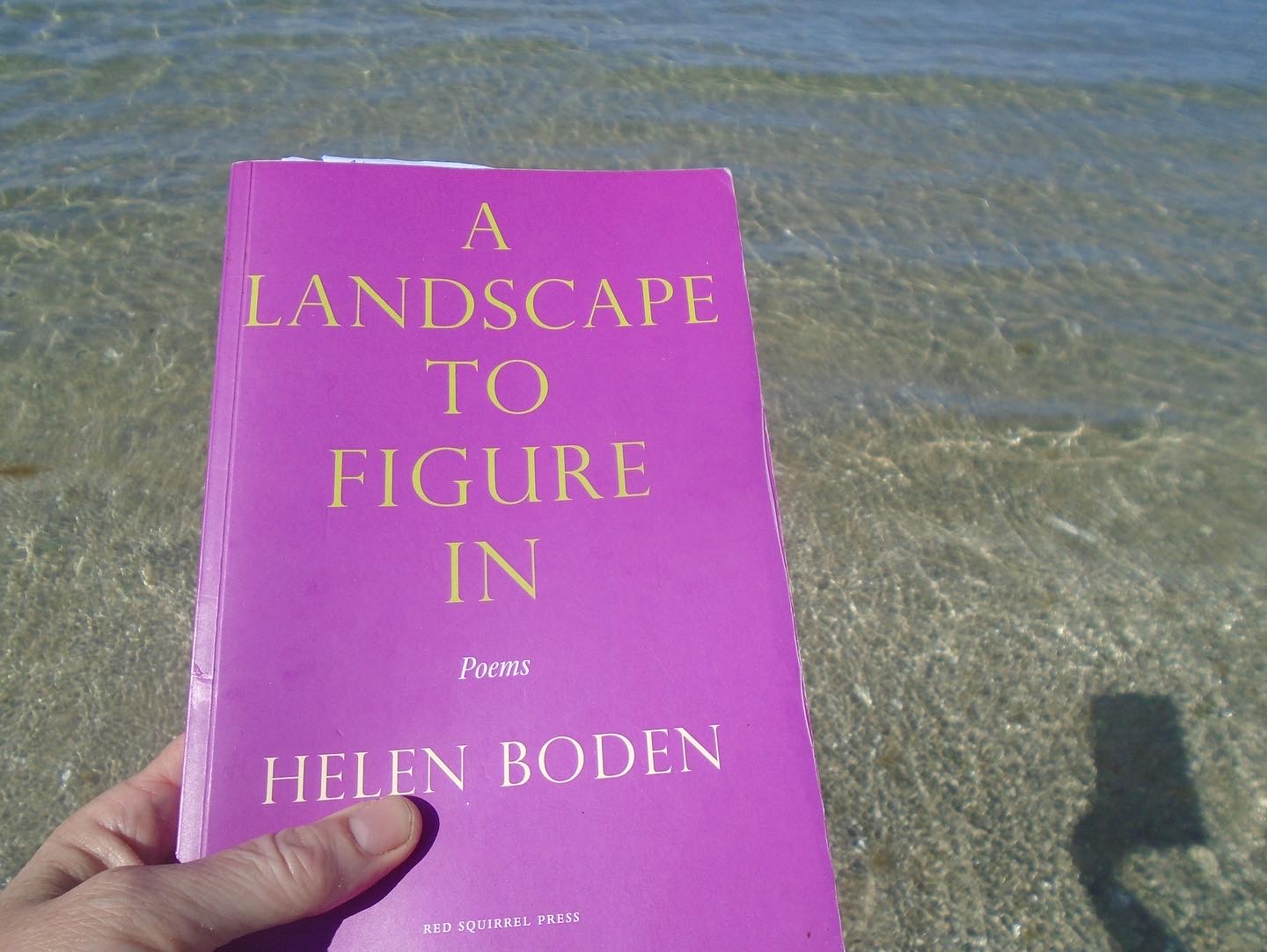
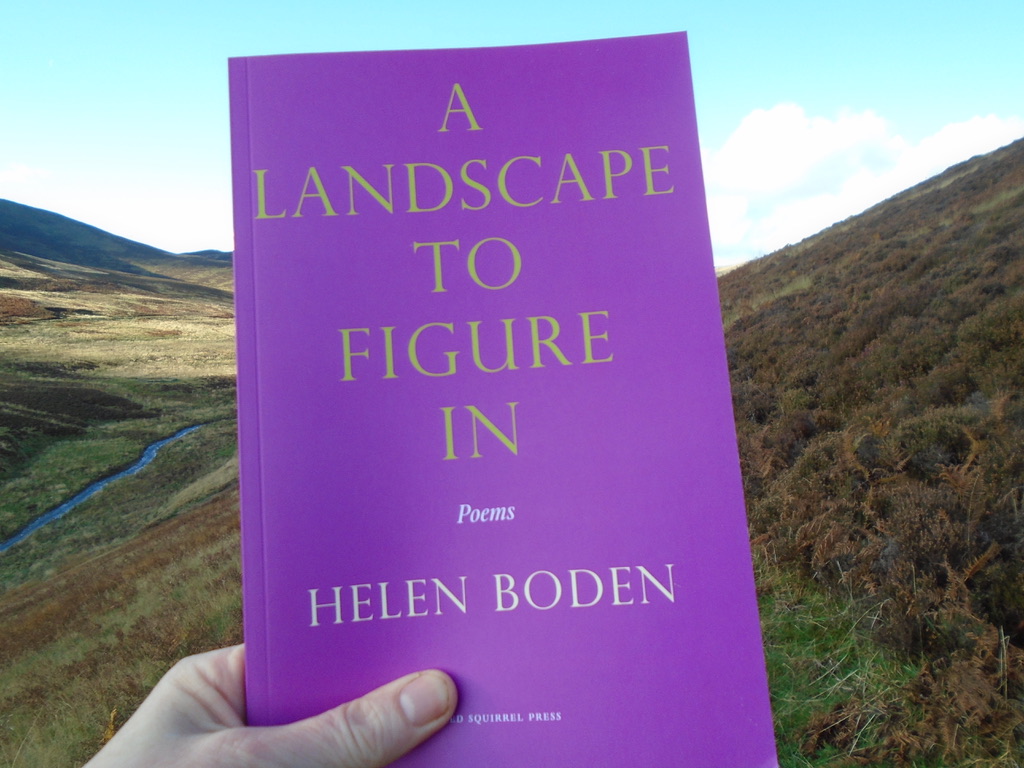
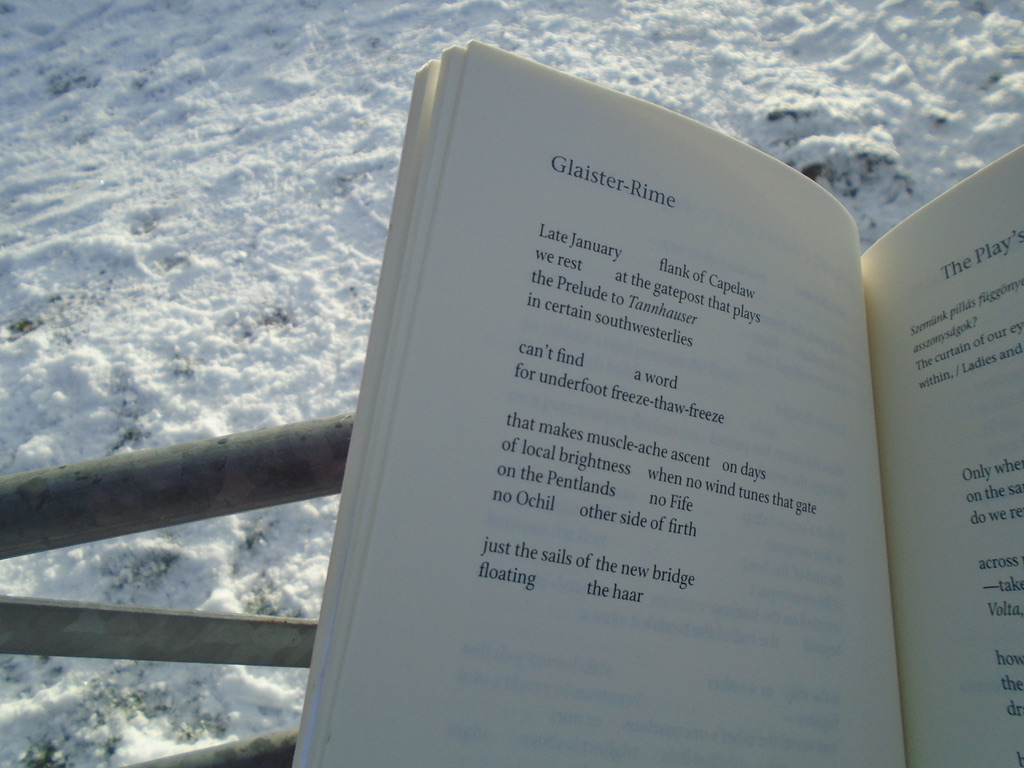
My debut poetry collectionA Landscape To Figure Inwas published by Red Squirrel Press last November. It’s about place and identity, and one of the soft-promo things I’ve been enjoying doing is taking it to places that feature in it, and taking photos in situ– in the wild – in different weathers and seasons. This may entertain friends more than it sells copies, but it’s been an important part of post-production for me – getting to read out loud, back to, and in front of, some places that inspired it and that figure in it. (Lest that sound narcissistic, this is something I have long done with words from others’ books. I think it can be a beautiful thing – to let the words carry over the air of hills and beaches, fields and moors.)
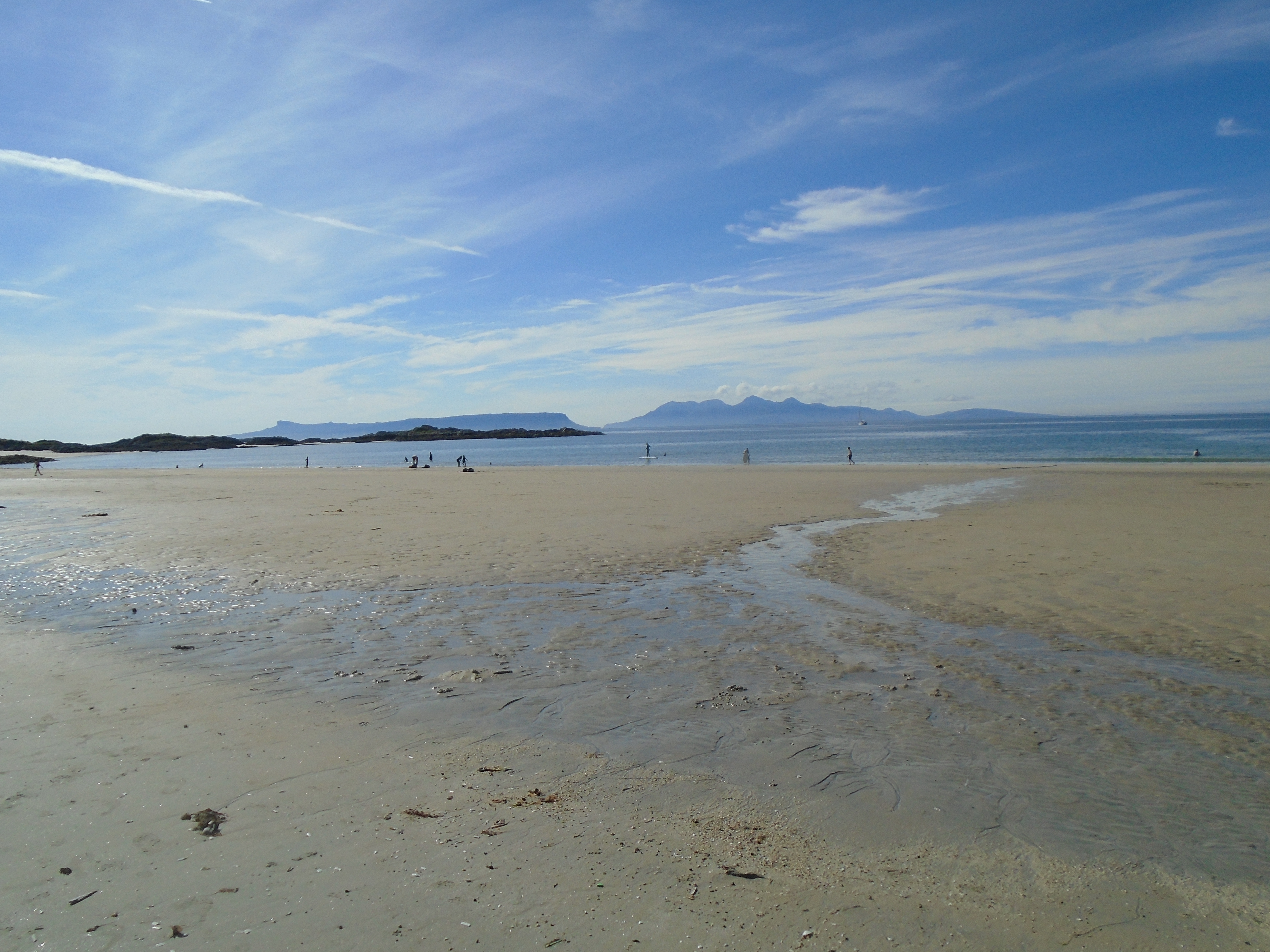
A Landscape in Morar
A Landscape in the Sound of Sleat
I’m a (very) late adopter of most things tech. I still don’t have a smartphone. The previous time I was in this area, midsummer 2007, I didn’t even have a digital camera. My mum was undergoing chemotherapy in Yorkshire, and would take her last breaths three months later, as an equinox sun set, over the Pennines beyond her bedroom window; through my train carriage window over Tinto Hill, and over the islands famous for sunsets that I first visited in the 70s with her and my dad. I have to live with the fact that I’d been in Edinburgh, sorting out things in my flat and organising work, and didn’t make it back in time to see her alive again – but it was a comfort, even at the time, to think of her passing against (or into?) this wider backdrop, and in this wider diurnal and seasonal context.
On the Small Isles back in June of that year it could be a challenge to find places with a strong enough (simple)phone signal to keep in touch, but I remember calling her – all well – from the top of the Sgurr of Eigg. Now on holiday in this ‘thinplace’ again, memories of previous visits, and details dormant in the interim, exerted a greater pull than that of devices and social media. I logged on occasionally, though, and was moved to read – at this time, from this place – poet Wendy Pratt’s FB posts about her father’s hospital admission and death, and then her beautiful blog tribute to him.
My first encounter with the Road to theIsles was actually taken in reverse – the road from the Isles – on the way home from a family holiday on Skye just after I left primary school. Loading the Armadale-Mallaig car ferry involved a labour-intensive, time-consuming turntable mechanism – though the service may still have been more efficient than that the islands are (not) receiving this summer – with an ageing, breakdown-prone fleet, and crews stretched too thinly. As an 11-year-old already attached to the islands, I clocked the Morar beaches as something to save for another time.
Morar & the Small Isles: the early years
I was a student when I did return, for a summer stay at Garramore Youth Hostel, between Morar and Arisaig, close to the beach that starred in Local Hero (1983); and a for lovely Easter-time break: snow on the Cuillins of Rhum and Skye, and a long, cold and beautiful day at sea on the Calmac ferry’s round to each of the Small Isles.
This summer I was a co-driver for the first time, having returned to driving a few years ago after a very long gap. I take regular work or leisure trips to the Borders, and Dumfries and Galloway, and have been to Northumberland, the North Pennines and Yorkshire, but the unavoidable motorways around the Central Belt had so far prevented me from venturing to the North and West I love. The pandemic put paid to imminent plans to tackle this, and now for the first time I drove my own car up the Black Mount from Tyndrum, skirted Rannoch Moor, onto Glencoe and out to the coast at Ballachulish, beside Loch Linnhe, and then along the Road to the Isles. It’s – too – many years since I’ve taken that road at all, as I’ve been more likely to head up to Inverness and across to the west, or take the train, which follows a differently spectacular route over Rannoch Moor. (For sure I know about the increasing problems of motor transport in the Highlands, and car use generally, and this deserves a dedicated post later.) Yes, I found old Runrig CDs to play. It was all more powerful and evocative than I expected.
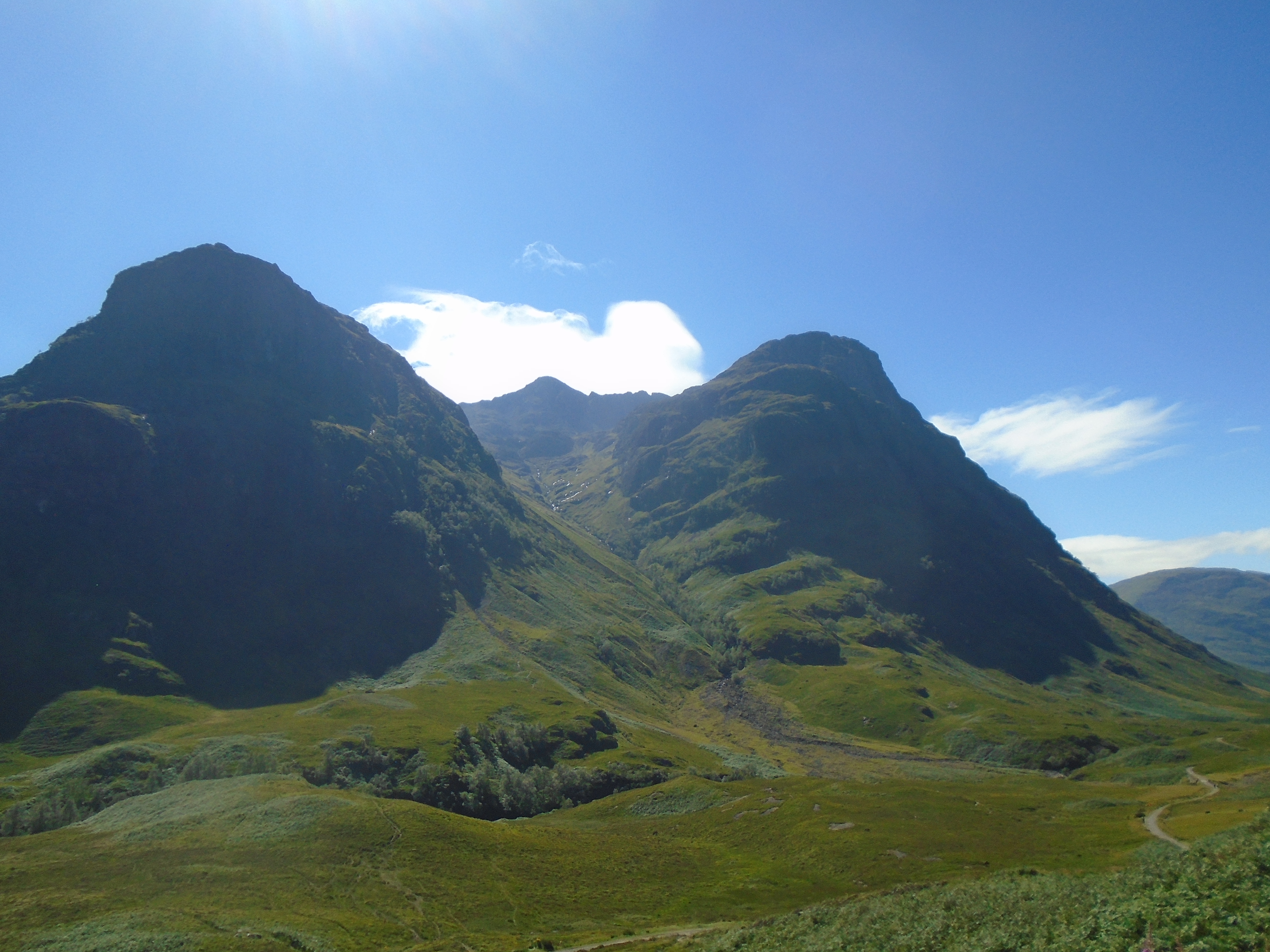
In Glencoe, August 2022
Blackmount to Glencoe
I’ve been looking out the photos from the earlier trips, still in the packets in which they returned from the developers, though never sorted into any searchable order. I can’t find my pictures from the earliest trip, captured on a Kodac Instamatic – though I still have the camera. I have some photographic record of the hosteling years, from a Canon ?Sureshot autofocus I no longer possess; and an APS (Advanced Photo System, which took panoramic photos), and an SLR, which I still have, but do not or can no longer use – as if preserving them as artefacts to accompany the uncatalogued archive they produced. I didn’t go digital until the end of the first decade of this century, when I wanted to take lots of pictures of the environs of my childhood home before selling up and moving everything I wanted to keep from it, including some earlier photographic hardware, to Scotland.
A snapshot of cameras
My maternal grandma (Sarah Ellen – ‘Nellie’ – Booth, 1895-1987), always used to say ‘where are the people?’ when I showed her my holiday snaps. I do have plenty people-photos from a few years later, and it is both enjoyable and poignant to look through them now, at twenty-somethings larking around in wellies or by misty summit cairns. Heavens know when I last looked at them properly, but I’d be closer to that age than to my current 57, and certainly more lithe and fearless over rocky promontories.
My closest IRL friends nowadays, apart from the poetry-reading ones, tend not to be big fans of social media or tagging. I respect their wish not to be co-opted to market my book photographically or make my travels look more sociable. I’ve remained firm friends with a few fellow-travellers from earlier decades, have lost contact with some, and re-connected with others through the Socials; so it goes.
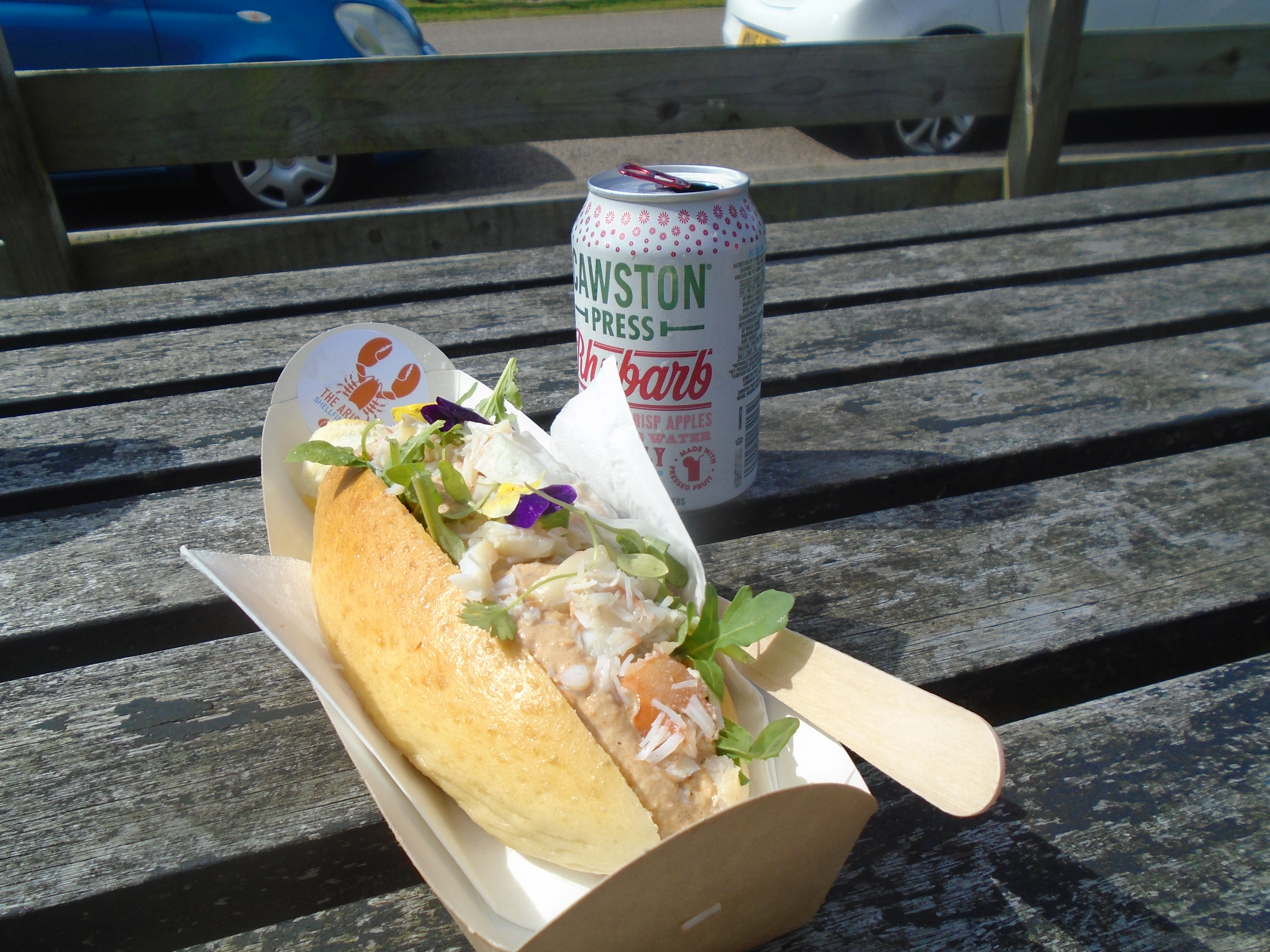
I didn’t spend all weekend lingering over memories. Camusdarach Beach invited swimming, and close attention to crabs and starfish in the shallows. I started thinking about the changes in Highland holidaying over the past half-century, too. There’s the increasing traffic that the infrastructure can’t support, and to which I was contributing, of course. The local authority seems to be making workable medium-term solutions about facilities, after what I was not surprised to hear were serious problems with parking and dirty camping last summer. Artisan foods and other goods are now widely available in shops, cafes and hotels, showcasing fantastic produce /products that help to support a sustainable life for locals; to augment the visitor experience or compensate for bad weather. Special shout-out this time to: the ArisaigShellfishShack, Sunset Thai Food Morar, Isle of Skye Sea Salt Company, and Arisaig Bread Shed.
I never photograph my lunch but . . .
Back home, I watched ThePrince of Muck (2021), a documentary film about Lawrence MacEwen, laird of the smallest of the four Small Isles until his death in May 2022. In 2007 I’d stayed on both Muck and neighbouring Eigg. The contrast, or complement, between the hospitality of the benign-governed-with-consent island, and the vibrancy of one which had been in communityownership for a decade, was key to my experience – though the occasional visitor of course lacks a fully nuanced, informed understanding of a locality. Certainly the culture of both islands helped provide respite from life with a terminally ill parent.
The Scottish islands unsurprisingly became a necessary backdrop to my own grief. I spent the first anniversary of my mum’s death on Arran, location of more family holidays than anywhere else (with the possible exception of Scarborough). Places where the dominant soundscape was waves, wind, birds, and not urban traffic, gradually walked me into acceptance of a new phase in my life. I wrote the poems that would be collected into A Landscape To Figure In, grounded in the Pennines where I grew up and the Pentlands where I stay, but reaching out to, and back from, places including the US / Canada border, Italy, Zimbabwe. Domestic and theatre interiors also feature, plus several hybrid or fictive locations. And there are real – with real 21stC problems – Greek and Scottish islands and coasts. None of the poems specifically reference the Morar/ Arisaig area, and ‘landscapes’ outnumber ‘seascapes’ (though the collection plays on the terminology of both) – but this one is is after a delectable set of ink and egg tempura paintings by Emily Learmont, themselves after a voyage in the Sound of Sleat, between Skye and the peninsulas of Knoydart and Morar:
Some Seascapes

After Emily Learmont

(i) Graphic

an inkblot cloud pursues the boats
like a speech bubble
flurries of vowels        morphemes       ideas
on a punctuation-flecked sea

swirls       whorls
of inverted commas
conversation billows
between the fleet

a thought detaches           memory sprays
                             a wake for the clearances

will they consolidate
into a skerry of memory?

night        nautical twilight       civil twilight       day
                      calm       storm      calm      storm     calm

plot the sound

I saw three. . .


(ii) Isthmus

Skeletal-chalked -
fine lines of rigging
fresh-vein the moon


(ii) Clearance

Ship parts the coasts
of Knoydart        Sleat
like a centrifugal force

funnels thought

when the storm has passed
through the vessel

is that a second ship
or fata morgana
the soul of the boat
or its counterpart
inverted on the horizon
beyond         the end of the sound

is the ship    or weather
fugitive -
one vessel the other’s unconscious      or ours

ship drops anchor in the sound
sets a lantern
a thousand onshore lights
glow back          as the darkest hour departs

departs        for Carolina

leaves a filigree wake
                                          a waning moon

a morning sun like marbled paper

 From A Landscape To Figure In (Red Squirrel Press, 2021)
I haven’t posted in some time, mainly because Safari stopped supporting WordPress, and I was reluctant to install an additional browser on the almost-full disk on my old laptop. I was also preoccupied with Zooming around the country, and then hobbling around the locality, after spraining my ankle – and then Christmas and etcetera. However, my début poetry collection was published by Red Squirrel Press in November.
I designated a rucsac copy to take out on walks to some local places that feature in it, took some in situ photographs before the ankle incident, and posted quite a lot of them on Facebook.
I’m delighted to say the book will be launched live in Glasgow on Mon 21 February at 7pm and at the Scottish Poetry Library on Sat 26th at 1pm. Limited numbers; Covid safety.
On both occasions I’ll share the billing with Aberdeen poet and activist John Bolland, and Stirling Makar Laura Fyfe. John’s new collection Pibroch, my current reading, is the text component of a brilliant multi-media project about the Piper Alpha disaster and the climate crisis. And more. I’m very much looking forward to getting Laura’s pamphlet The Truth Lies. And to reading live with them both, to a live audience.
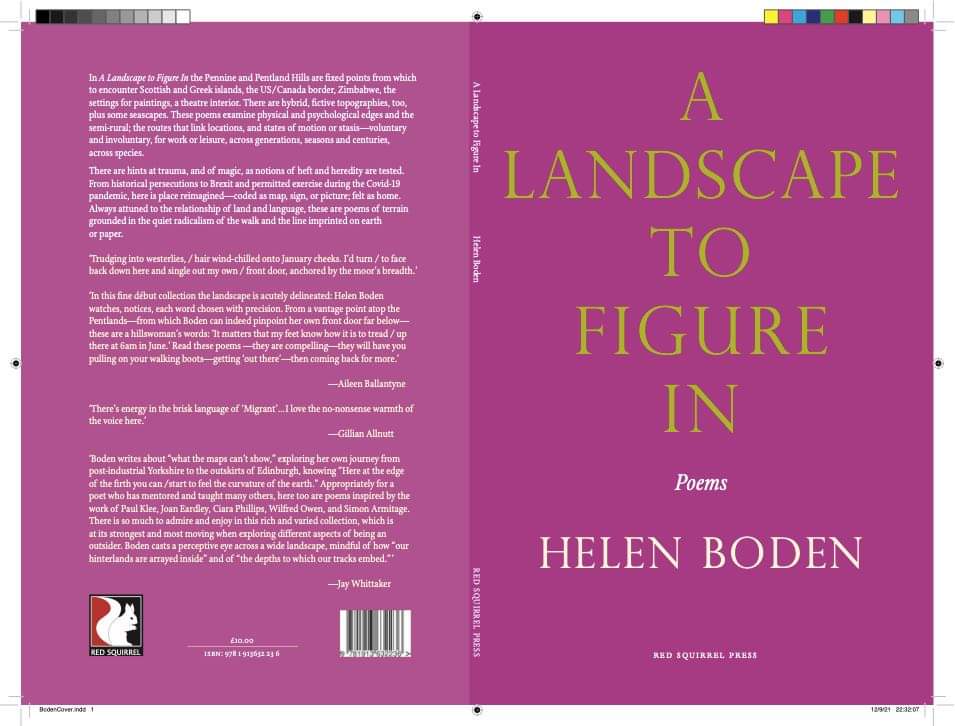
Currently unable to write posts on my laptop, which tells me I’m using an unsupported browser (WordPress tells me otherwise), so just a quick preview of the cover of my first collection. Thanks to Gerry Cambridge for typesetting and design and these wonderful colours.
(This month’s renga was done in collaboration with StAnza Poetry Festival. Many thanks to Annie Rutherford and Eleanor Livingstone for all their help and support.)
All shakes and shivers: tree, birdfeeder, hand. Snowflakes seek unchancy twins.
The brae: kids sledging, a Breughel’s living spit come squalling with delight to life.
Above the vaccine queue at the Municipal Hall the sky’s in scrubs
The land wears its muffler, bringing stillness to a frantic world.
The lunar new year is ox-stubborn, Lockdown or no, home pulls on a long line, ‘Gōngxǐfācái’s from Dundee to Singapore.
Wade through drifts for bread and eggs. One slip scrambles the whole meal.
Ice floes on the Tay, the snow crunches underfoot, sunset pinks snowy roofs.
Single-figure temperatures feel warm. A £15 meal for two. On Zoom. Slush.
We’re caught between registers: Fantasia on a theme by frost, or Adagio for streams of meltwater.











 helen boden literary arts