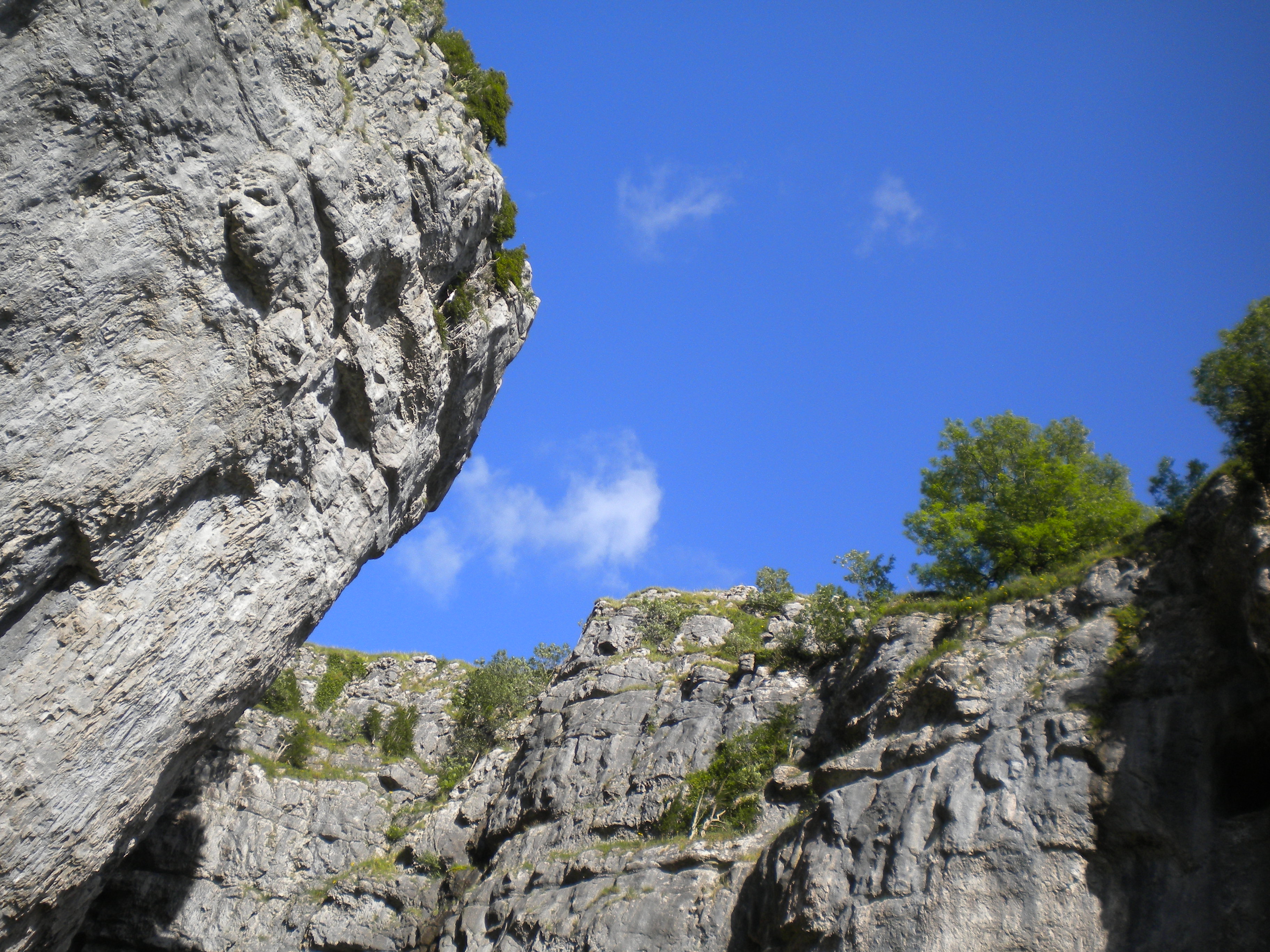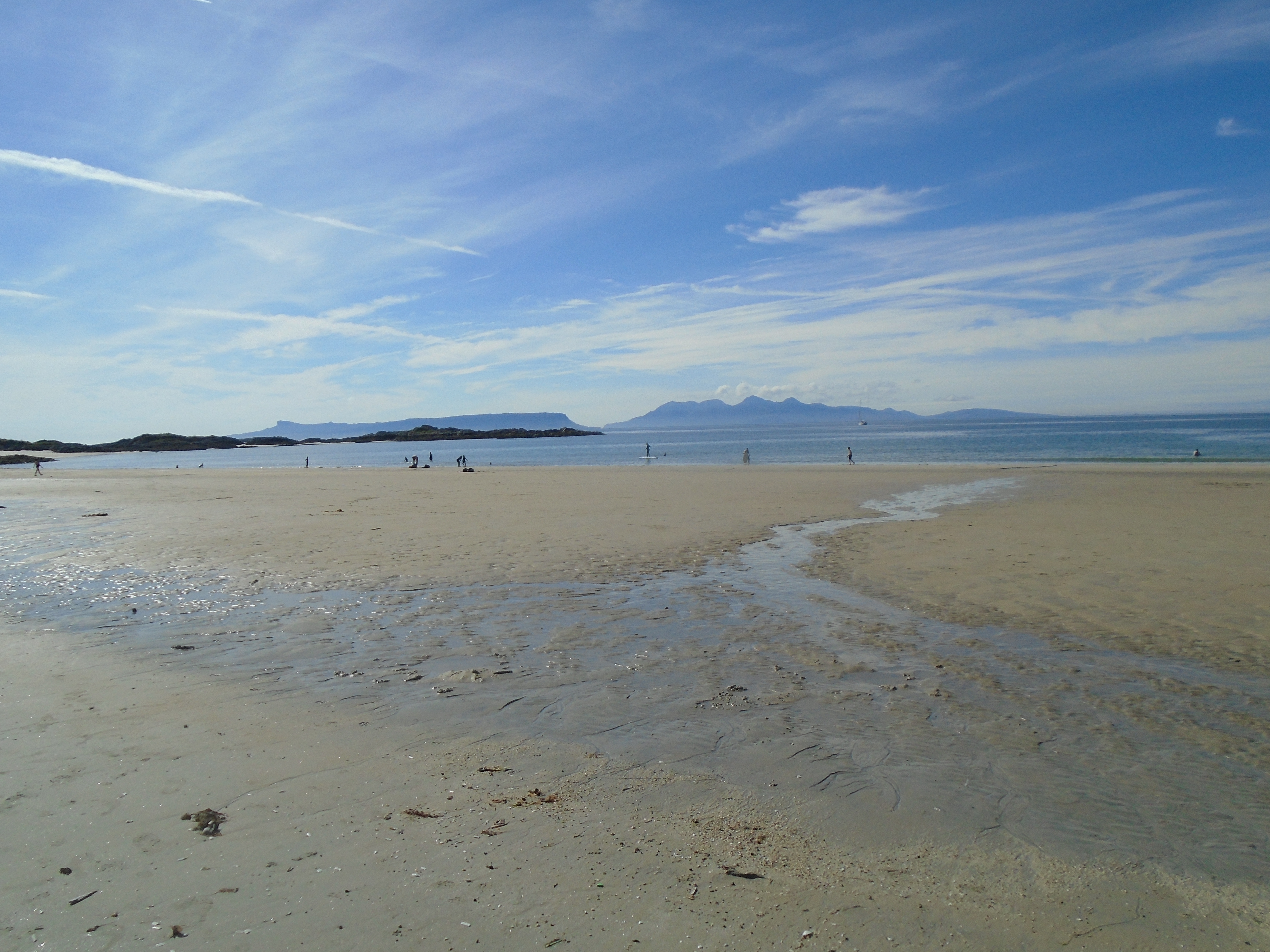
A Seaboard to (Re)figure on

Camusdarach, Eigg, Rhum

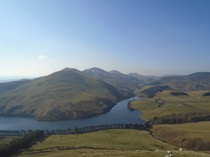
On a recent, brief but brilliant, trip to the Arisaig / Morar area, I realised I have been holidaying in the Scottish Highlands for coming up (in 2023) for fifty years now.

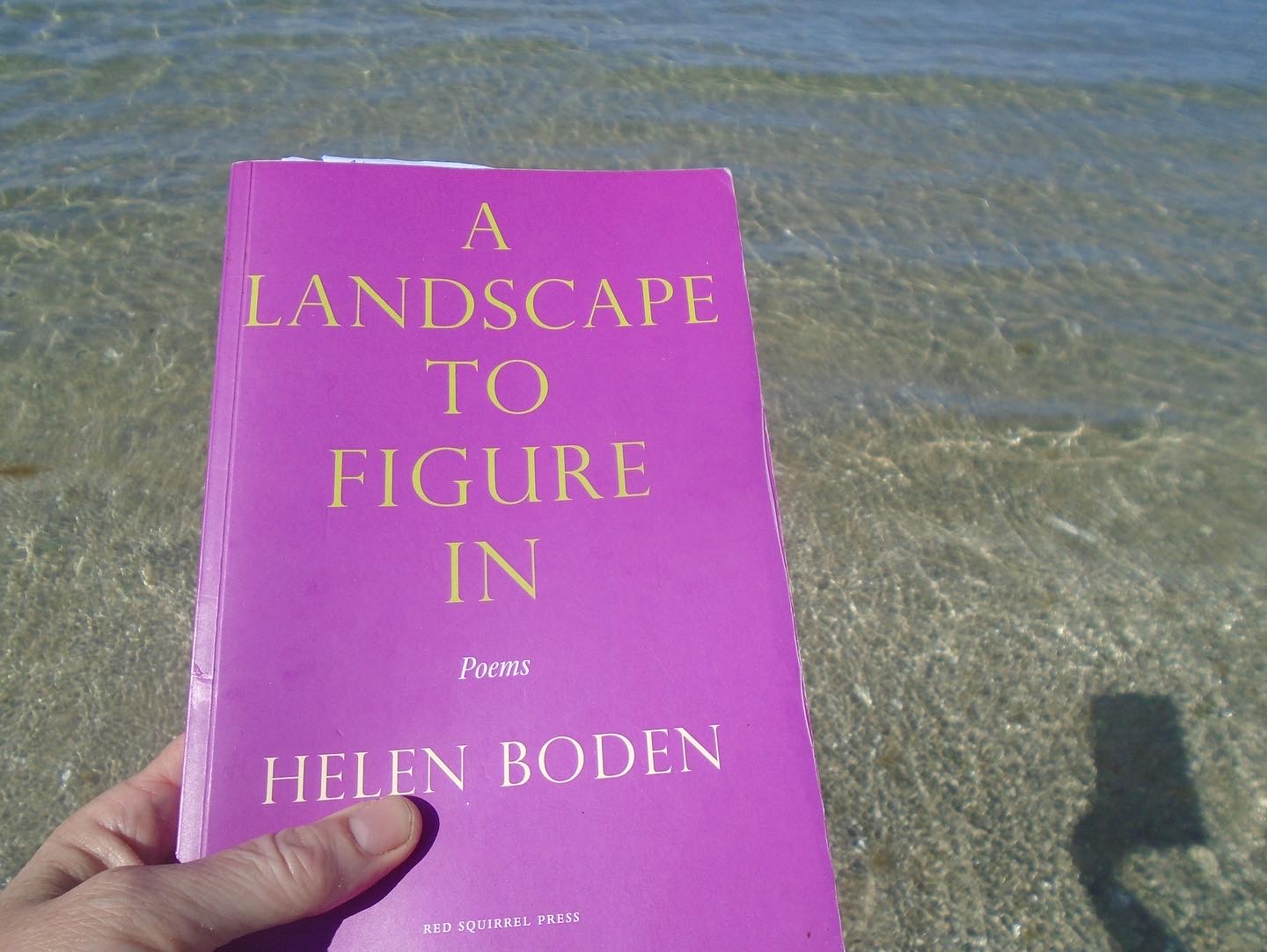
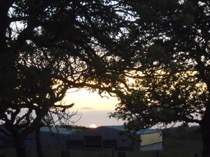
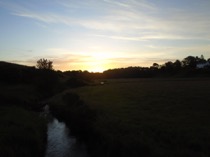
My debut poetry collection A Landscape To Figure In was published by Red Squirrel Press last November. It’s about place and identity, and one of the soft-promo things I’ve been enjoying doing is taking it to places that feature in it, and taking photos in situ in the wild – in different weathers and seasons. This may entertain friends more than it sells copies, but it’s been an important part of post-production for me – getting to read out loud, back to, and in front of, some places that inspired it and that figure in it. (Lest that sound narcissistic, this is something I have long done with words from others’ books. I think it can be a beautiful thing  – to let the words carry over the air of hills and beaches, fields and moors.)

A Landscape in Morar
A Landscape in the Sound of Sleat

I’m a (very) late adopter of most things tech. I still don’t have a smartphone. The previous time I was in this area, midsummer 2007, I didn’t even have a digital camera.  My mum was undergoing chemotherapy in Yorkshire, and would take her last breaths three months later, as an equinox sun set, over the Pennines beyond her bedroom window; through my train carriage window over Tinto Hill, and over the islands famous for sunsets that I first visited in the 70s with her and my dad. I have to live with the fact that I’d been in Edinburgh, sorting out things in my flat and organising work, and didn’t make it back in time to see her alive again – but it was a comfort, even at the time, to think of  her passing against (or into?)  this wider backdrop, and in this wider diurnal and seasonal context. 

On the Small Isles back in June of that year it could be a challenge to find places with a strong enough (simple)phone signal to keep in touch, but I remember calling her – all well – from the top of the Sgurr of Eigg. Now on holiday in this ‘thin place again,  memories of previous visits, and details dormant in the interim, exerted a greater pull than that of devices and social media. I logged on occasionally, though, and was moved to read – at this time, from this place –  poet Wendy Pratt’s FB posts about her father’s hospital admission and death, and then her beautiful blog tribute to him.

My first encounter with the Road to the Isles was actually taken in reverse – the road from the Isles – on the way home from a family holiday on Skye just after I left primary school. Loading the Armadale-Mallaig car ferry involved a labour-intensive, time-consuming turntable mechanism – though the service may still have been more efficient than that the islands are (not) receiving this summer – with an ageing, breakdown-prone fleet, and crews stretched too thinly. As an 11-year-old already attached to the islands, I clocked the Morar beaches as something to save for another time. 

Morar & the Small Isles: the early years

I was a student when I did return, for a summer stay at Garramore Youth Hostel,  between Morar and Arisaig, close to the beach that starred in Local Hero (1983); and a for lovely Easter-time break: snow on the Cuillins of Rhum and Skye, and a long, cold and beautiful day at sea on the Calmac ferry’s round to each of the Small Isles. 

This summer I was a co-driver for the first time, having returned to driving a few years ago after a very long gap. I take regular work or leisure trips to the Borders, and Dumfries and Galloway, and have been to Northumberland, the North Pennines and Yorkshire, but the unavoidable motorways around the Central Belt had so far prevented me from venturing to the North and West I love. The pandemic put paid to imminent plans to tackle this, and now for the first time I drove my own car up the Black Mount from Tyndrum, skirted Rannoch Moor, onto Glencoe and out to the coast at Ballachulish, beside Loch Linnhe, and then along the Road to the Isles. It’s – too – many years since I’ve taken that road at all, as I’ve been more likely to head up to Inverness and across to the west, or take the train, which follows a differently spectacular route over Rannoch Moor. (For sure I know about the increasing problems of motor transport in the Highlands, and car use generally, and this deserves a dedicated post later.) Yes, I found old Runrig CDs to play. It was all more powerful and evocative than I expected.
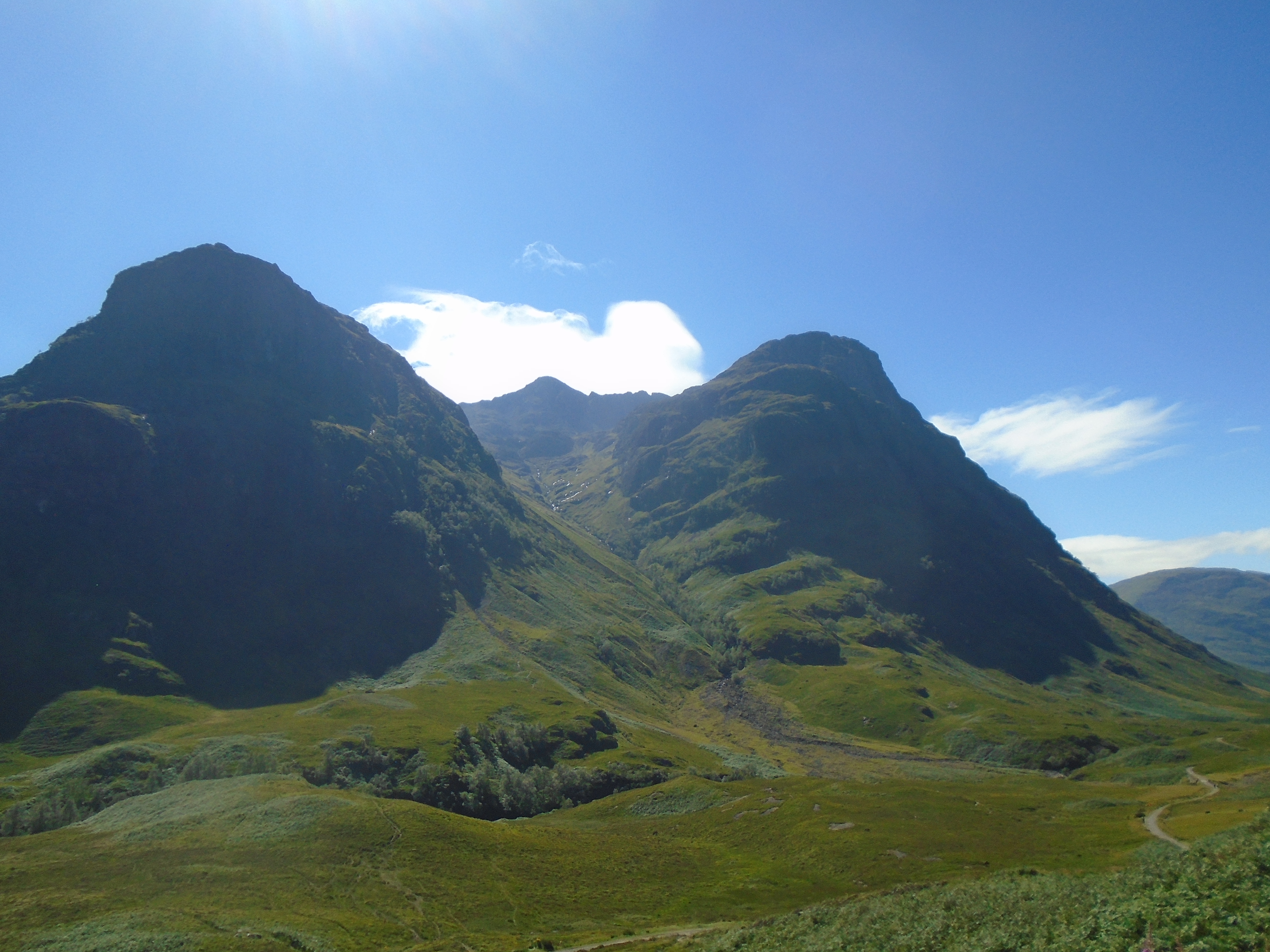
Blackmount to Glencoe

I’ve been looking out the photos from the earlier trips, still in the packets in which they returned from the developers, though never sorted into any searchable order. I can’t find my pictures from the earliest trip, captured on a Kodac Instamatic – though I still have the camera. I have some photographic record  of the hosteling years, from a Canon ?Sureshot autofocus I  no longer possess; and an APS (Advanced Photo System, which took panoramic photos), and an  SLR, which I still have, but do not or can no longer use –  as if  preserving them as artefacts to accompany the uncatalogued archive they produced.  I didn’t go digital  until the end of the first decade of this century, when I wanted to take lots of pictures of the environs of my childhood home before selling up and moving everything I wanted to keep from it, including some earlier photographic hardware, to Scotland.

A snapshot of cameras

My maternal grandma (Sarah Ellen – ‘Nellie’ – Booth, 1895-1987), always used to say ‘where are the people?’ when I showed her my holiday snaps. I do have plenty people-photos from a few years later, and it is both enjoyable and poignant to look through them now, at twenty-somethings larking around in wellies or by misty summit cairns. Heavens know when I last looked at them properly, but I’d be closer to that age than to my current 57, and certainly more lithe and fearless over rocky promontories. 

My closest IRL friends nowadays, apart from the poetry-reading ones, tend not to be big fans of social media or tagging. I respect their wish not to be co-opted to market my book photographically or make my travels look more sociable. I’ve remained firm friends with a few fellow-travellers from earlier decades, have lost contact with some, and re-connected with others through the Socials; so it goes.

I didn’t spend all weekend lingering over memories. Camusdarach Beach invited swimming, and close attention to crabs and starfish in the shallows. I started thinking about the changes in Highland holidaying over the past half-century, too. There’s the increasing traffic that the infrastructure can’t support, and to which I was contributing, of course. The local authority seems to be making workable medium-term solutions about facilities, after what I was not surprised to hear were serious problems with parking and dirty camping last summer. Artisan foods and other goods are now widely available in shops, cafes and  hotels, showcasing fantastic produce /products  that help to support a sustainable life for locals; to augment the visitor experience or compensate for bad weather. Special shout-out this time to: the Arisaig Shellfish Shack, Sunset Thai Food Morar, Isle of Skye Sea Salt Company, and Arisaig Bread Shed.
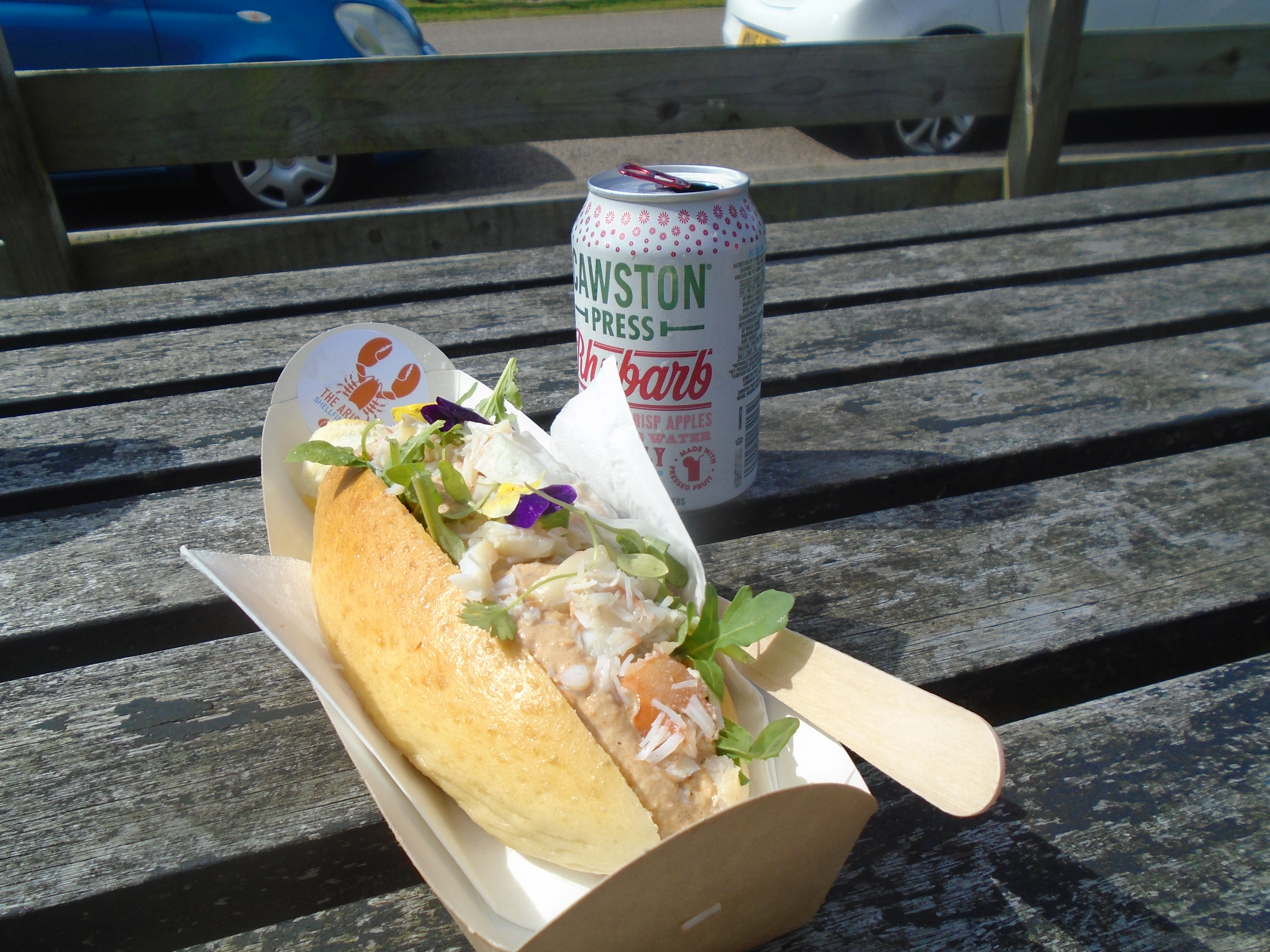
I never photograph my lunch but . . .

Back home, I  watched The Prince of Muck (2021), a documentary film about Lawrence MacEwen, laird of the smallest of the four Small Isles until his death in May 2022. In 2007 I’d stayed on both Muck and neighbouring Eigg. The contrast, or complement, between the hospitality of the benign-governed-with-consent island, and the vibrancy of one which had been in community ownership for a decade, was key to my experience – though the occasional visitor of course lacks a fully nuanced, informed understanding of a locality. Certainly the culture of both islands helped provide respite from life with a terminally ill parent.

The Scottish islands unsurprisingly became a necessary backdrop to my own grief. I spent the first anniversary of my mum’s death on Arran, location of more family holidays than anywhere else (with the possible exception of Scarborough). Places where the dominant soundscape was waves, wind, birds, and not urban traffic, gradually walked me into acceptance of a new phase in my life. I wrote the poems that would be collected into A Landscape To Figure In, grounded in the Pennines where I grew up and the Pentlands where I stay, but reaching out to, and back from, places including the US / Canada border, Italy, Zimbabwe. Domestic and theatre interiors also feature, plus several hybrid or fictive locations. And there are real – with real 21stC problems – Greek and Scottish islands and coasts.  None of the poems specifically reference the Morar/ Arisaig area, and  ‘landscapes’ outnumber ‘seascapes’ (though the collection plays on the terminology of both) –  but this one is is after a delectable set of ink and egg tempura paintings by Emily Learmont, themselves after a voyage in the  Sound of Sleat, between Skye and the peninsulas of Knoydart and Morar:

Some Seascapes

After Emily Learmont 
   
(i) Graphic

an inkblot cloud pursues the boats
like a speech bubble
flurries of vowels        morphemes       ideas
on a punctuation-flecked sea          

swirls       whorls
of inverted commas
conversation billows
between the fleet

a thought detaches           memory sprays
                             a wake for the clearances

will they consolidate 
into a skerry of memory?

night        nautical twilight       civil twilight       day   
                      calm       storm      calm      storm     calm

plot the sound

I saw three. . .


(ii) Isthmus

Skeletal-chalked -
fine lines of rigging
fresh-vein the moon


(ii) Clearance 

Ship parts the coasts
of Knoydart        Sleat
like a centrifugal force

funnels thought

when the storm has passed 
through the vessel

is that a second ship
or fata morgana
the soul of the boat
or its counterpart
inverted on the horizon
beyond         the end of the sound

is the ship    or weather    
fugitive -
one vessel the other’s unconscious      or ours

ship drops anchor in the sound
sets a lantern
a thousand onshore lights
glow back          as the darkest hour departs

departs        for Carolina

leaves a filigree wake
                                          a waning moon

a morning sun like marbled paper

 From A Landscape To Figure In (Red Squirrel Press, 2021)
An evening sun

Quiet Please, or A Year in the Sound of a Recreational Hill-User

WINTER: HUSH ON THE MAINS

A year ago I wrote a poem for Scottish PEN’s anthology to mark the 700th anniversary of the Declaration of Arbroath. Titled ‘A Declaration of Hush’, it starts, and ends, on the bridge over the Braid Burn at Colinton Mains, in the lull between Christmas and New Year – a week when I love to stay home, go for walks, do less, gather strength for the rest of winter. More polemical that what I usually write, it is a plea for quiet (and sometimes an angry or comic one, rather than being quiet itself): for listening, for toning down ‘unnecessary racket and clamour and din’ until ‘we can start to hear again’ other species and life-forms, nuance and diversity, and ‘our own hearts beat, breath and footfall’. It is also a love song to where I live, and can be read here.

31 December 2019

I never imagined when I wrote this that the turn-of-year quiet that I find so nourishing would persist throughout much of 2020. I was not always coping well with the way the world was pre-pandemic, particularly when in crowds or on public transport. Maybe I am neurodivergent – I certainly identify and empathise with people who are; maybe this is something I will go on to investigate, but it is not the main point of this post.

SPRING: DISTANCING

I chose to move out from Edinburgh to the edge of the Pentland Hills ten years ago, not exactly predicting being locked down during a pandemic, but thinking carefully about where I wanted to be – to spend Christmases, to return to from work and other trips, to write and exercise, to welcome friends.

Thanks to a commission from Pentlands Book Festival, I have written elsewhere about my experience of lockdown locality, and how, despite fear of the virus and collateral stresses including worry about money, I was fortunate to be literally and figuratively in a ‘good place’ when we were required to Stay Home. 

After a silent start, I wrote a lot. My skin, often barometer of my wider health, was in good condition – no doubt due also to lower pollution levels. 

In easy walking and cycling distance from hills quietened in the absence of many other leisure users, I consider myself privileged to have witnessed the passage of a spring when the song of skylarks was louder than the noise of traffic on the city bypass. I was also, of course, relatively privileged in other ways during a pandemic that has exposed and exacerbated inequalities. I have a garden. I did have work, and lost less income than many freelance artists.

I wrote a poem for Beyond the Storm, an anthology published to raise money for NHS charities:

SUMMER: CRESCENDO 

After the lockdown ‘anthropause’, the hills got noisier again and quickly became louder than they’d been before. With travel restrictions still in operation and many other leisure activities still closed, the Pentlands, like other rural areas close to urban centres, became unsustainably but unsurprisingly busy. The virus had impacted on everyone’s wellbeing, whether or not affected directly by Covid. Outdoor, green and wild places are as beneficial for mental health as for physical fitness, and there is a range of hills starting within a five-mile radius of a capital city centre.

One side-effect of the pandemic has been territoriality  – again unsurprising, with movement circumscribed in a way many had never experienced before.

A post-lockdown trope emerged, and played on repeat, on the local hill users’ Facebook group: that upland and wilder areas, which are / should be for all, were welcome-policed, not by hostile landlords, but by an old guard who considered themselves to be more worthy of them and were hostile to the influx. An ongoing online debate about access, parking, littering and more crescendoed into testosterone-fuelled rage and condescending judgementalism. There was a fair cacophony on the moral high ground.

Glad that people were able to find solace and release in the hills, at the same time I was often dismayed, and at times, shocked – for example when seeing long strands of cars parked along the verges of the lanes that lead towards the hills, their drivers disregarding advice from the Ranger service, and outdoor authorities across the country, to have alternative plans in case their carpark of choice was full. It usually was after 10am, even on weekdays and in bad weather. These vehicles blocked access for farm traffic and emergency services – fire risk was now high after a long dry spell – and later, after a long wet spell, caused drainage problems. 

I was most dismayed and shocked to hear music played out loud.

For every person who needs slow and quiet there is a counterpart who wants speed and noise, and this may not have been the best time to point out the latter’s unhelpful connection with adrenalin and antagonism to relaxation – we each cope in our own way; understandably many find being alone with their own thoughts just too difficult and need constant external distraction and stimulus. One of these does, however, have a disproportionate impact on the other; the effect of the quiet on the loud is negligible.

Disclosure: I’ll admit to some nimbyism existing alongside a more altruistic concern for people who live and work in the hills and for other species here; to some difficulty in compromising over the shared space. Simultaneous and contradictory truths are possible.

AUTUMN: THE HARLAW HOWLER

One Sunday I met  Out-Loud Family, or another iteration of them, again. I chose, unwisely, to return from a country cycle via a popular reservoir route. A family was blocking the – very wide – track from the carpark to the water. But they had young kids, who can be difficult to organise; I swerved past and smiled at the older boy, struggling to manoeuvre his bike. Then I heard  music coming from a tinny speaker on the back of the woman’s bike, glared, and rode on. The group caught up with me shortly afterwards at a bottleneck by a gate. We hung around waiting to get through, accompanied by their music, and I eventually said to the woman something along the lines of ‘can you tell me why you feel the need to play music out loud?’

Because my washing machine and car and computer and tooth were broken and my neighbour was being noisy and I’d gone out for a quiet day and made the wrong choice about the route home, my tone was quite possibly accusatory or judgy, when in fact I was just trying to ascertain their motivation and establish a civil discussion. I know that ranting at someone will not encourage them to examine their behaviour or its impact on others.

The woman replied  – this was the only thing she said – ’because it’s what we like to do.’

Her husband weighed in, saying (several times, with increasing volume and aggression): ‘It’s a free country. If you have an opinion just keep it to yourself’. They rode on and left the gate open and I’m afraid I yelled after them.

I cycled homewards, but they’d invaded my headspace. How dare he . . . but, they could’ve had as crap a week as me and I may have just made it all worse for them. . . 

That did not, in my opinion, make it ok for them to noise-pollute, but still. Patience, tolerance, understanding, compassion. Do unto others, etcetera. Let it go.

After tea, a bath, and food I logged onto Facebook. At the top of my news feed was this:

‘Anyone had any experience of the Harlaw Howler. Took the wife and kids . . . . We have a speaker and like to cycle listening to music. . .Anyway this older woman though it was in her right to question why we need to listen to music  . . . we had to endure the dirty looks and comments . . . First time in hundreds of miles with music playing dance or chart and [n]ever been insulted or questioned. This person actually thought they could say I can’t listen to music lol’

I watched ninety-plus comments drifting in during the evening, pro and con. There were 58 Likes for someone who commented ‘I actually think it’s anti social to ride or walk in the hills playing audible music. I’d prefer you kept it to yourself.’ Three comments, quickly deleted (I reported one of them to the site admins, and another woman noted she’d reported the others), were abusive and misogynist. A couple of comments encouraged seeing the situation more from the woman’s point of view, and speculated about her mental health, though not a single one mentioned neurodiversity or noise sensitivity. In a referendum I think the Quiet side would have won, but only very marginally.

The man / husband went on to claim that I’d been scaring another family. In the moment of being confronted by him I filtered out everyone else;  I hope I didn’t scare anyone, but my recollection remains that he was the one shouting – although It’s hard not to raise your voice when social distancing. I had to brace myself not to react, and alas, on finding they’d also left the gate open – the congestion had now eased, so it needed to be closed – yelled after them. 

I’m not going to go further into cyber-abuse and trolling – aurally silent, but capable of creating a cacophony from which its victim cannot escape – here, except to note the un-nuanced din of online disagreement that has been a collateral effect of Covid-19 restrictions across many  social media platforms and interest groups. As far as name-calling goes, I’ve heard worse, and was actually quite tempted to claim the ‘Harlaw Howler’ moniker. I was lucky to remain unidentified in the evening’s FB entertainment – no one had taken a photo. Harder to accept was the man’s belief that I had no right to challenge his behaviour, his choice to play music out loud; that he had absolutely no concept of this being unacceptable, or that others would find it intrusive or distasteful – or inappropriate in a place where people come for peace and quiet and to listen to birdsong.

In claiming ‘This person actually thought they could say I can’t listen to music lol’ he accused me (or the ‘Harlaw Howler’) of showing an unacceptable sense of entitlement, whilst failing toconsider his own family’s entitled behaviour.

WINTER AGAIN: THE USER-FRIENDLY HILLS

Lockdown #Two hasn’t silenced local traffic like #One did,  but snowfalls have quietened the land again several times so far in 2021, now bringing with it new hill dilemmas, including avalanche risk. It has also produced perfect conditions for skiers and snowboarders. Unable to travel to resorts, they have, often unwittingly, posed a threat to ewes, who are pregnant, as they were at the start of the first lockdown, by scaring them away from their heft (where they know how to find food under the snow). Along with wildlife they have been forced into gullies with deep drifts and fewer feeding opportunities. Sheep have been attacked in larger numbers than usual, too, by dogs allowed to run off the leash, owners not heeding notices explaining the law about pets around livestock. More information and guidelines about responsible conduct in the hills can be found here.

I walk in the hills with friends and visitors, especially over the Christmas holidays, but most of the time I go alone. I take work there when it’s still enough to sit and do some; I pace out plans for writing workshops and ideas for my own writing. I listen. I’m quiet but not silent:  one of the things I love most about hillwalking is the tradition of exchanging a greeting with anyone else you meet. I think something that has caused and escalated the Covid-era conflict is that newer hill-users don’t necessarily know about this – why would they if they have been accustomed to not acknowledging other people in the street throughout their lifetime, to telling their children not to speak to strangers, to – for a variety of valid reasons – keeping their heads down. But some are so preoccupied in their family groups, or on their phones (or, worse, playing music out loud), that I wonder why they actually bother to come to the hills and make them busier for everyone – in some places at weekends it’s actually quite hard to practice social distancing. Their sound travels far, too, when it isn’t windy, and that has been surprisingly often this winter. Some others are clearly only there for their anthropocentric adrenalin-sport and care nothing for the history or culture of the land, for those who live and work there, or for other species. I know plenty runners and mountain bikers and open-water swimmers who absolutely do not fit into this category, whose mode of travel is a means of deeply engaging with the place – and I am sure this is also true of many winter-sportspeople – but I also regularly see ‘hill-users’ who abuse the privilege of being there, oblivious to, and endangering, the hills’ natural and social ecologies.

Of course, one can never know what another person is enduring, why seeking out the hills may be a necessary outlet for them, but one especially cannot know this if they do not even make eye contact. There may have been days when I’ve been too upset or angry to speak to people in the street, but even when I cannot smile, I say hello to anyone I meet in the hills and the countryside. This very act can be instrumental in creating a shift of sensibility from distress to ease. I have a natural empathy with people in whom an ancient code of hill civility is as ingrained as the cross-hill drove routes on which they otherwise make low impact, and find their unease at the intrusion more understandable than the accusations that they are simply unwelcoming. 

POSTSCRIPT

Nan Shepherd’s study of the Cairngorms, The Living Mountain, was written in the 1940s and first published in the 70s. Her advocacy of ‘total mountain’, comprising all its elements, life-forms, weather and seasons; for circumambulation over summit-fever, has rightly become a classic and a manual for non-intrusive being in upland areas. It is a model for how to understand, recognise and witness place; to marvel and to mourn as appropriate. Through 2020-21 it  has been easier, then harder, than ever before, to find in the Pentlands the kind of full-sensory joy she recounts, when place and mind intermingle until both are altered and ‘one walks the flesh transparent . . . out of the body and into the mountain’ (p.106). 

I’ll give the last word to Shepherd. ‘Silence is not a mere negation of sound. It is like a new element.’

A Pentland Thread

Tying and tidying up some strands from the year as we face new restrictions and an uncertain festive period and start to the new year – this was one of the most affirming things I was involved in in 2020.

Edinburgh’s Pentlands Book Festival appointed three ‘Thread Leaders’ for an online experiment to encourage community responses to the 2020 Book Week Scotland theme, Future. Panashe Nyadundu wrote about Black Lives Matter, and why they matter in Currie. Reta MacLennan started a thread on the dreams and aspirations of residents of the upper Water of Leith valley villages: Colinton, Juniper Green, Balerno and Currie. I drew on my experience of lockdown locality and daily exercise in ‘Pandemic Perspectives’ – reflections on lockdown time & place, social and other forms of distance, seasonal shifts and more. Each leader curated the thread of new work responding to theirs for the PBF website. In Book Week Scotland itself we had a panel event, with readings, discussion and a q&a on Zoom, which was recorded and can be viewed here.

As a postscript, I made a ‘sampler’ poem using words and phrases from everyone who contributed, which can be read here. With huge thanks to all of them (I would have pasted it here were the WordPress block editor not so unstable – please click on the above links to read the Sampler and other writing on the threads, and to see my photos in better resolution!)

My own articles appeared in instalments, interspersed with the community responses in the form of poems, prose, maps and art work in several other mediums. Here are my text and photographs:

March/April: The Stretched Cleughs

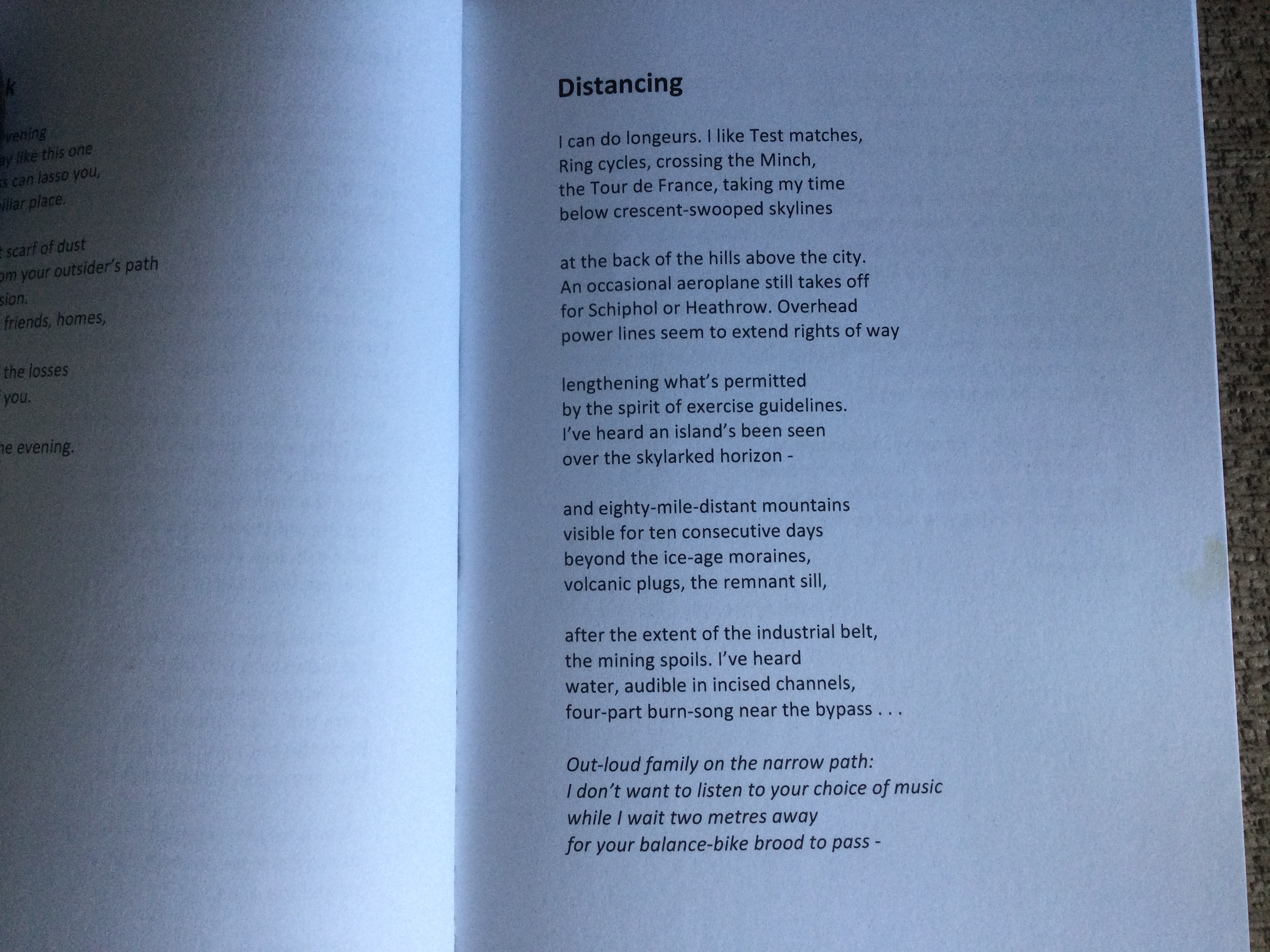
By the end of the month it didn’t rain and we didn’t drive, Arran and the Cairngorms could be sighted from the Pentlands. Ben Lomond had been visible beyond the Lang Whang horizon for ten consecutive days. This was (to knowingly use an overused word) unprecedented in post-industrial times. And it broke my heart – it is how things should be, could be, and yet was only possible because of the pandemic. The occasional aeroplane still took off from Turnhouse, for Amsterdam or Heathrow. I should’ve been flying to Verona at the end of March; instead I was locked down beside the hills of home. And holiday-Italy seemed unimaginable compared to Covid-Italy. For that matter, hills I could see but couldn’t reach on foot – Scald Law, East Cairn – might as well have been in the Alps. As further-afield started to feel less feasible, a kind of mourning set in.

But something differently imaginable began to happen at that that turn of year when things change visibly, daily, when the horse chestnut across the road comes into leaf and we lose sight of Hillend. There was a bit more greening every time I walked through Dreghorn Woods to the hills. I opened yesterday’s quarantined mail with my cup of tea when I got back in. I found a rhythm. I found: various versions of out-and-back, circular, from-the-door exercise. Pacing, grounding, I found lesser-trodden paths. I found a hold, a bield, below the rounded hills.

The clocks went forward. There would be no light-evening walks on Arran, but I could make a virtue of what was around, with more daylight, and good weather, to explore it. But we didn’t know what our capacity was for our own, or our household’s, company, and for staying very local – because many of us had never been tested in this way before. When I mentioned this to a disabled friend, though, she effectively responded, ‘welcome to my world’.

I was, literally and figuratively, in a good place, though very aware of my comparative privilege and good fortune. There were things about pre-Covid life I had been enduring, rather than enjoying, finding subtly but cumulatively stressful when I left this edge of Edinburgh for the city centre: crowds, congestion, pollution, noise. So much of this ‘new normal’ suited better than the old. And yet the news and fake news gave a constant reminder of why we were in this situation.

I found a rhythm. The rhythm was disrupted. I found a rhythm.

In the now emptier Pentland spaces, I developed a fresh appreciation of the valleys, or cleughs, that run south from the back of Capelaw and Allermuir hills, of the crescent swoop of the cleugh-head skylines. With sense of time increasingly distorted by the absence of normal routines and presence of some strange new ones, I became acutely attuned to the shapes, and especially the glacial incisions, of hills I have walked for more than 25 years. Beneath the seasonal, vegetational surface they could hardly – unlike the city centre – have changed much in a month, but they felt different, their glacier-sculpted forms broadened and post-glacial weathering accentuated. I became a sort of semi-feral creature of the place where the Covenanters fled from religious persecution in the seventeenth century. The air was full of skylark song amplified by the stilling, the quiet, the lack of traffic on the bypass. 

We were in a perpetual state of adaptation, to which body and mind responded at different rates – and to which front-line workers of course didn’t have the luxury of time to adjust. Body-clocks were out of kilter. Simple tasks, like unpacking the shopping, were exhausting because we were constantly in a heightened state of alert / vigilance. Routine activities became more demanding, and underlying anxiety about the raison d’etre of all this, the virus, grew. Bare shelves in Tesco brought home just how much food & shelter had become the immediate priority, followed by exercise & fresh air. There could be scant space left home-working, home-schooling, creativity. And sometimes, despite evident slowings-down, it could feel as though there wasn’t enough time. With dyspraxic tendencies that make co-ordination and being methodical hard at the best of times, my best efforts to sanitise everything in the right order felt too haphazard. In a manner more superstitious than scientific, I’d bargain that if I was extra-careful elsewhere, all would be well. 

New ethical dilemmas, a new territoriality, presented themselves in the hills as well as in shops. The question of what constituted reasonable etiquette exacerbated differences between people. Were you prepared to stay local, and not risk taking your contact-train further afield? Even if a farther field was only populated by sheep, it was lambing time, and farmers shouldn’t get sick because people go for a walk to make themselves feel better. In the nearest hills from home, the North Face of the Pentlands, I was as careful as I could be with gate fastenings, the main contamination-hazard, and became adept at using elbows and even walking poles. There was some (online) occupation of moral high ground from those sticking to the lower ground.  Fire risk increased. I tried not to think too far ahead. It became even harder to imagine further ahead.

For the first few weeks I resisted Zoom and the apparent rush to take all of life online. As others embraced remote working, and Hillend and everything beyond it vanished, I was unable to write. Instead I stilled a constant internal chatter by reading others’ poems out loud to the emptying cleughs. Everything I read seemed somehow apposite, prescient of this time.  Then I started to become bombarded by my own words, started a journal, blogged, transcribed exercise itineraries and walk routes, wrote a dozen poems, plus dozens more haiku.  Six weeks in I became acutely aware I was speaking my thoughts, or fragments of them, out loud, as though my unconscious were seeping up from under my breath. Deprived of a normal range of in-person communication, and surrounded by the clichés and metaphors of Covid, it was as though I was finding an – uncomfortable – way to externalise a concentrated interiority. 

Weeks divided into walk-time, that could generate a kind of euphoria, and a more anxious home-time, when I worried about the collateral effects of the pandemic: income, faulty and temporarily unfixable appliances or teeth, the thought of being in a crowd, or on public transport, again. Domestic plans would frequently be postponed by unplanned therapeutic walks. At this time of year I’d normally be ready to travel further. My ambition now was to watch the very-local change over the season. Would I settle into this, contented, or find it too limiting?

April / May: Shelterbelts

Slow-forward a few weeks and mindful of the demands on emergency services, and their contacts, in the event of an accident, I stopped climbing hills. Instead I drifted – it really was unplanned – further up the Water of Leith valley. Swapping heights for lengths, I cycled, walked, and delivered biscuits to a friend in Balerno recovering from a Covid-unrelated medical procedure. 

Then, ritually, obsessively almost, I paced the cracked-mud paths of the shelter-belts and that I’d previously overlooked, bypassed, when heading for the Pentlands: the woodland grids, dating back to the eighteenth century, that right-angled round a dozen fields. They proved very fit for purpose when walking in a colder wind. I found out more about the ‘Cockburn Geometric Wooded Farmland’ from council documents (https://www.sesplan.gov.uk/assets/files/docs/supporting-studies-and-docs/GB_Landscape_Character_Assessment_December_Final.pdf ), and from knowledgeable locals. We’d engage in a sort of shelter-belt dance, improvising the choreography (and protocols) of a distanced pas-de-deux: swerve and greet, greet and swerve (judge and be judged by those who don’t observe at least two-metre distancing). Passing places were pausing places – we needed this pause, us and the planet. 

I loved the idea of a ‘Landscape Character Assessment’. Sloping Wooded Farmland! Geometric Wooded Farmland! Watercourses modified to follow field boundaries!  I became interested in where the ‘character’ of the land changes and opens out, where broadleafs thin along the lanes beyond the village. Through Cockburn, Buteland, Haughhead, Glenbrook, my personal route map from lockdown connected up the places I’d whizz past on my bike a few times a year.  Fieldside, woodside, forestside; farmstead, formal garden. I noticed lots of details for the first time, like the mossy walls. I almost didn’t mind not being able to get further afield. 

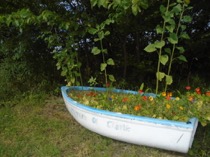
A lodge called ‘The Boathouse’ inland at Bankhead, and a memorial garden (for Charlie Cope of Goodtrees, who died in April), planted in an abandoned boat by local children, aptly symbolised the world-turned-upside-down of 2020.  Hope that it would right itself was expressed in the lovely lane and gate-art made by young people.

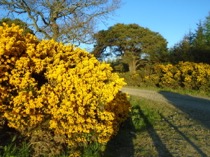
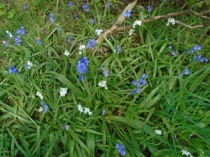
There was hope too in the changing verge flora: spring daffodils, primroses, garlic and bluebells, then gorse, so much glorious gorse. Later, iris and bog cotton at Red Moss. Orange-tip butterflies abounded, sensitised to the clean air and quiet. Laburnum, rhododendron and honeysuckle wilded where big house grounds met the lane. Their beech hedges re-greened. Limes and oaks leaved at different rates. Warm air released the aroma of bluebell, gorse, timber, pine. The upper Water of Leith, normally silenced by traffic from the A70, was audible in its incised channel below the gorse-bordered straight from Whelpside. There was four-part burnsong, with curlew solo, at Haughhead. 

(See also https://www.edinburgh.gov.uk/downloads/file/23010/balerno-villas)

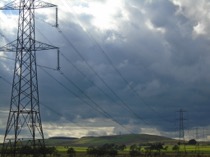
Overhead, power-lines drew an elevated hypotenuse across the axes of the shelterbelts. Above the green belt and the Central Belt, cables charted a diagonal course to / from the capital. Punctuating rights of way, pylons plotted a line for the hills. Beyond, visibility extended, hopefully, out of the parameters of lockdown. Below the National Grid, desire paths graphed the woods. 

June: headwaters, headspace and an imaginary island

I ventured onto the ‘Leith Plateau Farmland’, the countryside beyond Balerno. I imagined this area as a small, fertile island bounded by the Pentland horizon, the visible circumference from Capelaw, Black Hill and the Cairns, round to Auchinoon and Corston Hills on the Lang Whang, down to Kaimes and Ravelrig. Centred here, around Buteland, I felt these skylines wrap around me, like an amulet: curative, protective. How much of this feeling of islandness, of peace, calm, was due to the gorse, I wondered; to the meadows, cnocs, and single dwellings?  The fineweather blue firth to the northeast made seacliffs of Dalmahoy and Kaimes. More wildflowers – yellow, purple, grass-heads, orchids – bloomed into a passable machair. This was my sanctuary: a substitute Rousay, a replacement Barra, a bield to experience the quiet of a Uist evening, that I  sought out several times a week. 

I’d continue from the Buteland road-end, through forest on one hand, past fields with growing lambs and calves, red-ploughed earth or ripening crops on the other. Where the lanes and shelter-belt paths right-angled round the fields, the track here described a dusty-earthed parabola: up to the moor, down to the ruins at Buteland Hill. Then it opened out above the buzzard-patrolled valley-bottom scraped flat by the glacial young Leith.  On the way back I could cycle through several seasons: wind and rain on the moor, gorse-scent releasing sun in the forest. 

My 2019 diary recorded where I was this time last year: often down in the Borders. Recompensed by local magic, I missed and didn’t miss these trips. On the day that 300 covenanters met at the Cauldstane Slap, I walked up to the border of the Borders again for the first time. 

Early and late exercise at midsummer fits around work and helps to offset seasonal insomnia. The lethargy of lockdown made it harder to get out of bed this year, but when I did make the effort I was amply rewarded. The imaginary island looked especially Hebridean in a haary dawn or dusk. In the evening and early morning it became clearer that we’re the guest species here. There might be hares in the first field after the road-end; the buzzard of Buteland Hill shoulder-swooped humans daring to reach Leithhead. 

It is an expanding experience to wait out the simmerdim of a clear June night, to determine when it  starts to get lighter, and hear the dawn chorus crescendo from silence. To see the sun come over the horizon at Buteland Farm, rise over the Water of Leith channel at Haughhead, risen above Whelpside. To turn to see the lit land brightening behind on the way home for breakfast.

Was it still an island? Irises were out, and so was more traffic. People came back, and with them new ethical and environmental dilemmas about parking and littering. Would the magic have served its purpose (and vanish) as the carparks re-filled and gorse faded? Dawn brought back the islandness, almost of-course-it-did, but the air, land-settled, also felt and smelled autumnal.

Like strict poetic forms such as the sonnet, lockdown could be an enabling constraint. I was glad when I could actually drive to the road-end on my ‘island’ and walk further upstream from it, pleased to have new horizons & visions again. I started to imagine having the confidence to do more, but was wary of going much further too quickly. I even wondered if my bodily and psychological readiness to emerge followed government permission to travel further. We were collectively exhausted from being in a prolonged fight-or-flight state: the pandemic had also taken its toll on those lucky enough to stay well and keep their jobs. I posted on Facebook about having a sort of simultaneous claustrophobia and agoraphobia and over 40 people agreed.

Annoyingly, if symbolically, when I tried to go away overnight, just into the Borders, my old car refused to accelerate on the open road, and had to be towed back. For a few days I just wanted to return to on-foot local exercise, to be held in hills that held me at the start of the pandemic. I took an evening walk up Howden Glen – now with a pink foxglove, rather than yellow gorse, border – and along the cleugh-head. Good to be back, amidst

the glacial channels / datytme slowing / the accelerating year

Afterword: Summing up the Pandemic Perspectives thread

Things changed visibly, daily again, as they did at the start of lockdown back in March. Hillend came back into view once more, as the leaves of 2020 fell from the horse-chestnut opposite. 

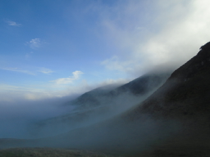
During a November week of still air and stunning cloud inversions, the Pentland cleughs filled with mist. Partially recognisable hilltops emerged from a sky-sea, the mingled elements creating an elevated shoreline liminality. Hard not to try to find metaphors in this, as we faced an uncertain winter and new, changeable restrictions, and took in the hopeful news:  progress with a vaccine; Joe Biden as the US President elect and Kamala Harris the first woman and person of colour to be VP elect. 

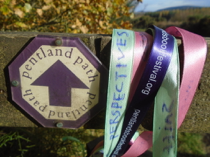
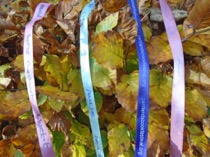
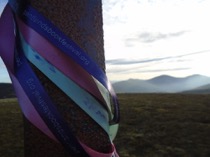
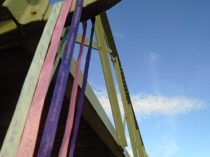
Back home, PBF posters and ribbons festoon local landmarks. To mark the end of this project, I placed and photographed ribbons in (and then removed them from) locations I’d written about for this thread. 

It’s been a privilege to read, see and assemble a rich array of responses: words on memory, in-the-moment presence, and virtual reality; visual representations – drawings, paintings, photographs, maps – of our place at this time. Here’s to the magic of language and landscape; here’s to the future.

Covid-era Poems by the Thread leader

I have poems about local lockdown published here: http://pendemic.ie/three-poems-by-helen-boden/ and here. I am also a contributor to Beyond the Storm – poems from the Covid-19 era – proceeds from sales go to NHS charities: https://www.writeoutloud.net/public/bookshop.php https://www.writeoutloud.net/public/blogentry.php?blogentryid=105446

Wordsworth 1770-2020 and 1984-2020

I’m not a huge fan of  anniversaries and commemorations (though I have recently contributed to an anthology for the 700th anniversary of the Declaration of Arbroath, and two years ago it was important for me to mark the centenary of Wilfred Owen’s stay at Craiglockhart, just down the road from here). 7 April 2020 was the 250th birthday of the pre-20thC poet who has probably influenced me more than any other.

IMG_3027

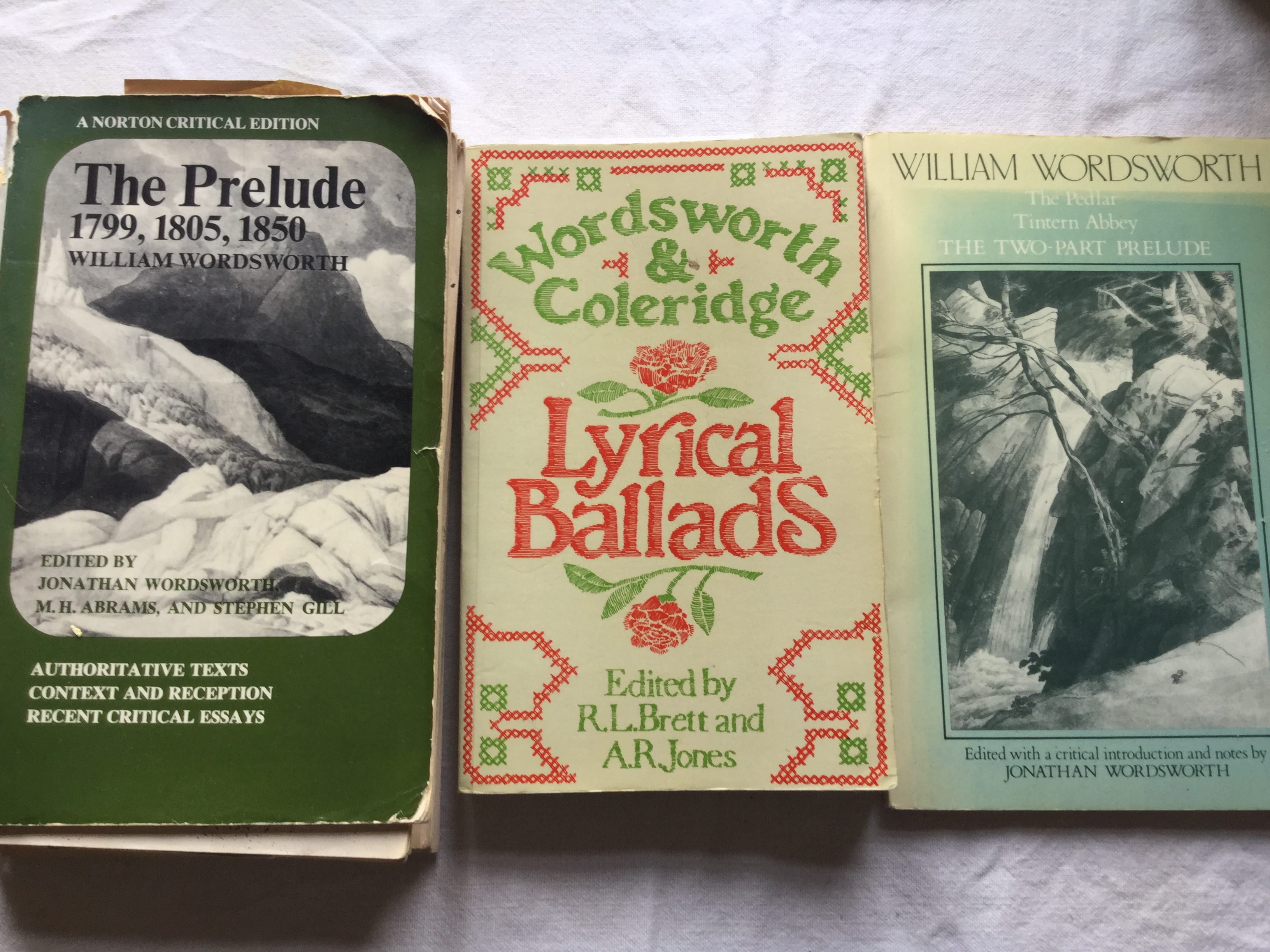
I had a back operation when I was nineteen, after my first year at Newcastle University. Recovering a couple of days later I started on Wordsworth’s verse autobiography, The Prelude, from the 2nd year reading list (such girlyswottiness then was to contribute to other health problems later on, and I’d actually attempted to read Dryden the day before, but never mind). It was one of those transformative moments, an epiphany, or what  Wordsworth would’ve called  a ‘spot of time’ – even though for him, as for me normally, these tended to happen in quiet, outdoors, upland places. I went on to write a PhD on Wordsworth, Autobiography and 18th-century Psychology, and then to study Dorothy and Mary Wordsworth.

My thesis was supervised by the late Robert Woof, former director of The Wordsworth Trust, and I was lucky enough to be able to study the manuscripts of The Prelude, and later the Scottish and Continental travel journals of Dorothy and Mary Wordsworth, in the Wordsworth Library, Grasmere.  The re-opening of Dove Cottage (where Wordswoth lived from 1799-1808, the home with which he is most readily associated), and the anniversary celebrations scheduled for 7 April in Grasmere are currently postponed due to the Corona virus pandemic.

6B444D78-5FE2-4F8C-832F-721527AF7E7E

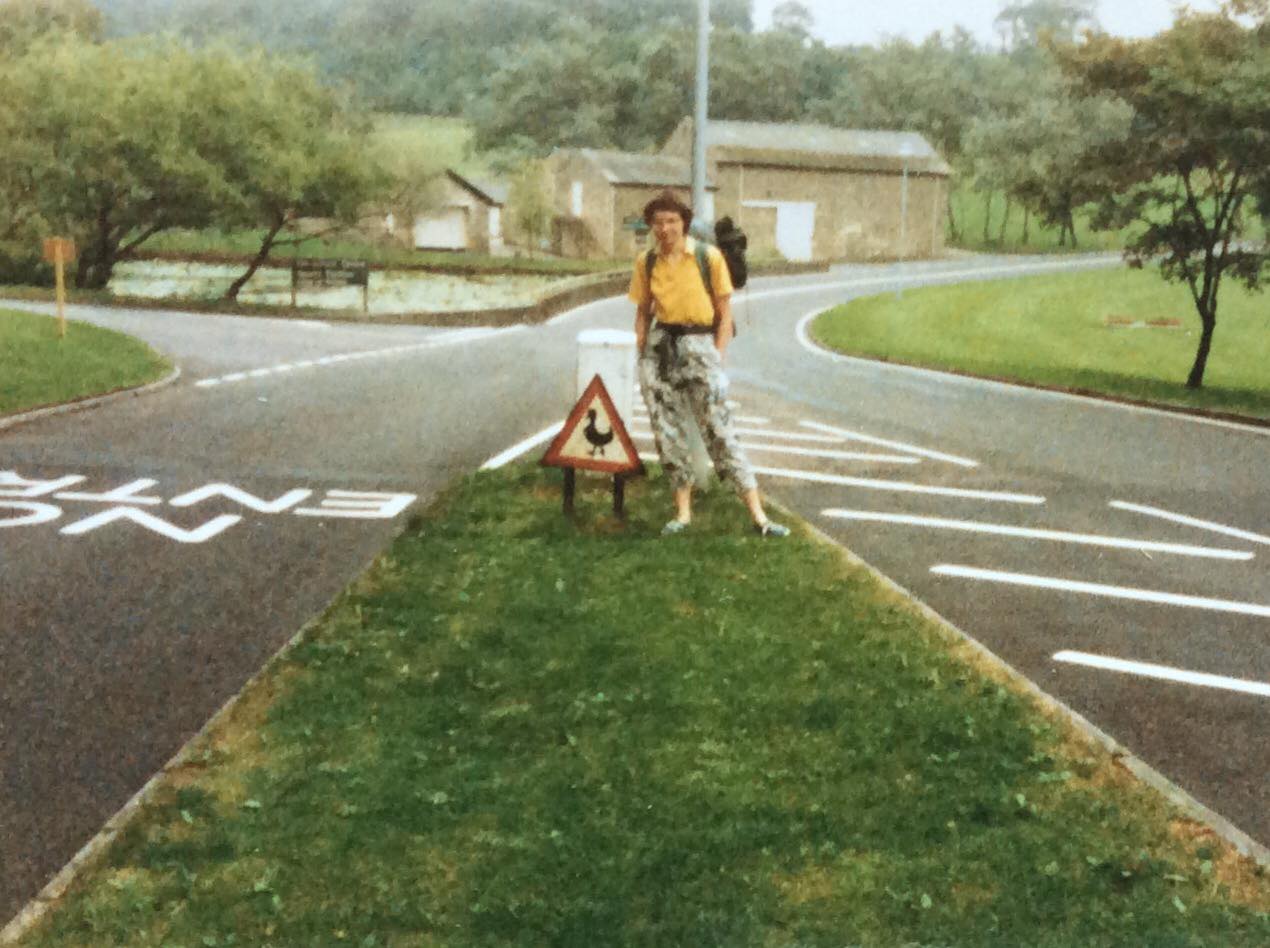
En route to Romanticism & Revolution conference, Lancaster University, ?1989, photo by John Goodridge

Three and a half decades on from a hospital bed in Huddersfield, it’s easy for me to understand the effect that discovering  Wordsworth had on a child of Northern England who had been scholarly and feral in equal measures. I can see how well the Romantic poet vocalised and lineated  so much of her own experience – of the rural and seasonal, of the workings of memory and of attempts to record, represent and draw conclusions from that experience (though the specifics may have altered: she didn’t steal boats or rob nests, and she wasn’t orphaned at an early age). She was, too, lacking in role models from the women writers who were shortly to become more widely taught. 

I’d read some of the Brontes – not a great deal was made of their local significance – and Jane Austen at school, but had been rather more excited by my discovery of the WW1 poets and the virtuosic style of Gerard Manley Hopkins.  Then I read Woolf’s  To The Lighthouse and was stunned by what was possible in prose (and I’ve since grown to hugely respect Austen’s syntax and to be more impressed by the Bronte novels’ connectedness to a locality),  but I still hadn’t read any women poets at that stage. My first year at uni featured a lot of drama written by men; and Anglo-Saxon, also to become a great love and influence.

My own early attempts creative writing, after I moved to Scotland in 1995, were too much influenced by extensive reading of Wordsworth and Coleridge – far too much verbal solitary wandering above seas of mist. In the last couple of decades I haven’t read much from the Romantic period at all. Wordsworth exhorted readers to let nature be their teacher, but still spoke with the authority of the dominant-species lyric ‘I’. Thanks to the work of Jonathan Bate (especially Romantic Ecology) and others who have rehabilitated him as an eco-poet  he is proving to be an important poet again in the time of climate emergency. He may be an important poet for lockdown. Certainly his work on the healing powers of nature and our relationship to our thoughts looks prescient of  21stC therapeutic techniques including Mindfulness and CBT. For the past week he’s the poet I’ve been reading on my permitted daily exercise in the hills I’m lucky enough to call home (with sincere apologies to RLS), walking to the beat of  that most measured of blank verse; reading aloud, facing southwest towards a locked-down Lake District, those unsurpassed recollections of childhood adventures and fears.

Minor Road Trip

I.m. Jeffrey Boden, 28 April 1927 – 18 August 2008

‘We can walk between two places and in so doing establish a link between them, bring them into a warmth of contact’, Thomas A Clark, In Praise of Walking


The Scenic Route

I’ve just returned to Edinburgh from a minor road trip, or minor-road trip, or narrow road trip to the North of England. Or, perhaps, a Sentimental Journey to places from my past. I started driving again a couple of years ago, aware that there are already too many cars on roads not designed for them in such great numbers, on a planet not at all designed for them – having passed my test at the age of 18, but never built up much practice or experience. My friend Gill, who knew that I wanted to be able to take myself to places off the bus route, and no longer carry all my luggage / in bad weather, offered me the use of her late mother’s Micra. I wasn’t certain I could re-acquire what seemed to be skills more complex than those needed for anything else I do.  With the help of several friends, most of whom were professional educators of some description – it sure is a transferable skill – my extreme nervousness dissipated and I started to gain confidence. Last year I was able to drive down to the Borders for work and walks and short breaks, and contemplate some day moving out of the city. I took over ownership of the car. On a couple of occasions I crossed briefly over the border into England. I became very interested in the idea of  The Border itself – which will be the subject of another post, and some poems.

This August I planned my first proper self-drive holiday, to Yorkshire, where I grew up. Three years ago another good friend, former Newcastle flat-mate Lesley, told me that her sister, who now lived in Malhamdale, wanted a cat-sitter in the summer holidays. I’d been looking for ways to spend more time in Yorkshire, where I no longer have close family,  on a budget, so this was a perfect opportunity. I travelled down by public transport in 2016 – blog post here, with better weather! – and 2017 and had an amazing  time exploring again the limestone scenery that was the destination of regular childhood trips from the (gritstone) edge of the West Riding Pennines where we lived.

DSC00419

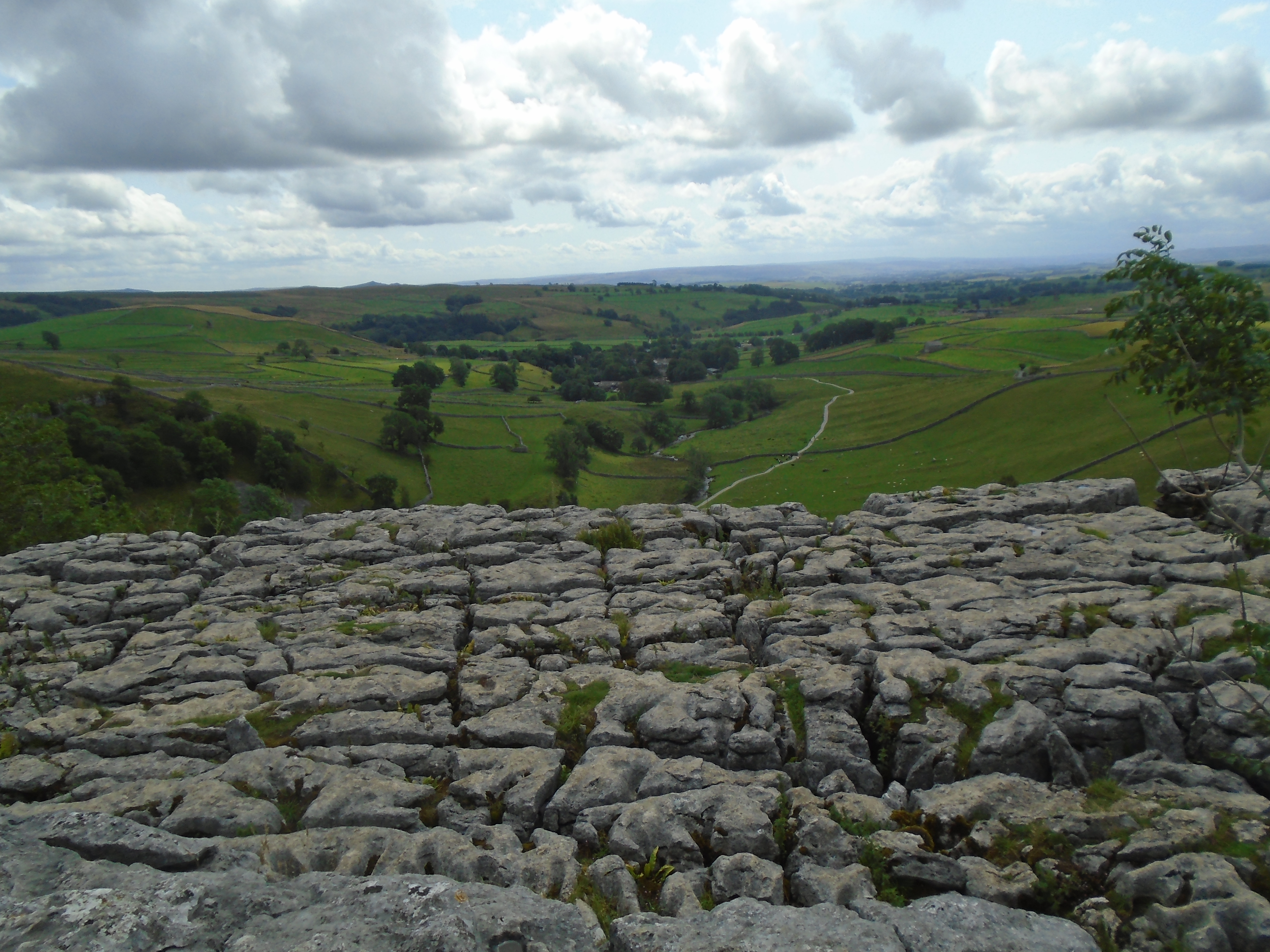
From Limestone Pavement to Malhamdale


So far I still don’t drive on motorways and the larger trunk roads. You can, however, get from Edinburgh to the north of England without the A1 or M6 if you allow enough time. The plan was to use the A7 and A68 through the Borders for the first and last stages, then get off the big roads, and wander down to Malhamdale and back via places I haven’t seen since I was a child in the 70s (Kielder), since I was a student in Newcastle in the 80s (Hadrian’s Wall, the North Pennines), since I met up with elderly parents for short breaks in the first decade – their last – of this century (Kirkby Stephen, Ribblehead, Swaledale, Arkengarthdale). Plus some regular favourites, familiar from youth and  the more recent cat-sitting trips (Gordale Scar, Malham Tarn), and some completely new locations.


Of course some familiar places have changed quite a lot – popular sites now necessarily have more car parks and visitor centres. As when abroad and in places like Orkney, I prefer the charm of  visiting the lesser-visited. (And yes, as with the actual driving, I am aware of the irony if not hypocrisy of so doing. But I do contribute to the local economy, buying  home-made and home-cooked, or items from which the profit goes back into local organisations, whenever I can).

The backroads and byways were subject to several closures and diversions, and not just where the well-publicised recent Yorkshire floods had occurred. Journeys were also repeatedly lengthened due to driver error. I generally have a good sense of direction, and can judge distances well when walking and cycling – or as passenger-seat map reader. Driving alone without satnav, however, I took wrong turnings with comic regularity – for example when avoiding bigger roads after crossing the North Pennines and descending to the Eden Valley from Hartside. (So many bikers! So many seats commemorating bikers’ deaths! So many memories of  trips to the Lake District from Newcastle!)

IMG_2675

Hartside, Cumbria: edge of North Pennines / Eden Valley, looking West

Below the Pennines between Melmerby and Kirkby Stephen, I drove through many pretty red sandstone villages with big well-tended greens and inviting pubs – to which I declined the invitation and persisted on my quite tiring way. I did need to cross the A66 trunk road at some point, and just before this I found myself driving through a strange, deserted MoD landscape that wasn’t even shown on my road-map. I started to wonder if I was imagining it even while I was there.

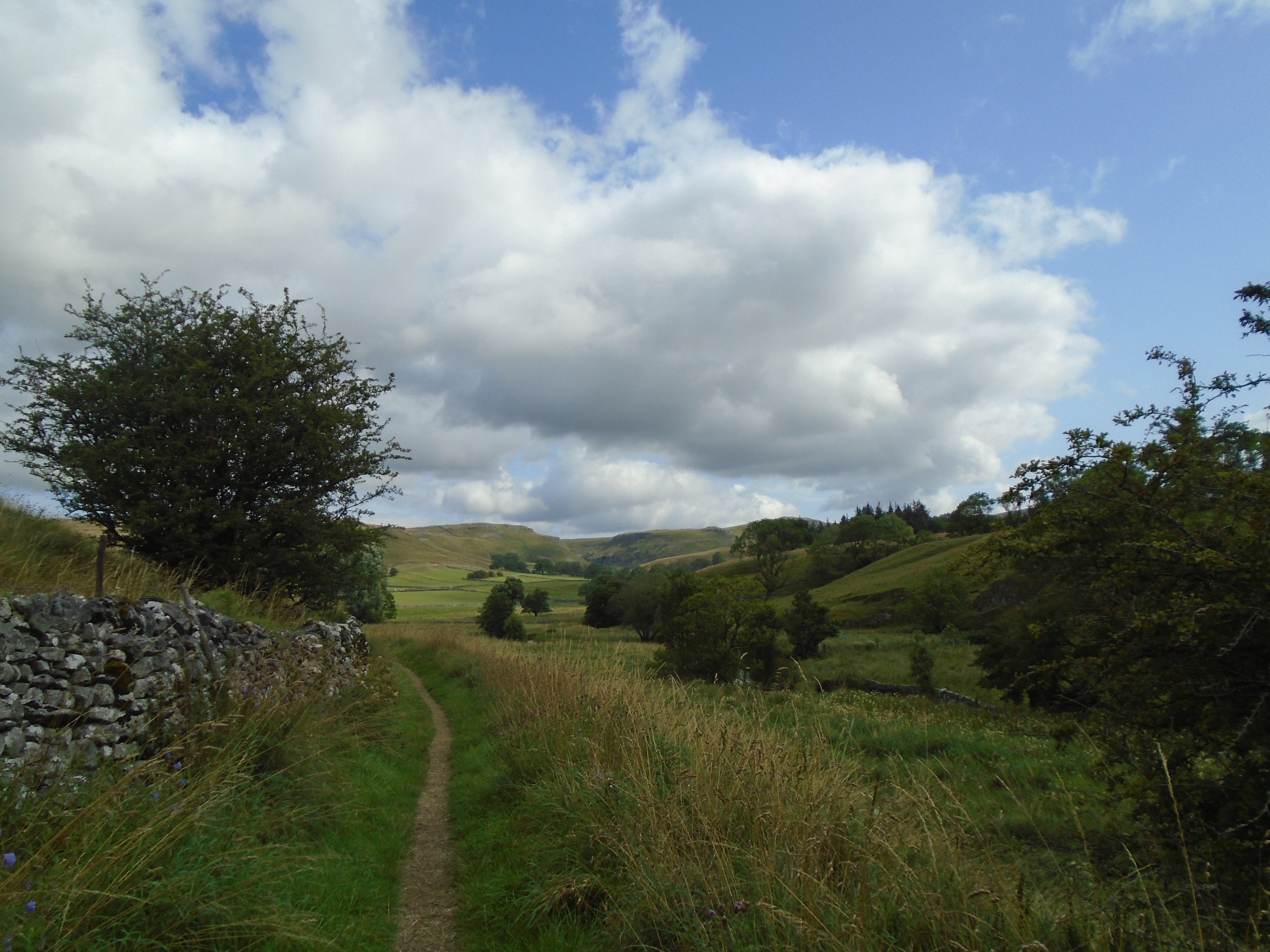
The core of the trip was my cat-sitting stay in Airton, Malhamdale. The village is just south of the Mid Craven Fault’s limestone showstoppers Malham Cove and Gordale Scar, connected to them on a section of the Pennine Way by a lovely hour’s walk upstream beside the young River Aire (strong enough though to merit its second mill en route to Skipton and Leeds by the time it reaches Airton, just  two miles south of its source). Walking these riverbank paths to Malham has become established as a contemplative ritual, of unwinding and arriving and then preparing to depart, over my three recent visits.

DSC00415

Approaching Airehead from Scalegill; Gordale ahead


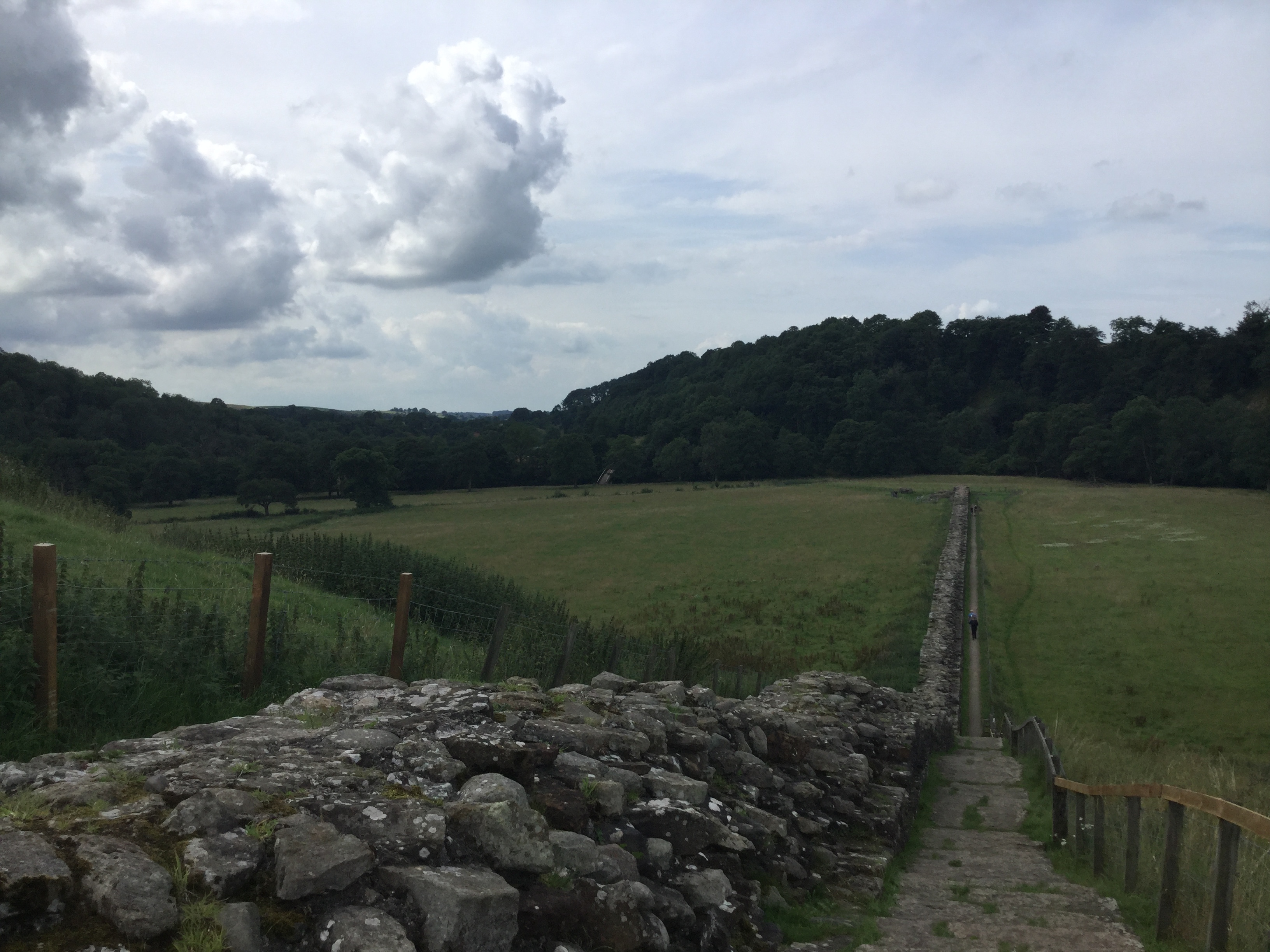
The destination, the furthest point south, the cat sitting, were important – but so were the stages en route, and the route itself, including all the ‘wrong’ turns,  and all the country lanes which driving provided the opportunity to explore. I travelled widdershins, south from Newcastleton, after an evening excursion to Kielder and stopover in Liddesdale, and walked a short stretch of the Roman wall near Gilsland. On the return I planned a more easterly journey through Northumberland to Jedburgh.

IMG_2670

Hadrian’s Wall near Gilsland


Airbnb makes booking stopovers easier and more enjoyable than it used to be, though I’m accustomed to the high quality and comparatively low-price, high-availability of the Scottish Borders: finding suitable places on the right dates in the Yorkshire Dales National Park was bit harder. So I stayed in the rather lovely Eden Valley village of  Crosby Garrett on the way down. A beck runs through it, with (slow) lanes on either bank, and there’s a viaduct on the Settle-Carlisle line at the head of the village. A farm track passes under this and up onto the hillside, where on a humid Saturday evening I started to orient myself in relation to familiar North Pennine and Dales landmarks (Cross Fell, Ingleborough).

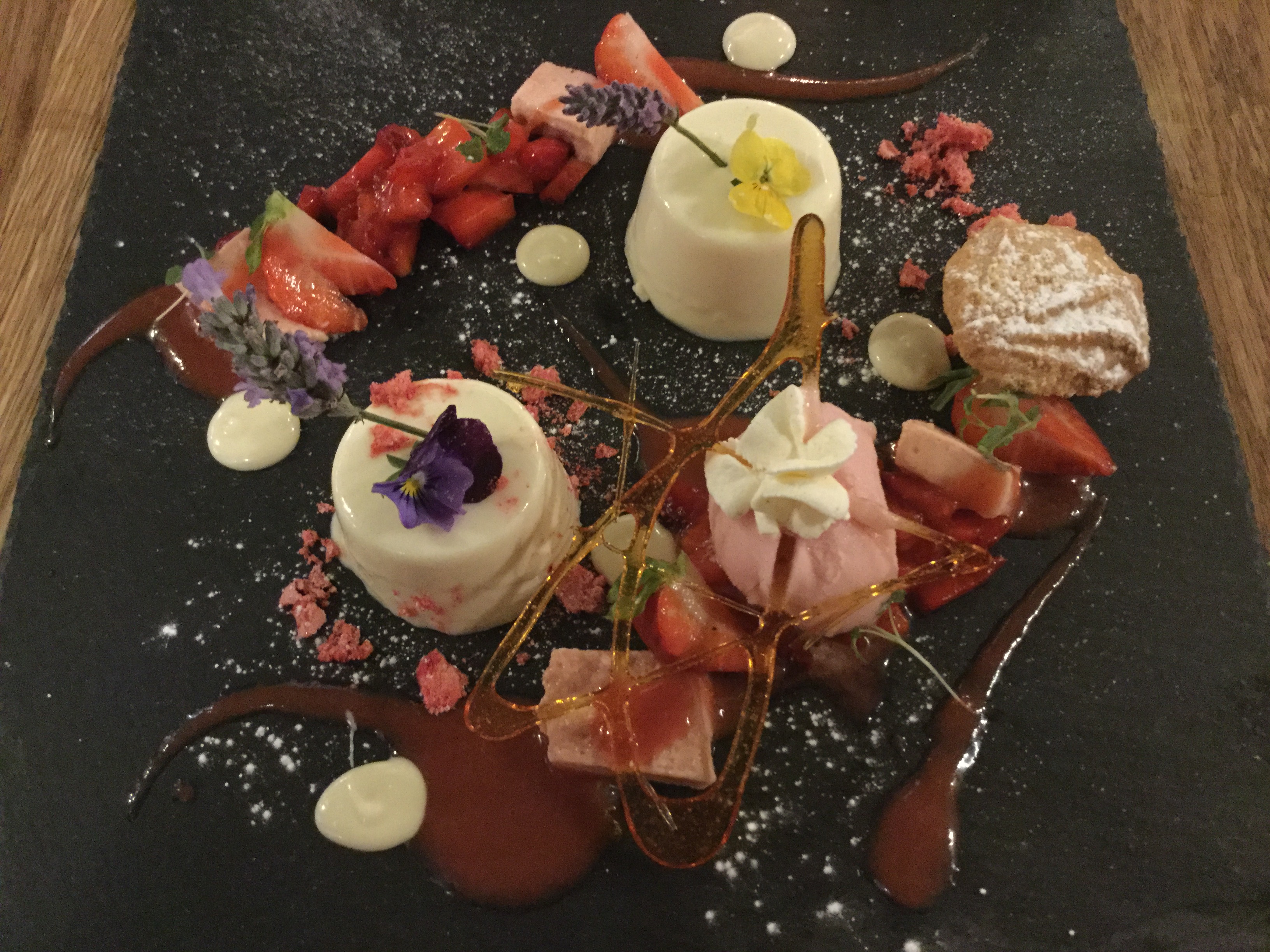
The two consecutive nights that I wanted in family favourite Swaledale on the start of the journey back north weren’t available either, so I stayed for one in the next dale south, Wensleydale, where my host persuaded me to try the early bird menu at the local Michelin / gastropub along the road, rather than the local pub grub with real ale round the corner that I’d have been happy with. Never been anywhere that serves an amuse-bouche when travelling alone before, but it was all so lovely that I also had pudding (lavender – apparently now A Thing in Yorks – pannacotta with strawberries several ways) after the (relatively) cheap two-course menu.  I am not someone who photographs my food, in restaurants or at home, but:

IMG_2717


Honesty, Tea & Cakes

It was an appropriate celebration of having come so far, but no more enjoyable than seeing a Cakes for Sale sign at a farmhouse gate when driving over to Ribblehead on the way down to Airton. I’d been hoping for some Eggs for Sale, common in rural areas, but this would do very well too.

In two places I encountered the phenomenon of the ‘honesty tea shop’. The first was in the hamlet of Halton Gill at the head of Littondale, after a steep  descent of Penyghent Ghyll (named for being at the foot of the most shapely of Yorkshire’s Three Peaks). I gather this is a favourite cyclists’ refreshment stop. I’d just driven over from Malham Tarn, on my first leg of the return north, and was ready for re-fuelling.


It’s wonderful motoring country. I expected to find the gradients and corners and summertime congestion difficult compared to southern Scotland, but it wasn’t very busy and I took to driving through this terrain as readily as I had, decades ago, to walking. But this is also God’s own cycling country: it hosted the grand départ of the 2013 Tour de France, and next month will host the UCI World Championships. My dad cycled these roads before he drove them, sometimes for 200 miles a day. He’d shoulder his bike and walk over the peaks, too.

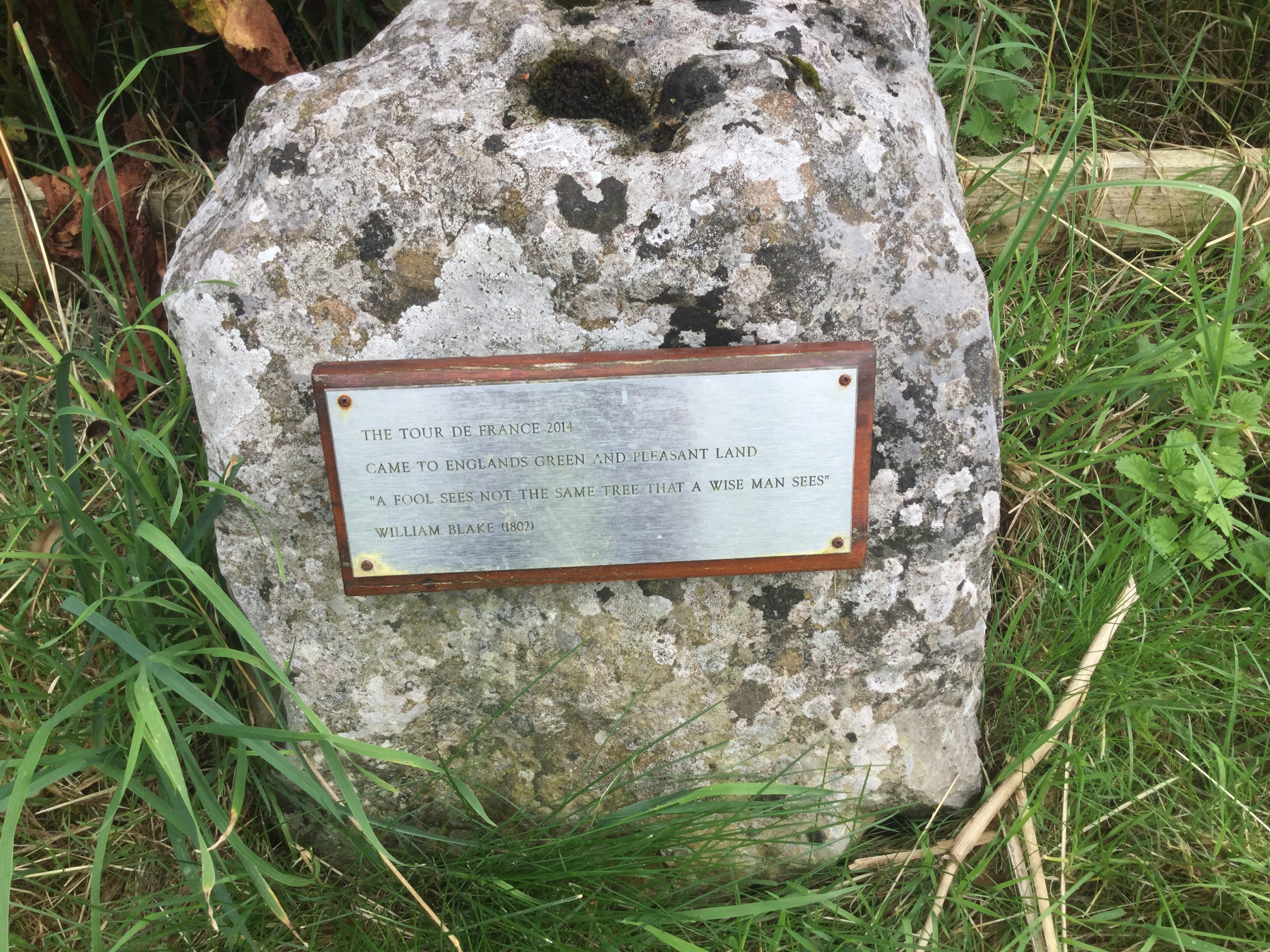
Just below Katie’s Cuppas is a rowan tree, and a plaque on a stone next to it. It commemorates the 2014 TdF passage by quoting Blake, supplementing the ‘green and pleasant land’ reference with ‘the fool sees not the same tree that the wise man sees’ from The Marriage of Heaven and Hell – hard now not to invest this with Brexit-era significance (though most of Yorkshire voted Leave, something incomprehensible to most in Scotland).

The second honesty tea stop was in the Old School Muker Gallery, one of several repurposed former education buildings in Swaledale, and new since my last visit. It was nearly closing time; the afternoon had somehow gone by while I walked around lovely Keld at the head of the dale, in my own footsteps and those of my late parents, then drove down to Muker and walked back to the River Swale over the paving slabs on the famous wild flower meadows (now cut for hay). I’d already had my tea, and my cake, at the Keld farmhouse that serves them, but I found time – on a day spent productively losing it (the Keld area seems to have that reputation, of displacing time in the way that a sea voyage can) – to buy some presents. An agitated woman appeared to be pushing in behind me at the till but it transpired she was agitated for good reason: the passenger window of her car, parked along the verge near mine, had been smashed and valuables grabbed from the interior while she and her family were enjoying refreshments in the honesty tea room. With no signal in the dale, she needed to use the shop’s WiFi and landline to contact the AA and police. Thieves operate in this area / Don’t leave your valuables in sight notices are, alas, common, alongside more appealing way-markers, useful interpretive panels, and Slow Down for Red Squirrels, Do Not Interfere with the Industrial Archeology, or Eggs for Sale signs.


Agnus Dei

Stopping for the priority movement of sheep and cattle on the road can cause frustration if getting from A to B quite quickly happens to be your priority.  Luckily it wasn’t mine and I was happy to pause for the flock moments after crossing the county boundary into Yorkshire.

IMG_2681

Welcome to Yorkshire


Later at Malham Tarn, my car was engulfed by a positively Biblical, seemingly endless, ovine flood. Biblical-pastoral imagery is inescapable, and attractive, in a place so long predicated on sheep farming, and where Christian religion can still be deeply entrenched in valleys historically rooted in non-conformism – despite depopulation and the problematic increase of holiday homes. Nonetheless on my last night in the Dales I was quite surprised to hear that my Gunnerisde host’s neighbour disapproved of her hanging out washing on Sundays. Reading leaflets at Keld Resource Centre, housed in the former village Literary Institute, I was less surprised to find a softening of Old Testament-type values in favour of emphasis on compassion, mindfulness and environmental awareness (not incompatible with the core Christian message, of course, but often submerged under a more oppressive, controlling, discourse that has been internalised over generations, and is still sometimes evident in people’s speech and behaviour).

Tiny, tranquil Keld, a ‘thin place’, according to more Resource Centre interpretative borrowing from Celtic Christianity or pre-Christianity, has a high proportion of public buildings to private dwellings. The windows of the unadorned, atmospheric United Reformed Church look out on the Dale in the way the Telford kirks do on the Scottish Highlands and Islands. Several Anglican churches in the Dales have bespoke stained glass depicting local scenes, like the beautiful example at Muker.


Quite a number of people seem to have claimed Keld as one of their favourite places on earth, and I’d add my name to them. It featured in a Scotsman article in 2013 which draws attention one of the village’s most famous twentieth-century admirers, North Penniner W H Auden. In ‘Streams‘, part of the 1953 sequence Bucolics,  Auden describes, in full Wordsworthian voice,  dozing beside one of  the waterfalls at Keld, ‘where off its fell-side helter-skelter, Kisdon Beck / Jumps into Swale with a boyish shouting’, and having a surreal dream that coloured the rest of his day: ‘fortunate seemed that  / Day because of my dream and enlightened’.

DSC00490


Centuries of Transport and Industry

Gunnerside, Muker, Thwaite and Keld: names with the sonority of a liturgical chant; they certainly have the power to regulate and improve my mood. But as well as being a magical place with an undoubted aura of spirituality, this is also a former industrial landscape. Abundant remnants of the lead mining that took place in the eighteenth and nineteenth centuries are assimilating with natural screes in places like Gunnerside Ghyll. Together with  place-names like Surrender (as in give up your land to the mine owner)*, they add considerable interest to today’s walks. Like in Orkney, the presence of the past is everywhere: evidence of changing uses of the land – and, with a little imagination, especially in bad weather, of the hard lives of those who worked it.

* The Surrender Mining Company is one of several that operated commercially  in Swaledale in the eighteenth century. ‘Surrender’ is also a legal term internationally associated with the handing over of mining rights and land.


In addition to numerous drove roads – the lovely ancient walled lanes, sometimes incorporated as part of modern long-distance walking paths – and the tracks that have become metalled roads, the Settle-Carlisle railway line famously travels up and down the Dales. For about a decade from the mid-90s I’d meet my parents, at Ribblehead Station, for short breaks and celebrations in Swaledale and Arkengarthdale –  including their 40th wedding anniversary and my mum’s 80th birthday. When they set off back to West Yorkshire I’d go for a walk around the iconic viaduct, sit on the limestone scars, have a poke around the sink holes where  water seeps underground through the soluble limestone (when do ‘sink holes’ become ‘shake holes’ as you travel northwards? When do Swaledale sheep become Cheviots?) before boarding a train back to Scotland.

Ribblehead Viaduct was built, at considerable human cost, by navvies who lived in the temporary accommodation constructed for / by them on Blea Moor. It now has surfaced parking spaces and access paths and little evidence of the ‘shanty towns’ save a memorial plaque. I stopped off  to pay homage en route between the Yorkshire border at Aisgill on the upper reaches of  the River Eden, and Airton. As ever the presence of a fair number of bikers and cavers and families queueing at the ice-cream van made little impact against  the scale of the built and natural environment.


Eden Regained

Talking of Blake, and faith, the well-planned trip turned out to have some unplanned symmetries and highly pleasing synchronicities. My final stopover was, like the first, to be in the Cumbrian district of Eden according to local government demarcation – but somewhere that felt less like a garden than Crosby Garrett, in one of those high moor villages with which I feel great affinity, near the source of the South Tyne.

I left Swaledale by making the low-gear ascent onto Reeth High Moor, then down steeply to Surrender Bridge, up again, across more open moor, down again,  through the original  All Creatures Great and Small ford, back steeply up onto Reeth High Moor – where I  pulled up and looked down over Arkengarthdale. I’d stayed in this most northerly dale with my late parents on maybe half a dozen occasions in the years before they became too frail. Then I quickly crossed the dale bottom, over the Arkle Beck.  Steeply up once more, this time over The Stang and into Country Durham – stopping again at the top to look back, and forward, as I had repeatedly, ritually, at other summits, high points of passes, and county boundaries, over the course of the trip. If I didn’t know, and in a few months’ time, would I be able to tell which of my photos look forward into the dale, and which back at it?


So I returned to the North Pennines on my way back to the Border via Haltwhistle. I’d intended to head in a north-easterly direction, directly to Haydon Bridge on the final day, but I – who am supposed to Know the North – took a wrong turning, somehow confusing the two place-names beginning with H . . . my mistake at least gave me the opportunity to drive – straight-  along the rollercoaster Roman road parallel to, sometimes on the course of, Hadrian’s Wall. Thence to  Bellingham, where I bizarrely both cut a finger quite deeply on the door of an old railway carriage repurposed as a cafe, and got stung on the back by a wasp.

This was a road trip, enabled by having four wheels for the first time in my 54 years, but I am foremost a walker, a pedestrian (and secondarily a cyclist). The Pennine Way and my path had appropriately, it felt, intersected at several points. It ran adjacent to where I was staying both in Airton, and finally at Garrigill, just south of  the north Pennine crossroad-town Alston. I encountered the Pennine Way signage, and walked a few paces, or a few miles, along it, in both of these places and wherever else we met: at Malham Tarn, the foot of Penyghent, Keld and Muker, Dufton, by the Roman wall and the A68.

DSC00534


Weaving in and out of North Yorkshire, Cumbria, County Durham and Northumberland,  I relished too the modulation of accents from the north, south, east and west of the region – and was bemused that mine, which I take to be a fairly readily intelligible Northern English, could not always be easily understood: on several occasions I did not get the ice cream, or the beer, that I thought I’d ordered. But I did get to savour instead some pleasant surprises for the palate, as well as for the ear and other senses. A twenty-first century sentimental journey, aye; a grand tour of sorts, yes.

These are places that Auden loved to re-visit; they are places where my West Riding baker dad drove, cycled and walked. He introduced me to them when I was young and I’ve loved them all my life, but as I got older we didn’t have much else in common. We argued, as is common, when he supervised my teenage driving practice; otherwise I ignored him. I don’t think he ever really understood what it was I did after I left home. When my mum died in 2007 he tried to persuade me to take up driving again, and added me to his motor insurance. I discovered when I saw the documents after he died eleven months later, eleven years ago today, that he didn’t know what my title or my job title were. But there were places where we were able to connect in his later years, especially the Yorkshire Sculpture Park, near where they lived; and Swaledale. I inherited his car and wanted to keep it on and bring it up to Scotland, but (having no choice but to deal with the house) driving still felt too much to take on at that point; for this and other factors connected with the estate I sold it. I like to think that in making this commemorative trip, he would have understood my reasons for doing so, and my experience of place, as much as anyone; and that in driving safely on the roads he loved for twelve days of August (ok, the car sustained minor damage to number plate and wheel hubs when I was trying to park when tired, but I’m not the perfectionist he was), I would have made him a little bit proud.

mum and dad

Walking with Wilfred Owen

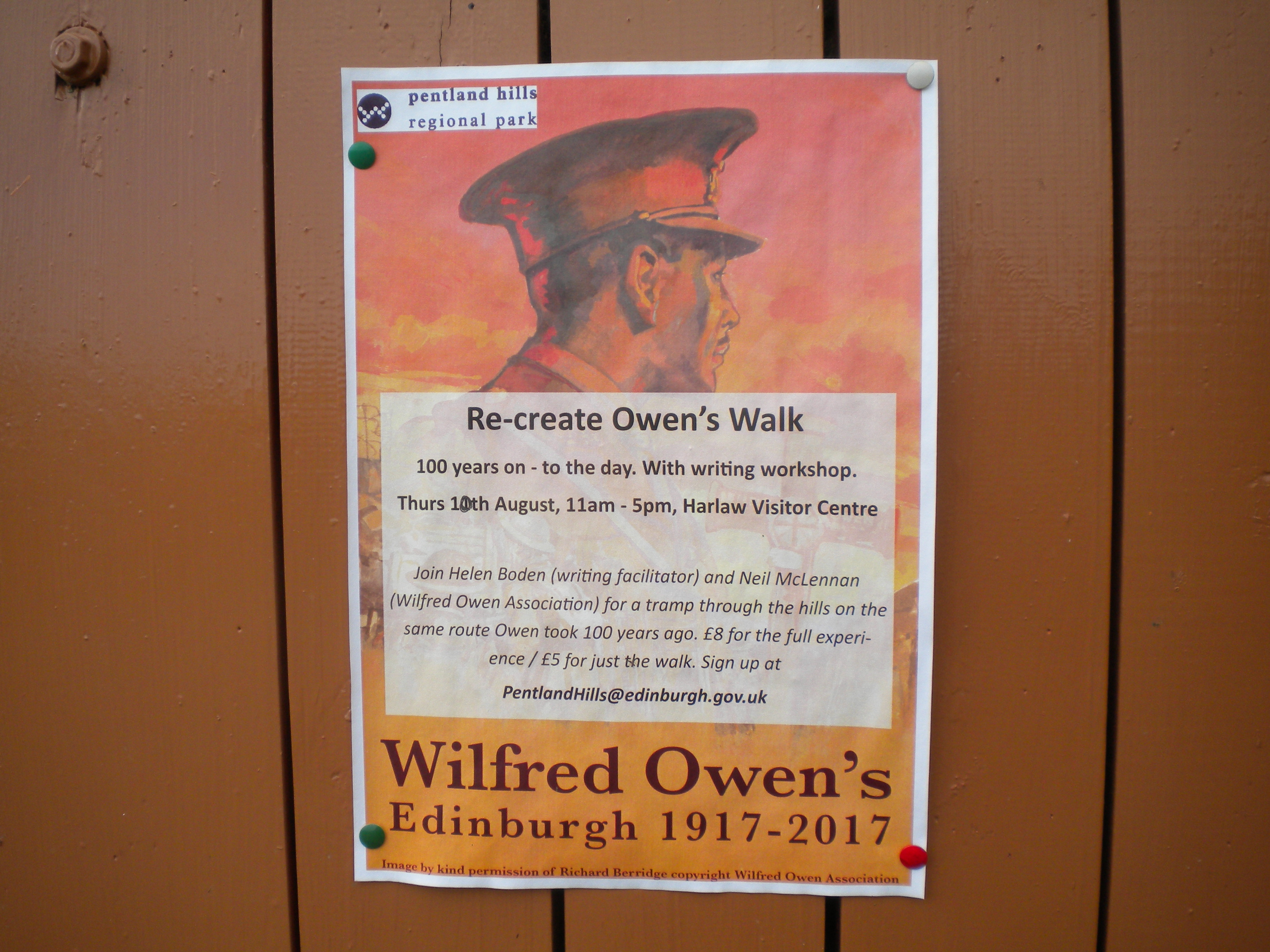
10 August 1917: a dozen walkers from the Craiglockhart War Hospital Field Club, including Wilfred Owen, walk in the Pentland Hills. According to an article Owen wrote for the hospital magazine The Hydra, the route took them from Balerno tram terminus to Threipmiur Reservoir, Bavelaw Castle, Green Cleuch, Loganlee and Glencourse.

DSCN3585

Threipmuir / heather

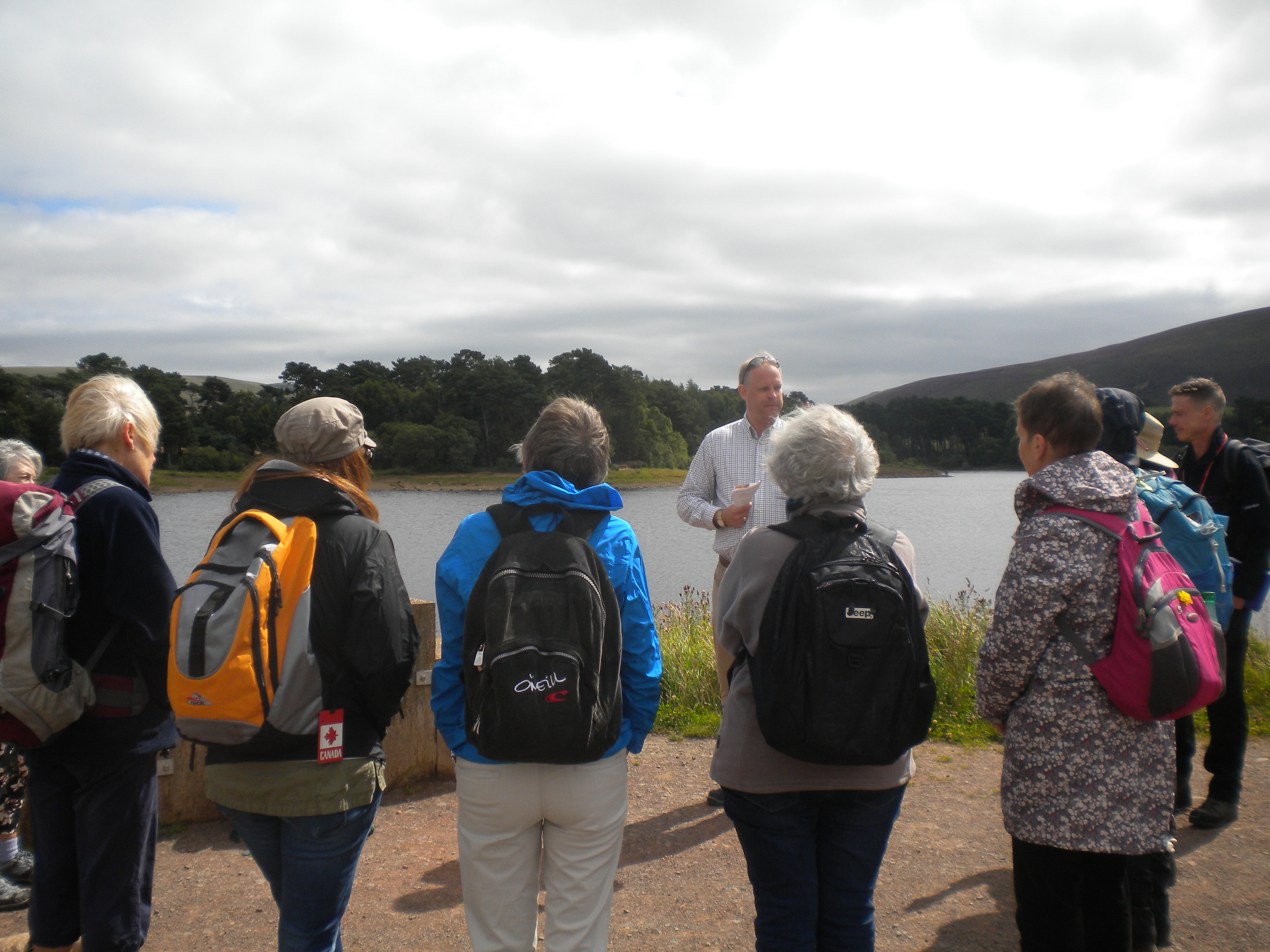
10 August 2017: a dozen walkers, and a dog,  from Edinburgh, Glasgow and Canada retrace Owen’s route, led by Neil McLennan, chair of the Wilfred Owen’s Edinburgh 1917-2017 committee, and indefatigable researcher of Owen’s time in Edinburgh, Tommy McManmon, Natural Heritage Officer (that’s a Ranger, pre-rebranding by the council), and me, poet of these parts.

DSCN3581

We departed, in both senses of the word, from Owen’s route, at Harlaw Visitor Centre, to have a cuppa, make introductions and do some warm-up exercises to prime us for walking as poets. Then along to Threipmuir to fall into century-separated step with Owen (I’m reminded of Nan Shepherd’s ‘one is companioned, but not in time’, The Living Mountain, ch 5).  We also fell into step, conversation, and companionship with each other, sharing stories of what brought us here, today, literally and figuratively. Periodically we  stopped and Neil took us back to 1917 and the findings of his own research.

DSCN3582

2017 historian / walkers

After a lunch stop at the Howe (‘Habbie’s Howe’ to Owen), we fell into silence for a spell, to observe, hear and generally ‘sense’ the experience of walking in August 2017 – both to be mindful of the present moment, and to remind ourselves of  the 1917 walkers, here as part of a rehabilitation that would make them fit to be returned to the front, that would see Owen unnecessarily killed a few days before the Armistice. Beneficiaries of post-WW2 peace and prosperity struggling to come to terms with Brexit and Trump, we used our minutes of silence to walk in an act of remembrance and maybe resistance, for peace, integration, tolerance; and to write. The results were stunning and I hope they will be in the public domain at some point.


A humbling, inspiring and companionable experience for someone who, like many, was introduced to, and became enthralled by, modern poetry when studying the WW1 poets at school; who has lived somewhere between Craiglockhart and the Pentlands for the last 7 years, and walked this route for over 20 without realising until now that it was the one taken by Owen. Not my average day’s walk in the hills of the adopted home.

DSCN3601

harvest / Harlaw

Sightlines at StAnza

This year’s StAnza Poetry Festival started for me before Aurélia Lassaque sang in Occitan at the  launch in the Byre, before I crossed the Forth on an auspiciously bright first morning of March. It may even have started a few years ago,  in exhibition venues around the town where poetry was combined with visual art, and I thought how it would be fantastic for  Words on Canvas to do that.  WoC are an ekphrastic group formed at the National Galleries of Scotland in 2008, who also respond to exhibitions by working artists, give readings and produce pamphlets.

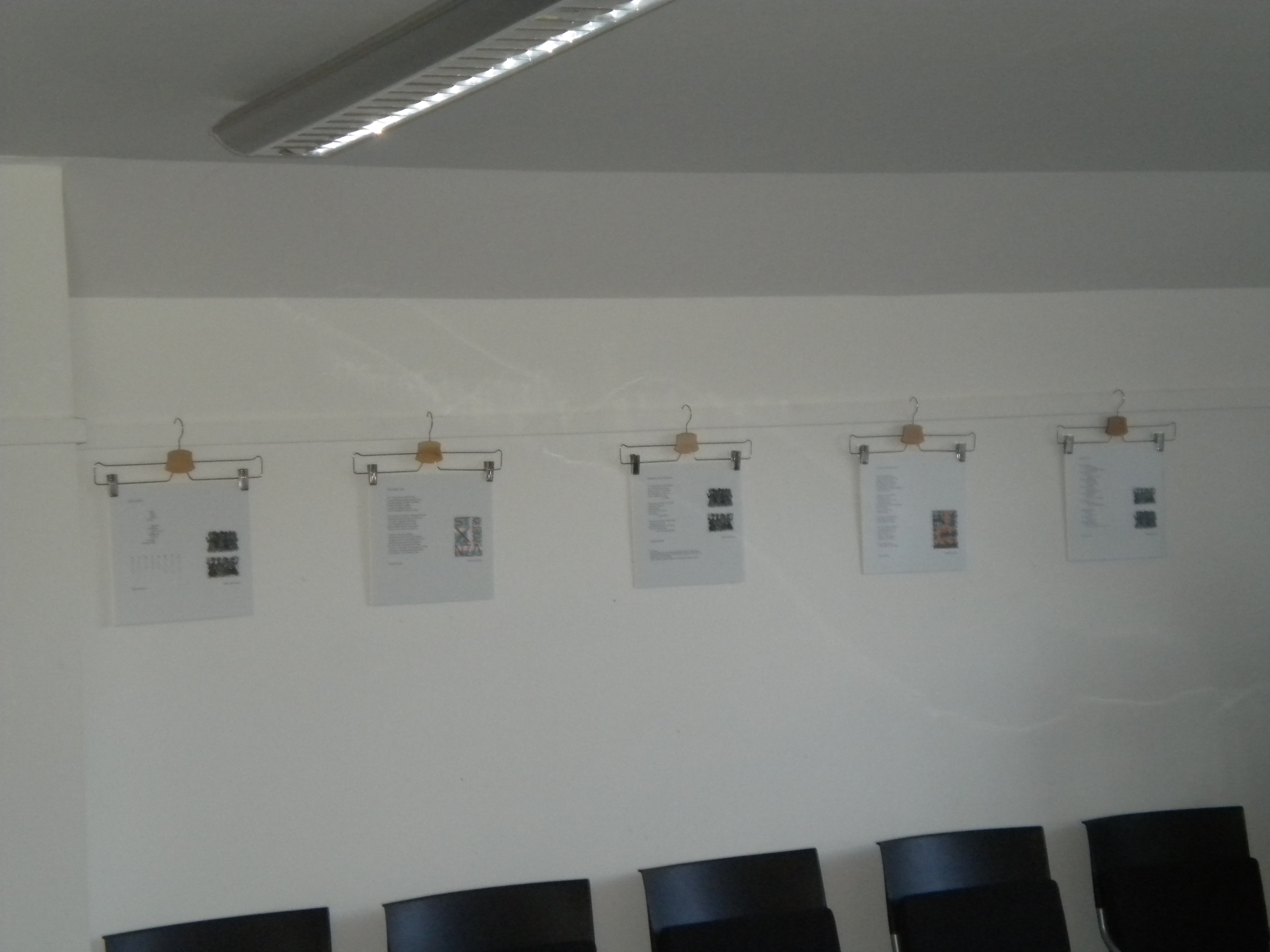
Forward to the winter of 2016-17, and we started responding to linocuts by last year’s artist in residence Hilke MacIntyre as jpegs of them were emailed to us. In mid-Feb we sent fourteen new poems back to festival director Eleanor Livingstone, who combined them with their corresponding images (big shout-out to Eleanor here: it’s not like she doesn’t have enough to do two weeks before her festival starts). When I arrived  in Fife on the 1st, StAnza’s printers had turned them into rather lovely 30cm sq foam boards. Local WoC member  Susan Grant and I hung them in the room above the Public Library that is used for the StAnza workshops. Then I checked into my favourite B and B, quiet by the Kinness Burn, where the owner keeps his own hens – my marker for good holiday accommodation when not staying in a town.

dscn3347

A wall from the Sightlines exhibition

The weather was stunning. Before going off to my first booked event on Thursday I  bought a selection of participants’ books from the StAnza bookseller JG Innes, before stocks ran low – I was too late to get everything I wanted last year – and sat in the sun for a couple of hours, sheltered from a still-cold wind in a south-facing  nook in the harbour wall, watching the tide come in.

And then into the flow of words. I’ve already gushed on Facebook, in my own post and on others’ feeds, about how Paul Stephenson gave a masterclass in the delivery of a poetry set, reading from his Happenstance pamphlet about living in Paris during the November 2015 attacks. How I thrilled to the sounds of Occitan, Catalan, Arabic and French (that my friend Tessa Berring was one of the four poets on a four-day residency devoted to translating each other’s work between English, French and Occitan, added another layer of interest). How Joan Margarit, Robert Crawford, Alice Oswald and Kathleen Jamie played to the strengths of their voices, personalities and material. How Jacque Darras’s homage in sound to Jean Tinguely’s kinetic sculpture was one of the best examples of ekphrasis I’ve been privileged to experience. How stimulating I found the mix of poetry and themed discussion (& coffee!) in the breakfast panels on this year’s themes: the Heights of Poetry, and On The Road. And more.

The first time I attended StAnza I was struck by how it was like a mix of a Hebridean holiday and being back at university: you bump into the same people everywhere and you made new friends quickly. This year, most of the members of the two peer crit groups I belong to in Edinburgh where around at some point, as well as regulars from the Scottish poetry scene and guests from many parts of  Europe and beyond – more of a joy than ever in this post-brexit vote year. Before taking your seat in the Byre auditorium,  you can greet familiar faces on all four sides of you.

On Friday this sense of community was augmented by the arrival of the remaining members of WoC, who had made a very early start, from the Borders and East Lothian as well as Edinburgh. If they were tired by the time our Meet the Artist event started at 3.45pm in the Library, they didn’t show it. We’d hung the Sightlines boards randomly, because, after a bit of experimentation with grouping and ordering, we thought they looked best that way. The  reading proceeded thematically, however, in the spirit of  On the Road, beginning with poems inspired by  Hilke’s townscape (the one that’s on the front cover of the brochure), moving into a café scene, progressing to The Byre, and concluding – with sound and shape poems – with our responses to Hilke’s response to last year’s Jazz evening.

dscn3340

Jean Taylor’s poem responding to linocut of St Andrews streetscape by Hilke MacIntyre

There’s a lot going on at StAnza, and you have to make difficult choices, so I had been a bit worried that the 11 of us might outnumber our audience, but we didn’t. They asked interested questions that enabled us to open up about our process, how we use artworks – or sometimes a small detail from them – to trigger a linguistic response. This could form a kind of poetic commentary on the image or be a ‘translation’ – a poetic equivalent – of it; or it could send the writer on a geographical or historical path or other associative journey well beyond it, or into personal memory. I’d become very familiar with this set of fourteen poems, as we considered constraints such as readability on a wall, and made decisions about fonts. Voiced by their authors, they took on fresh life. Like Hilke’s linocuts, they sang.

Sightlines1

Meet the Artist reading & discussion for Sightlines


fullsizeoutput_233

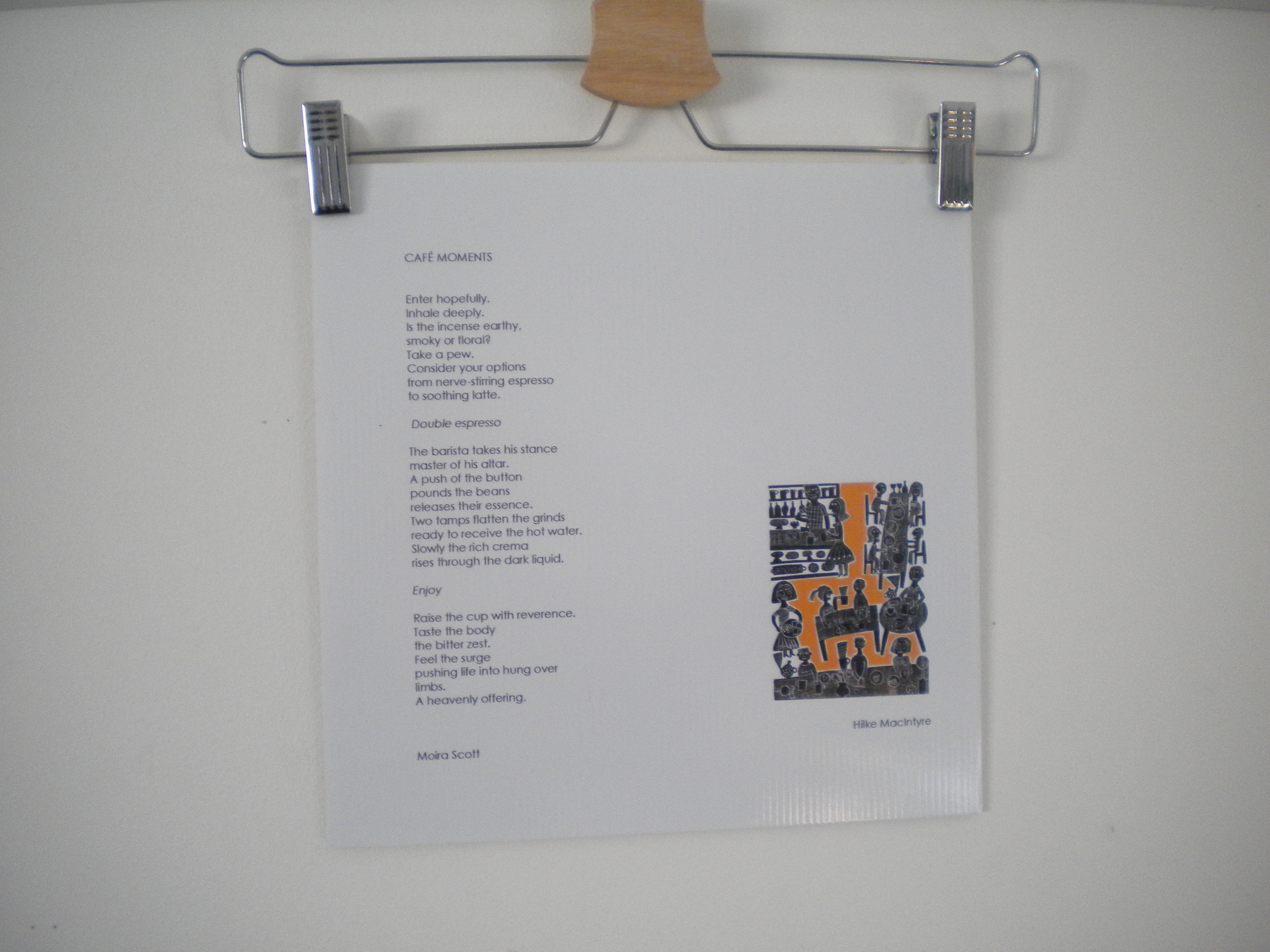
Cafés scenes: poem by Moira Scott, linocut by Hilke MacIntyre

home county

On the final page of A Field Guide to Getting Lost, Rebecca Solnit writes: ‘the county was something I chose to return to again and again’. She is referring to Marin County, CA, and the last chapter of her meditation on loss in all its senses, place and memory, describes her involuntary revisiting, in dreams, of the ‘one story house’ where she grew up. She comes to realise that it held more narrative versions, and more connectedness to the wild hinterland she loved, than she had previously believed possible. It seemed an appropriate thing to read on my final day in the county I choose to keep returning to, Yorkshire.

I grew up in the West Riding, which had become West Yorkshire before I went to secondary school. We had many school trips and family days out in the Dales, about 40 miles north of the industrial towns, some of it administratively still in the West. My dad, a baker from Dewsbury, used to spend all his weekends cycle-touring up there, and later he took his family by car on practically every day off. I’m not entirely sure that was what his wife had bargained for, but his daughter took to it as eagerly as she took to her schooling, and it established in her a pattern of escaping the urban at every opportunity. It was the perfect place to study for O and A levels in Geography, though I suspect I actually became quite complacent about it, underwhelmed by the things that made other tourists gawp. And quite dismissive of the tourists. It was far more exciting to go up to the Scottish Highlands.

DSCN2746

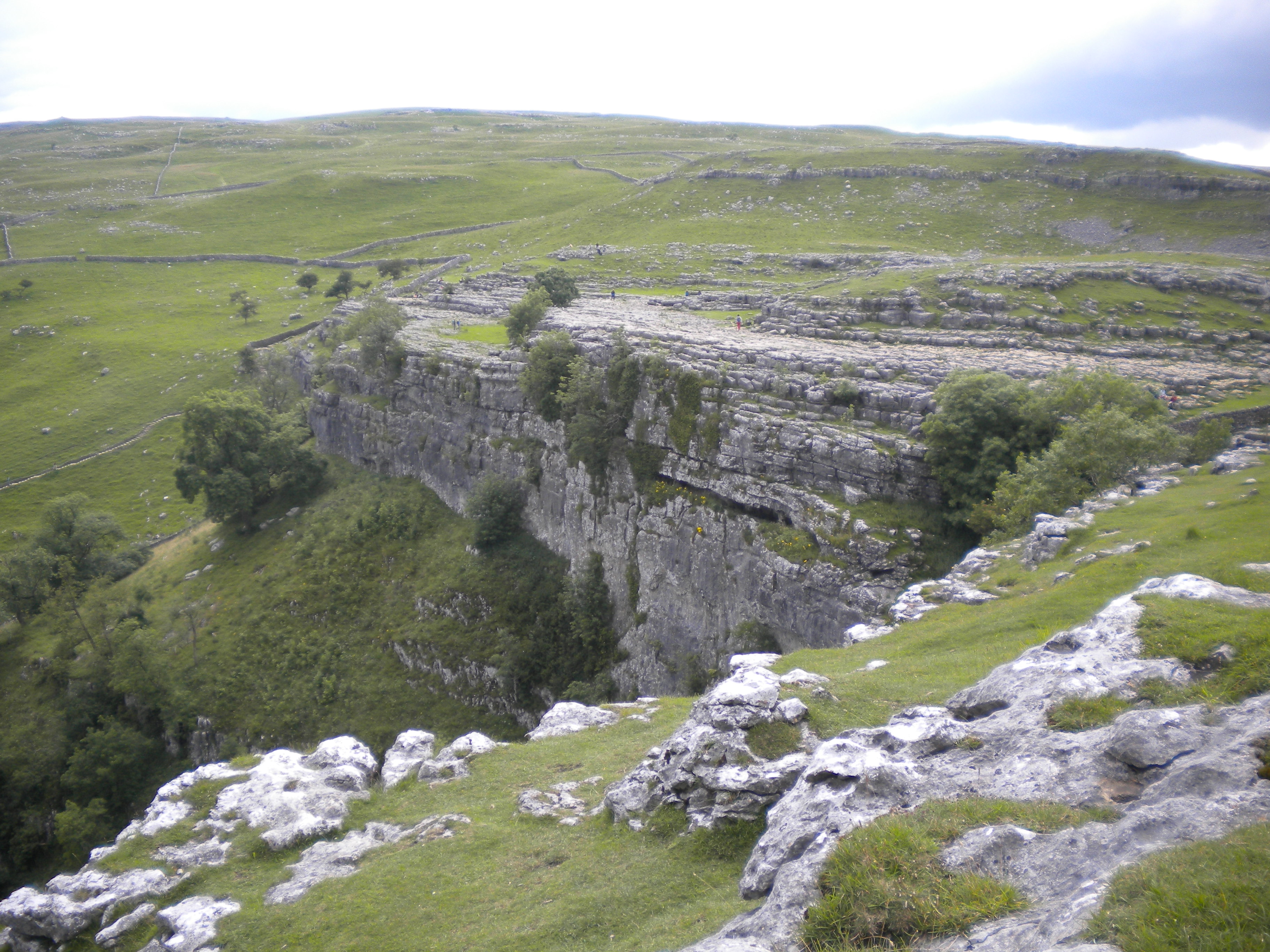
Malham Cove

I live in Edinburgh, and go back to some part of Yorkshire every eighteen months or so. I’ve just returned from cat-sitting for a friend in Airton, Malhamdale. Airton was somewhere you passed through en route to limestone mecca Malham. A couple of miles south of the Craven fault-line which is the reason for the geological highlights of Malham Cove and Gordale Scar, it’s a farming village with a main green and several satellite ones, and seventeenth-century buildings, including a Quaker meeting house. It’s near the source of the Aire, which goes on to flow through Leeds, and which I always thought of as a more industrial river than, say, the Wharfe or Swale, more like the Calder I grew up beside.

DSCN2795

Village green, Airton

I’m not synaesthetic, but I am highly sensitive to the way bedrock and soil colour the land. Limestone has always signified light and brightness to me, in contrast to the gritstone of the southern Pennines. Millstone grit, to give it its full name. Think wuthering heights, remains of Elmet, the small-town toxicities of Sally Wainwright’s Happy Valley. The green over limestone has a luminescence; that over gritstone – beautiful also, despite the grimupnorth connotations – generally produces a more matt, olive tone.

DSCN2827

limestone green

WH Auden’s  poem ‘In Praise of Limestone‘ opens: ‘if it form the one landscape that we, the inconstant ones / are constantly homesick for, this is chiefly  / because it dissolves in water’.  The poem is at least as much about the karsts of southern Europe and the crises of masculinity as it is about the poet’s own formative Pennine landscapes. I have also been homesick for the red sandstone of Arran and the gneisses of the far north of Scotland and Isle of Lewis; for the coastal bluffs of the south of France. I am probably homesick for whatever sort of rock I have most recently left behind, but a real feeling of hireath is most likely to be triggered  by the sight of Pennine millstone. Limestone gives  a lighter sense of longing and nostalgia, and also, I think, of hope.

The first evening was quite disorienting: familiar and unfamiliar both, unhiemlich, even. I went to the pub in the next village, Kirkby Malham, for ‘home killed’ (not cured) gammon, sold by weight. I had the smallest, and it was huge.  Intending to continue towards Malham afterwards, I actually took the wrong road, and headed uphill towards Settle. I was rewarded with a fresh angle on Malham Cove, and southwest of me was the Lancashire witching hill, Pendle Hill, and the dark moors that extend towards Bradford and the industrial cities. I felt caught between the two, and surprisingly far from home.

DSCN2705

first night

Next morning I went for breakfast and provisions at the excellent local farm shop (it’s local, artisan, everything nowadays, unlike in the 70s and 80s), and felt a bit foreign, with my strange bank notes and own shopping bags and not realising you could buy alcohol before noon on a Sunday. But it’s the post Tour de France D’ales, and you can. After a couple of days of walking, eating and looking after a lovely cat called Picasso, I re-acclimatised. Oh, I love limestone! Walking down a green lane between limestone walls has long been a favourite pastime and a source of joy.

DSCN2834

scar, scree, walls

The contrast between the worked countryside and the wild is marked in Malhamdale, courtesy of the decisive Craven fault, though cattle graze above it, and uncultivated species blossom by the riverbank below it. Nuances within each category become discernible, when you have the leisure to savour them all on daily walks that connect places in, above and around the dale over a ten-day period at harvest-time.

DSCN2851

farmland, cove


DSCN2850

moor, scar

Venerable drystone walls in limestone demarcate ancient field systems above Malham village. From a distance, they resemble bobbly knitting (though admittedly there may be a chicken-and-egg issue here). Downdale, modern machinery worked the fields all day and into the night, and serially transported its loads to farm-yard, competing on the narrow lanes with tourist traffic. When not walking off-road (cattle! mud!), I hopped onto the verge to let them all pass and admired the wild flowers. As well as being the longest single stay I’ve had in the Dales, this was the first time I – a bad hayfever sufferer – had been resident in summer. I took my anti-histamine, and went out to find what was there, just as I’ve taken in recent years to going for walks at dawn and dusk, when you see, hear, smell, different things. The sparse vegetation capable of flourishing in the limestone grykes, that I’ve only seen in books before, was at its peak.

DSCN2801

Limestone gryke

I’m surprised by how scant my recall could be: I remembered key sites / sights, like the Cove, that tend to appear frequently on calendars and magazine covers anyway, and I remembered details like the whitewashed – now flaking – sweetshop where the roads fork in the village. But I’d failed to retain any image of  what excites me most, the  sweep of the county seen from the heights, the horizons, the extent of view. This shouldn’t surprise me, as I know all about the sublime: the unrepresentable, the unrecoverable, the impossibility of retaining what we most desire, but it does. It made me wonder (given little in the broader picture will have changed), what did I actually see as a child?

My dad, though never an assertive person, used to have set itineraries and omissions that he stuck to – there were some places we always just drove past. Maybe he had more of the cyclist’s mindset than the walker’s, and of course he’d be aware of what time he had to return to bakery duties. I’d look out of the rear window, wanting to stop and explore. Malham Tarn was one of these places, and now I finally got to linger there.

DSCN2864

boathouse, tarn

Last Saturday had been hot by this summer’s standards – I walked in a t-shirt, and sat for long periods with books and ice-cream. Sunday was wild, like one of those Hebridean ‘summer’ days, and it was a delight to explore the variety of topographies in the National Trust Malham Tarn estate: upland moss (raised bog) and groundwater-fed fen, bird hide, boat house, broadleaf avenue, an orchid house which has been converted into a sustainable building for group use.  I emerged tarnside to the accompaniment of waves, then crossed the flat high grassland  and dropped into the shelter of the limestone valley above Gordale.

Underfoot conditions are tougher than in my local Pentland Hills, but there are also more people around participating in recreation activities. When I fell into a deep concealed ditch in the less visited southern Pentlands last month, there was no one around (actually I wasn’t badly hurt, and I was quite glad there was no one to witness my tumble). Now, scrambling down to the top of the force (waterfall) at Gordale, as I had up to its base  the previous day, I knew that if I had newer boots with grippier soles and the rock was drier, I could still make the direct connection between the two, and was happy to leave it at that for this trip. When I was young and lithe, I took for granted what my body was capable of, in the same way as I took for granted the scenery I was privileged to be able to experience. Now I try to make the time to cherish both.

DSCN2882

Gordale / above

DSCN2892

Gordale / below

Places like Malham village were very busy on weekends and bank holidays when I was a kid. My dad’s car used to give them a swerve and head for quieter spots. Nowadays, an off-season traveller with a love of remote places, I’m even less used to tourist hotspots. One thing that struck me, though, was that in my Yorkshire youth you only ever saw white faces once you were out of the city. You still wouldn’t call it multicultural, but now there are Asians and a smattering of other ethnicities, clad in lyrcra or gortex for their chosen pursuits, or chasing their ice-cream eating children around village greens. These will be second- and  third-generation children of immigrants, now at home, in this country, in this county.

DSCN2785

Gordale, climbers

Simultanism: Words and Pictures, Reading and Looking


image2

I’ve just had a love-my-job couple of weeks. This is possibly because it’s been quite a workshop-intense fortnight, and workshops are one of my favourite aspects of my job. Also, a lot of them have taken place in beautiful gallery settings, which does tend to enhance one’s sense of creativity and zest for life.  Within the ekphrastic-workshop (writing about art) category I’ve enjoyed quite range of different activities over a short time period. What follows are some notes and observations on this, in words and photographs.

I  attended a  rich panel discussion on writing and sculpture at the Fruitmarket Gallery  the other week, during Sara Barker’s exhibition Change-The-Setting. One of the speakers argued for a fluid transition or ‘translation’ between the two mediums, rather than the old ‘influence’ model. Of course this isn’t always desirable, or possible, particularly if you are a specialist in only one field. So how do we find an equivalent language for sculpture? Another spoke of Barker’s own reading, of authors including Virginia Woolf, and her attempt to make spatial equivalents of the texts in which she was immersed. The closing remarks drew an analogy between sculpture and spoken word: both operate in space. This seemed an appropriate conclusion, as  I was en route to Kevin Cadwallender’s monthly poetry event 10RED in Leith.

Change-The-Scene, Fruitmarket Gallery: visit by Third Thursday Writers in April 2016. Photographs by Rosemary Bassett.

During a decade of working as a freelance educator  at National Galleries Scotland – often as the only one  who didn’t go to art school or study art history – I’ve developed a love for works in the collection that incorporate writing in some way: in mediums ranging from collage to neons; by substituting objects drawn or painted in perspective with their names; playful working with signs and messages; almost-text marks, and words in unfamiliar scripts. Are we reading or looking  when we view them?  One of my favourite works has to be Sonia Delaunay’s collaboration with French poet Blaise Cendrars, A Trans-Siberian Prose

2012AA43177

Delaunay was a proponent of simultanism. This meant finding a visual equivalent for the text, rather than illustrating it. She and husband Robert Delaunay aimed to present simultaneously a number of different ‘modern’ experiences – distilling words, colour, or their signature take on the  Eiffel Tower  (bottom left in the image above) into a single picture. This could be a great way of thinking about the text and image relationship, rather than seeing them in more hierarchical terms of influence or inspiration. Of course there are pictures that serve to illustrate text, and writing that captions images, and the ‘responsive’ model of using a visual artwork as a writing prompt remains a productive one. But ‘simultanism’ seems to offer a way into thinking about some alternatives.

The Scottish National Gallery of Modern Art has a monthly session called ‘The Drawing Room’. This  ‘examines the range of possibilities within contemporary drawing practice and explores how mark-making can also be conceived as sculpture, installation, video, performance, writing, sound, textiles and animation.’  When organiser Sharon Quigley invited me to lead this month’s session, I jumped at the chance. We walked round the top floor of Mod One, collecting words from the artworks, before settling down for a series of  practical exercises. All the participants were visual artists. Once again I was reminded how writers and artists work differently: short, intense bursts of concentration suit the former; long, slow periods of concentration seem more appropriate for the latter – in workshop settings at least. And of course there will be individual variations and preferences. We can learn a lot from listening to each other and observing each other’s practices. I’d wanted to show  a range of activities, options and possibilities, but I realised I also needed to respect their way of working – some of them might well be out of their comfort zone here. I felt reluctant to stop them and move onto a new activity as they settled into a task, though Sharon reassured me they welcomed interruptions. During writing groups, it’s usual to pause, read and critique at several points – here saving up all the work done to display at the end worked best. I was hugely impressed by the quality and range of what they’d produced, and the way they displayed it.

The regular groups I work with use a lot of visual stimulus. The raison d’etre of the fortnightly writing group at National Galleries Scotland, Words on Canvas, is ekphrasis or responsive writing. Their recent writing triggered by synaesthesia, light, colour, time, ‘random constructions’ and ‘looking out / looking in’ in the prints of Whilhemina Barns-Graham was amongst the best they’ve ever done.

The termly-theme approach at South Side Writers tends also to encourage responsive work:  like many writing groups, we often use prompts in the form of images, objects and other texts. Writing on ‘Mapping’ just now, this seems especially the case. As always, there is a massive range of relevant historical, geographical and cultural material available to use, enhancing individual and collective knowledge of the subject. Some great discussions take place in the room. We’ve used old maps, personal maps, art maps, maps of the imagination and obsolete maps; poems about maps, and novels that contain maps. We’ve considered the aesthetics and politics of cartography, and used place names and landscape features in our word hoard. As always, members have written original, funny, moving, lyrical and surprising responses.

P1300165_Writing Room groupMapping South Side Writers. Photograph by Olga Wojtas.

Third Thursday Writers go to a different exhibition  each month. Most recently we were at the Ingleby Gallery, in its final week in its Calton Rd premises, looking at Kevin Harman’s No Man’s Land – beautiful glassworks made by repurposing double glazing units and household paint. We used them  to think about synaesthesia; and about chance and choice, mood and perspective in art and writing. Ingelby Gallery  is a wonderful writing space – I  do wish I’d used it more. The station announcements audible from Waverley across the road can seem intrusive, but we found a way to incorporate them into response to the artworks, combining place-names, remembered journeys, and imagined locations with ideas suggested by the artworks.

At No Man’s Land on the Third Thursday. Photograph by Rosemary Bassett

Cartoonist, musician and generally brilliant colleague Malcy Duff and I reprised our Text & Image workshop, previously set in art galleries, at the Scottish Poetry Library. This was about hybridity in more than medium and form: writers and artists combined their ways of working, their energy and interests, to make shape poetry, found poetry and sound poetry.  One participant blogged about his experience here. The day  also encouraged me to consider  the relationship between creative and pedagogic practice, as I participated in Malcy’s exercises, drawing different shapes of speech bubbles; collaging; reproducing pictures using only words; making non-linguistic sounds to fit a ‘script’ of drawn shapes.  Afterwards I  put the four letters of the word PLOT in the corners of a rectangle, and I drew the outlines of Yorkshire and its constituent parts before, and after, the 1973 local government re-organisation. The shape of Yorkshire uncannily resembles a speech bubble –  into which I might put the words wool, or steel, or scone, or STOP FRACKING – or that common lament of Yorkshire people living in Edinburgh who haven’t got the time to go and stand in a queue in Anstruther: decent fish and chips.

Text & Image workshop – spreading out at the SPL. Photography By Hector Michael Fried.

Stravaig

Interesting reflections from a participant in Saturday’s Text & Image workshop at the Scottish Poetry Library – including a rather lovely film-poem he made afterwards.

stevedsmart's avatarsds

script1_verticalI accidentally attended a workshop at the very excellent Scottish Poetry Library yesterday. ‘Accidentally’ because the workshop wasn’t exactly about what I though it was – my fault for not reading the small print in sufficient detail once again!  I should have looked up acrostic first (well, now I know…)

stravaigWhat the workshop was about was about image and poetry, but in the sense of using text and other elements to make a poem that is spatial as well as (or maybe more than) temporal.  Well, so to speak…

…clear as mud? Think ‘concrete poetry’ (for example).

Nothing ventured, nothing gained, however, so I decided to give it a go…

To be honest, I felt a bit at sea – I’ve always found this kind of thing quite difficult to get into. But in any event it was good to grapple with it with people who didn’t.  I was impressed by the range…

View original post 168 more words