mad march and invisible colours: could spring be far behind?

The closing lines of Shelley’s ‘Ode to the West Wind’, and a reflection that the poet didn’t live in Scotland and wasn’t factoring in climate change, formed an accompaniment to many of my March wanderings: to Fife for  StAnza; to the Scottish National Portrait Gallery  for a workshop on creative writing for undergraduates in English and journalism from Napier University; to Glasgow for a two-day training event; into the snowy hills, wafting my walking poles around like ski sticks. The month-long cold snap was ushered in at StAnza, where I  facilitated a workshop called ‘Different Viewpoints’ on the first morning. Sponsored by Lapidus Scotland, this undertook to examine through practical exercises the relationships between ‘personal’ or ‘therapeutic’ and ‘creative’ writing, and between ‘internal’ and ‘external’ stimuli. Against the backdrop of, and engaging closely with, an exhibition of poems and paintings about liminal spaces entitled Unmapped, the participants created poems that beautifully wove together personal experience, memory and present-moment response to real and imagined places.

Back in Edinburgh, facilitating a session for undergraduates, rather than the ‘adults’ I usually work with, set me thinking further about ekphrasis, or the use of visual art to inspire writing, and how and why we teach it. When the BP  Portrait exhibition was up earlier in the year, in the winter proper, I took to  reading Michael Longley in front of a wonderful portrait of the poet, The Dailects of Silence, by Colin Davidson  At the close of his most recent collection A Hundred Doors, Longley has an elegy, ‘White Farmhouse’, which concludes with a line that cites Marcel Duchamp’s claim   ‘titles are invisible colours’. Are they? I need to ponder some more, but titles (if not artist statements and gallery glosses) can be of abiding interest to those with a textual background who are looking at pictures. What are we to make, for example, of Ben Nicholson’s habit of supplementing a matter-of-fact dating or stating of medium with a descriptor, as in June 1961 (Green Goblet and Blue Square), or Painted Relief (Plover’s Egg Blue)?

Words on Canvas were invited to write in response to paintings in the Royal Scottish Painters in Watercolour (RSW) annual exhibition. There were 252 works in the exhibition, and our deadline was just a week after we first got to see them. I had a couple of hours in the gallery beforehand, en route to the Portrait Gallery to have a look at Rousseau and Hume prior the Napier session. I quickly saw the work I wanted to write about, Gordon Mitchell’s Lasting Impressions, a painting of a sun lounger  against a sun-baked wall whose cracked plaster revealed the shapes of human silhouettes. I was reminded first of  the second paragraph of  The Wasteland, the lines about aridity, broken images and shadows, that lead up to ‘I will show you in fear a handful of dust’; and then, more optimistically, of a standing joke about the cost of hiring a sun lounger on the cote d’azur from last year’s summer holiday. Fine, but on Monday morning fifteen other writers (minus a couple I bumped into in the gallery who were already hard at work) would need to choose from the remaining 251. The usual WoC format is a Gallery tour, covering just  four or five works, followed by a writing critique session a fortnight later.  Feeling under some pressure, I started to jot down the titles of works that attracted me for one reason or another. Then I took up the catalogue, and noted down titles that themselves appealed (invisible colours if you like). Bingo, eureka, etcetera. Rousseau, Hume. On Monday I asked those writers who hadn’t already seen the exhibition and selected a work initially to choose a title that appealed, and write to that before seeing the picture to which it pertained. Then we paired up and did some writing exercises in front of the paintings, and a week later we had a pamphlet of stories and poems, and were ready to attend a reception where we were introduced to the painters of the works we’d selected. ‘Have you met your artist yet?’, we’d ask as we encountered each other circulating the exhibition, glasses of fizz in hand. Several writers reported uncanny correspondences between their thought processes and those of their painter-partner.  Gordon Mitchell told me his sun lounger was located near St Tropez. I had it not terribly far away, on the Cap d’Antibes, but then I don’t suppose it’d have been in Copenhagen or Anstruther.

Meanwhile, the South Side Writers concluded their term on fruit & veg with an attempt to break out of the tradition and make an original,  contemporary statement on the subject, accompanied by a very tasty and refreshing fruit salad. Mine felt very modernist, nearly a century past its sell-by date.

In Glasgow just before Easter I did the two-day training for Living Life To The Full (LLTTF). This is a CBT-based programme designed to be delivered in eight sessions in non-clinical settings, by professionals from different fields who season the basic template with their own personality, experience and knowledge. The target client or user is the individual with mild to moderate depression or anxiety, maybe near the bottom of a long waiting list for treatment,  but it could, I think, be really useful for helping anyone to problem-solve their way around the various obstacles they inevitably encounter. Writer’s block, relationship tensions, builders who don’t turn up. Well, maybe not the latter: it doesn’t promise miracles. The programme was on the periphery of my radar untilLapidus Scotland members were invited to learn more about it at a Bibliotherapy seminar at the National Library of Scotland in February. We heard some pretty inspiring presentations, by Drs Ann Wales, whose job title, Programme Director for Knowledge Management, doesn’t quite convey the extent of her humanity and intellectual curiosity; and Chris Williams, founder of LLTTF. Later we took part in  sessions which could be loosely categorised as either  ‘creative’ (poetry, storytelling, journalling) or ‘scientific’ (concerned with the transmission of knowledge and information).

After this I felt fairly sure that my place when working in healthcare settings was firmly in the creative camp, but I was curious to learn more about this method dedicated to transmitting health information (according to a social, rather than medical, model) in simplicity and clarity  in order to help individuals make positive changes in their lives. I signed up for the training. It turned out to be a truly inspiring couple of days. After an accelerated trip through the components of the programme, we were divided into small groups, with the task of preparing a small chunk of it to deliver to the rest. Oh no, I thought. I’m too tired. I haven’t slept properly the last few nights. I assimilate information slowly, with much reflection and walking around: I’m not ready to do this yet. I don’t want to look a numptie in front of esteemed Lapidus colleagues, or the lovely people from other fields I’ve only just met. Luckily, the extrovert part of me that enjoys a bit of a performance kicked in. I had fun, and, I hope, communicated my points effectively. More than that, hearing the others’ presentations really helped to reinforce everything we’d  learned in a short space of time, and I left with a sense of the possibilities that this new tool might afford.

Now that April’s here – and yes, I would like to pop down to England, though my guess is that the spring isn’t much more advanced there this time – I’ve paced along the plateau of  Capelaw Hill and been to a stimulating workshop on poetry and place with Australian poet Mark Tredinnick at the Scottish Poetry Library. At the end of a UK tour where he too has written of ‘the winter / that did not want to end’, he appeared less tired than I, much closer to home. In an open-plan learning type format,  he interspersed his  own observations about the poetry of place with dialogue with the attendees about their approaches to the matter. The moment when  Mark asked me who I was reading at the moment – rather than when faced with delivering part of a LLTTF module at short notice after little sleep – was the one chosen for me to go blank. Michael Longley?  The many writers from and writing about these islands and beyond whom I encountered at StAnza? In truth I’d been thinking most recently about  influences further back in the tradition: the Anglo-Saxon poets, Wordsworth, Hopkins, sundry Modernisits, as well as relishing the challenge of how on earth, in the air or by the water  to make it new myself, now. I could have talked about some or all of these – or about prose writings on place by the likes of  Kathleen Jamie and Robert McFarlane; or innovations other Scottish writers and artists are making – some of them in a  global context. Or I could have engaged more with some of  the many things that resonated for me in the others’ words that afternoon . . . but eloquence had well and truly taken leave of me. It may take some sun and more visible colours to power up my brain again.

stanza 13: legacy and place

IMG_0772

Photo: Stephanie Green

StAnza Poetry Festival, St Andrews, Scotland, 6-10 March 2013

One of the festival themes was ‘Legacy & Place’.

It was like a Hebridean holiday: you bumped the same people several times a day. Andrew the drystane-dyker poet; Enid who wrote so movingly in your workshop; Annie the young journalist; Rebecca whose poems graced the walls of the room used for workshops,  complementing paintings of the peripheral made by her collaborator Anna. People you knew from Edinburgh; Canadian writers you just met for the first time; cheerful StAnza staff.

Weather enclosed and defamiliarised the Fife town and seemed to intensify and brew the creative and social activity.  The wynd where  I took shelter  from the landfall of an Orcadian wind suddenly felt like a Stromness pend, and was filled with kent faces. I was happily disorientated. When the visibility improved a little on Saturday, I walked along The Scores to the West Sands to ground and assimilate the many wonderful words I’d heard over the previous three days, from the voices of Gillian Clarke, George Szirtes, Ken Babstock, Chris Whyte, Erin Moure, Mark Doty, Jean Atkin and more. Offshore, in parallel, waves broke endlessly, uniformly, companionably from the still-near horizon. Up at the cathedral, I stepped over the remnants of low walls and was reminded of the cloistral ruins on the tidal island of Birsay, and every bit as cut off from the quotidian. The wind intensified; drove in a tide of Shetland vowels. Time to return to the warmth of StAnza’s replacement hub, the Town Hall, made resplendent with words, sounds, images and tactile textual objects, to see  the collaboration between Fife poets and Shetland craft makers, Farlin. Time to hear Walt Whitman and Marina Tsvetaeva echoing down the generations and across continents.

It wasn’t  unexpected that, meteorologically enabled or not, sounds and other senses from  the northern and western isles  found their way along the wind and waves and into my experience of the venues in St Andrews. It did however come as a surprise to me to be taken back to the Lake District. When Gillian Clarke spoke of childhood fear as a foundation for poetry in her compelling exploration of  Brythonic verse and the Welsh alliterative pattern cynghanedd,  she cited Heaney’s testament to the pervading power of early terrors.   I was reminded of Wordsworth’s assertion near the beginning of The Prelude that he was ‘fostered alike by beauty and by fear’, before embarking on his incomparable blank verse catalogue of childhood adventures and misdemeanours. When Erin Moure, in a dynamic workshop on revision, commented that ‘language can do more than we know’, I searched my memory for the source of his line ‘we feel that we are greater than we know’. And then Jean Atkin, appearing with Zoe Skoulding in the highly atmospheric vaulted undercroft at St John’s, read her poem about the old coffin path that connects Ambleside and Grasmere. I was back in my graduate school days, trying to impress American delegates at the Wordsworth Summer Conference whilst walking that same path on a visit to Rydal Mount, the Wordsworths’ home between 1813 and 1850. Or  earnestly studying early MS. drafts towards The Prelude at Dove Cottage, but waiting for the weather to clear so I could climb Helvellyn (a Cumbric place-name, incidentally, closely related to Brythonic). My supervisor was the late Robert Woof, director of the Wordsworth Trust, who tended to be there, rather than doing his day job across the pennines at Newcastle University. Since that time, the Trust, like the universities, has recognised the benefits of welcoming creatives alongside academics. Time to pay a return visit, perhaps.

But for now, thank you, Eleanor Livingstone and all the StAnza team and participants.

fruit and veg; and inside out

Each term the South Side Writers have a new theme. In Spring 2013 it’s Fruit & Veg. This is because

(i) there’s been a bit of a running joke about bananas in the group for a couple of years. I always eat one before the class starts. Some time ago member Olga Wojtas showed us her party piece, which involved turning a banana into the profile of a penguin by partly peeling it and taking one bite. Time seemed ripe, pun intended, to bring the subject to more conscious and literary attention.

(ii) Last term we did Borders, Boundaries and Edges and I felt it was time for something more concrete and less conceptual.

Before Christmas we discussed and wrote about different sorts of boundaries – geographical, political, personal – and literary, in the shape of stanzas and paragraphs. We looked at examples of visual art with clearly defined lines (Mondrian, for example), and with fuzzy ones (Whistler`), and some that combined both, such as a couple of my favourite paintings in the National Galleries Scotland collection: Cezanne’s  The Big Trees, and Klee’s Threatening Snowstorm.

Design
After Paul Klee

blueprint for rebuilding
out of the bruising

provisional etching
of the reconstruction of Dresden

prophetic minaret to a
cloud-capped ground zero

Valhalla in a new era
for post-conflagration gods

plans on the drawing board
prefigure each apocalypse

This poem first appeared in Words on Canvas (National Galleries of Scotland, 2009).

One week everyone brought in an object with an (accessible, usable) inside and outside. I asked a series of questions, to be answered first with respect to the object’s exterior, and then again about its interior, so that you ended up with two lists which could be used or combined in various ways as a writing prompt.

Fruit ( we haven’t really made it into veg yet) is proving to be a fascinating subject for a series of writing classes because of its range of usage, literal and metaphorical, throughout literary history from Virgil’s ‘The Salad’, through the various sorts of Christian-era symbolism, to an abundance of contemporary works. It too has insides and outsides, of course. We started the term  sniffing, feeling, peeling and tasting fruit and will end with a fruit & word salad. Each writer is now researching a different fruit and bringing in a textual  example of it. In response we’ve written about hybrids (nectarcot, anyone?), provenance and packaging, architectural pineapples  and still lifes, as well as addressing a species and defamiliarising the common-or-garden so that it becomes exotic. Oh, and a banana is a herb.

classes of 2012

The summer of 2012 saw, inter alia, the 25th anniversary of Edinburgh’s South Side Community Education Centre. As part of the celebrations, the writing and art groups mounted a joint exhibition in the centre cafe on the theme The South Side 1986-87. 

DSCN1556

ODYSSEY by Iain Matheson

She comes to a standstill at the corner of Hill Street. The bus had been prompt, she had been late. By the timetable there’s not another due for half-an-hour – too long to wait when she has just this one day to see the Edinburgh sights. She wants to walk but doesn’t know the way. She picks a boy to ask but he’s already gone, poking furiously at a screen in his hand. An old man passes, bent double, his life’s belongings in a dozen plastic bags, his momentum unstoppable. She flags down another man carrying a banjo.

‘Excuse me please, I’m looking for Blackford Hill, do you know if I can walk there?’

Banjoman stops, stares into space. Finally his eyes close; his head makes a slow rotation, once to the left, once to the right, back to the centre. His eyes reopen and meet hers.

‘No such place.’

Banjoman’s voice resonates as from the foot of a mineshaft.

‘Oh dear, are you quite sure? I saw it on a map and thought I’d like to go there.’

‘Tourist maps. This is the only map you need.’

Banjoman props his instrument against the marbled wall at the corner of Hill Street and unbuckles a rucksack. He labours inside for almost a minute till he produces a coloured, crumpled sheet. He stretches it loudly between his hands to flatten it, then beckons her. At the top, florid green letters declare,’The Southside’. She looks for a moment and says,

‘Yes, I’ve visited some of these places today, McEwan Hall… and the birthplace

of Harry Potter. Now, if you could show me which road to take for Blackford Hill…’

‘No such place.’

Banjoman’s phrase, repeated, combines fate and triumph. He points to the map.

‘That’s all the places there are. It’s a map of the world.’

She looks at him, bewildered, she says, Sorry? although she knows she has heard correctly. A map of the whole world.

‘But what about the castle?’ Once more the slowly shaken head.

‘Or Princes Street – I’ve been there!’ A raised eyebrow joins in the motion.

‘What about the roads at the edge of this map – they can’t just stop?’

Banjoman’s head changes tack; now it nods, the same, slow, reptile’s move, once up, once down.

‘But what happens when people leave The Southside?’

‘They don’t leave.’

‘And how do other people get here?’

‘There’s no other people.’

‘What about travelling to work, going on holiday, buses – where do the buses go?’

‘All in people’s heads.’ The nodding head now comes with a smile, lips closed.

‘So – so there’s really nowhere else? Just  – The Southside?’

Banjoman becomes animated, he raises an eyebrow and smiles and nods, all at once.

‘This is quite a shock. Do you think I could keep this map please?’

‘Take it, take it, I’ve plenty more.’

Banjoman nods twice to settle the matter. He struggles back into his rucksack, picks up his banjo and rejoins the flow of Southsiders on Nicolson Street. She stares at the map in her hands, appalled and secretly thrilled. Bowmont Place, Bernard Terrace, Middle Meadow Walk… singing inside she sets off to explore, the whole world at her feet.

*       *        *       *      *     *     *

As usual there were many creative writing activities at National Galleries Scotland. Shortly after the re-opening of the splendid Portrait Gallery I ran a five-week creative writing course on portraiture and character, which was repeated in the autumn.  In August cartoonist Malcy Duff and I collaborated for the third time on Text & Image, a course that looks at the history of combining words and pictures, then introduces practical exercises on interpreting writing as drawing and drawing as writing; illustrating writing and captioning images, and presenting text as image. Experimentation is encouraged, and we also include some sound poetry, creative reading and performance.

DSCN1425DSCN1429DSCN1433

This time we were based out at the modern art galleries for two full days, and able to use the wonderful resources of their archive, including artist’s books by key figures of twentieth-century art, as well as the temporary Picasso and Modern British Art and Munch exhibitions.

It is always a delight to work with Words on Canvas, a group of very talented writers that meet fortnightly at the Galleries. This year some of us also participated in a collaboration between poets and craft makers on an exhibition for the Pittenweem Festival, Fife.

In August Southsiders and WoCers  joined to give a well-received reading at the Captain’s Bar, as part of the Edinburgh Festival Fringe.

In the summer I was invited to lead a series of four monthly workshops at the Hermitage of Braid, to produce textual art for its newly-reclaimed walled garden. Given the sort of summer we had, or rather didn’t have, we were incredibly lucky to be able to work outside on all four occasions, three of them in pretty good weather.

DSCN1587DSCN1589

Juliet Wilson, who blogs as Crafty Green Poet, wrote a haiku which can be read by clicking the link.


BRAIDBURN SYMPHONY by Olga Wojtas

I take my seat and listen

To my left, the bass throb of the waterfall

To my right, the soft rippling through rocks

Stereophonic streaming

The pizzicato of jogging shoes

A scherzo of children’s giggles

The faintest fluttering of leaves

A yap

A yap

A yap

Fortissimo barking

Chorus of apologies

The faintest fluttering of leaves

The bass throb of the waterfall

The soft rippling through rocks

I wrote the following poem to mark the occasion.

Braid

On the Occasion of the Writing Workshops for the Walled Garden, Summer 2012

June’s birdsong is all but washed away
by the shout of the Braid in July
in a hurry through the Hermitage today
on its course along the lower side of the garden wall
to the shore of a firth making scarce more noise.
Out in the North Sea it mingles  via the Humber
with the waters of  Spen and Calder which  return
to the burn that stitches the Pentlands to Portobello.

This is not the Water of Leith but of remembrance.
Above it all this sort-of summer sits a new Parnassus
on  the top-most terrace  where we are  inspired
by  coast-bound stream and   breeze along the Braid,
whose water, like the brook Derwent at the bottom
of  Wordsworth’s childhood garden, is ‘boxed’  but not here
‘stripped of his voice’, two centuries and thirty  steps  below
along the  southern edge of  an Edinburgh plot.

And if like that, could this not also be
the forest pool by which a goddess bathed
as a bewildered hunter chanced upon her and gawped;
or the bank where a visitor from across the Pond
planted lily of the valley with her betrothed
in memory of their first meeting here;
and  a perpetual memorial to the  woman  who tried
to rescue her dog in a spate like this and was drowned?

The rest of the work produced is available to read in a folder at the Hermitage Visitor Centre, and some of it will find a permanent home in the garden, alongside sculpture and other artworks.

I always enjoy participating in others’ workshops. In March I joined a session led by Ken Cockburn to mark World Heritage Day. To tie in with this year’s theme, the Roman legacy in Scotland, Ken devised a series of writing walks on the seven hills of Edinburgh. I went on the one on Salisbury Crags. Ken’s account, and poems by myself and other participants,  can be read here.

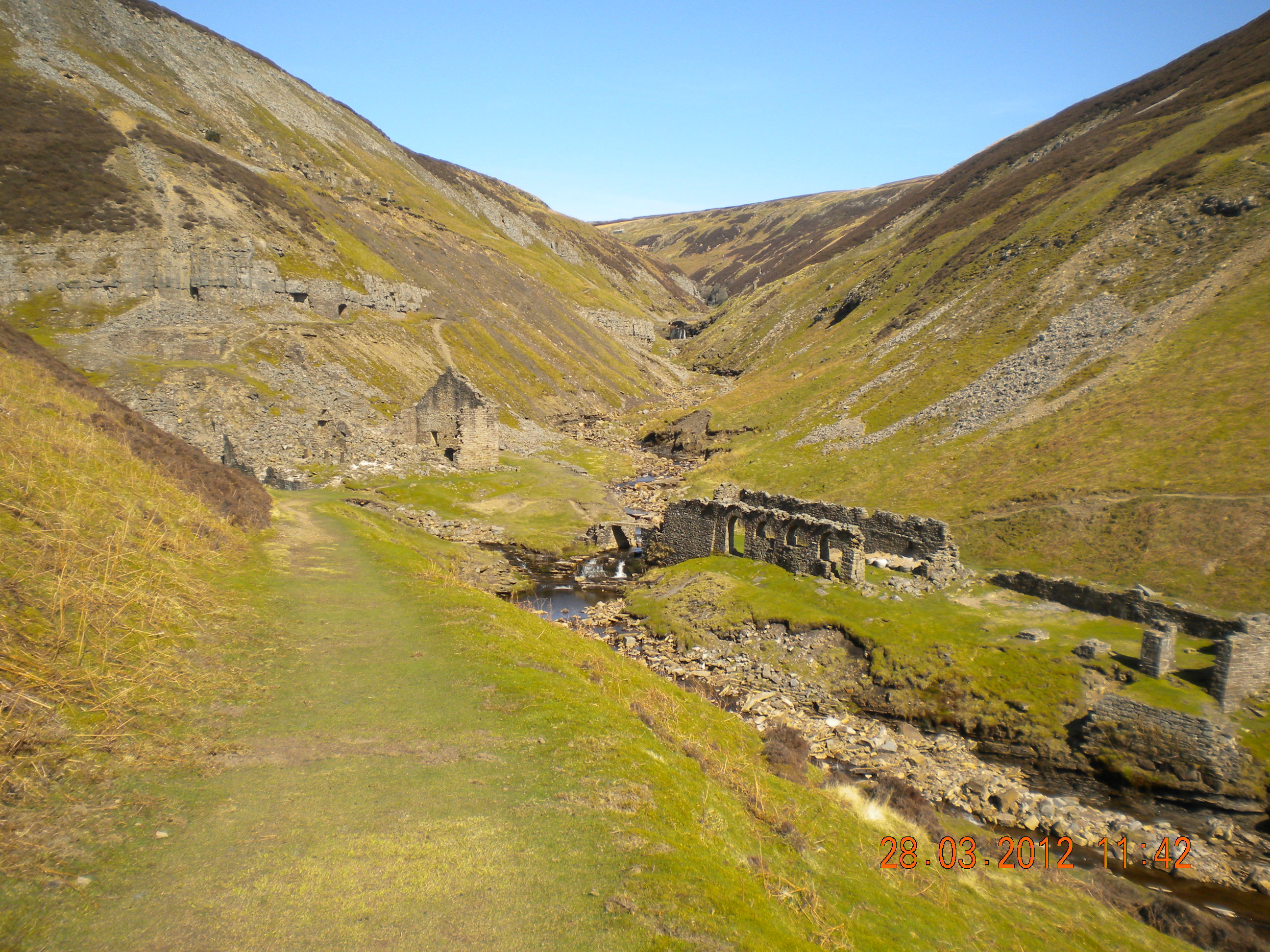
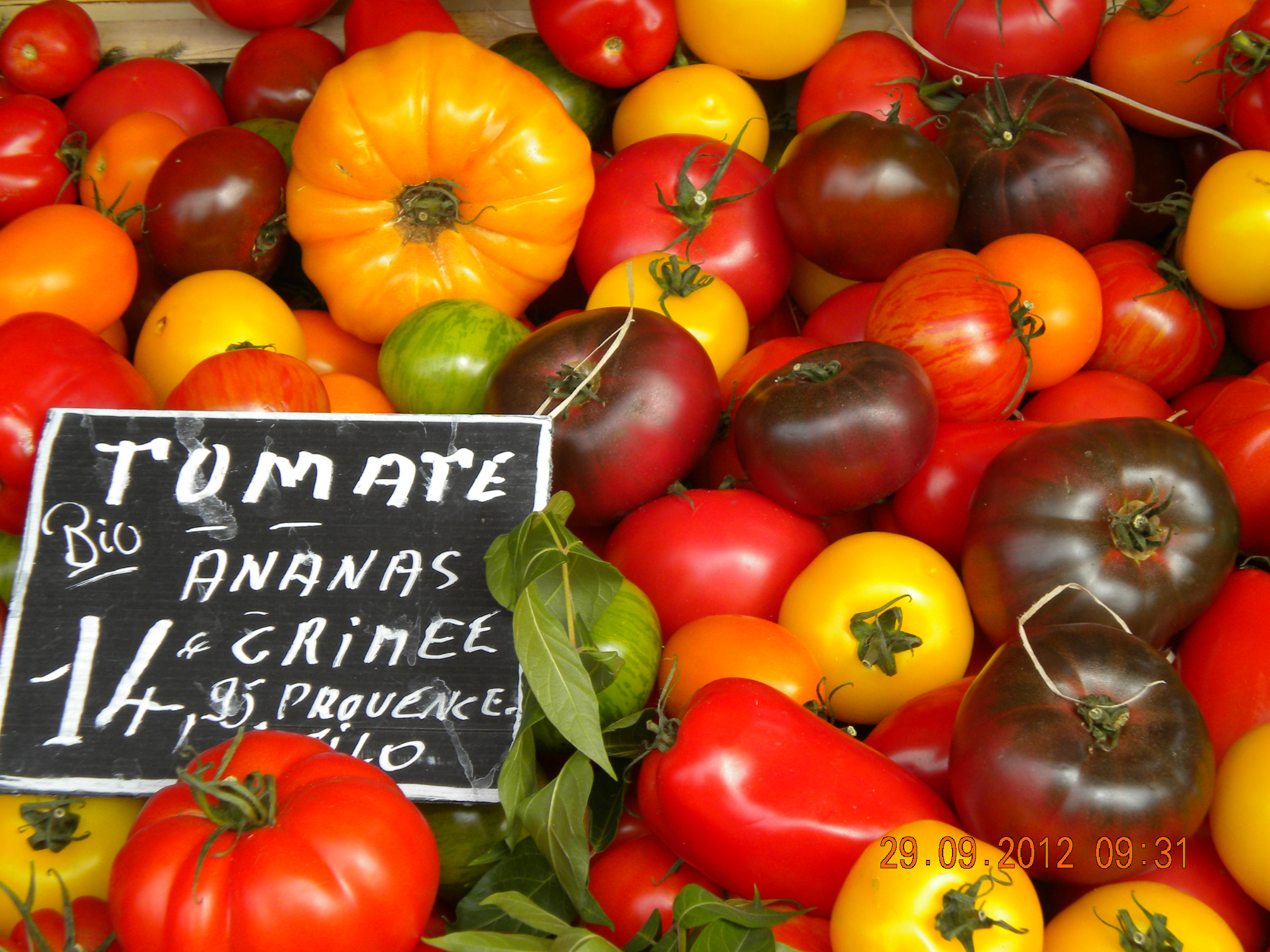
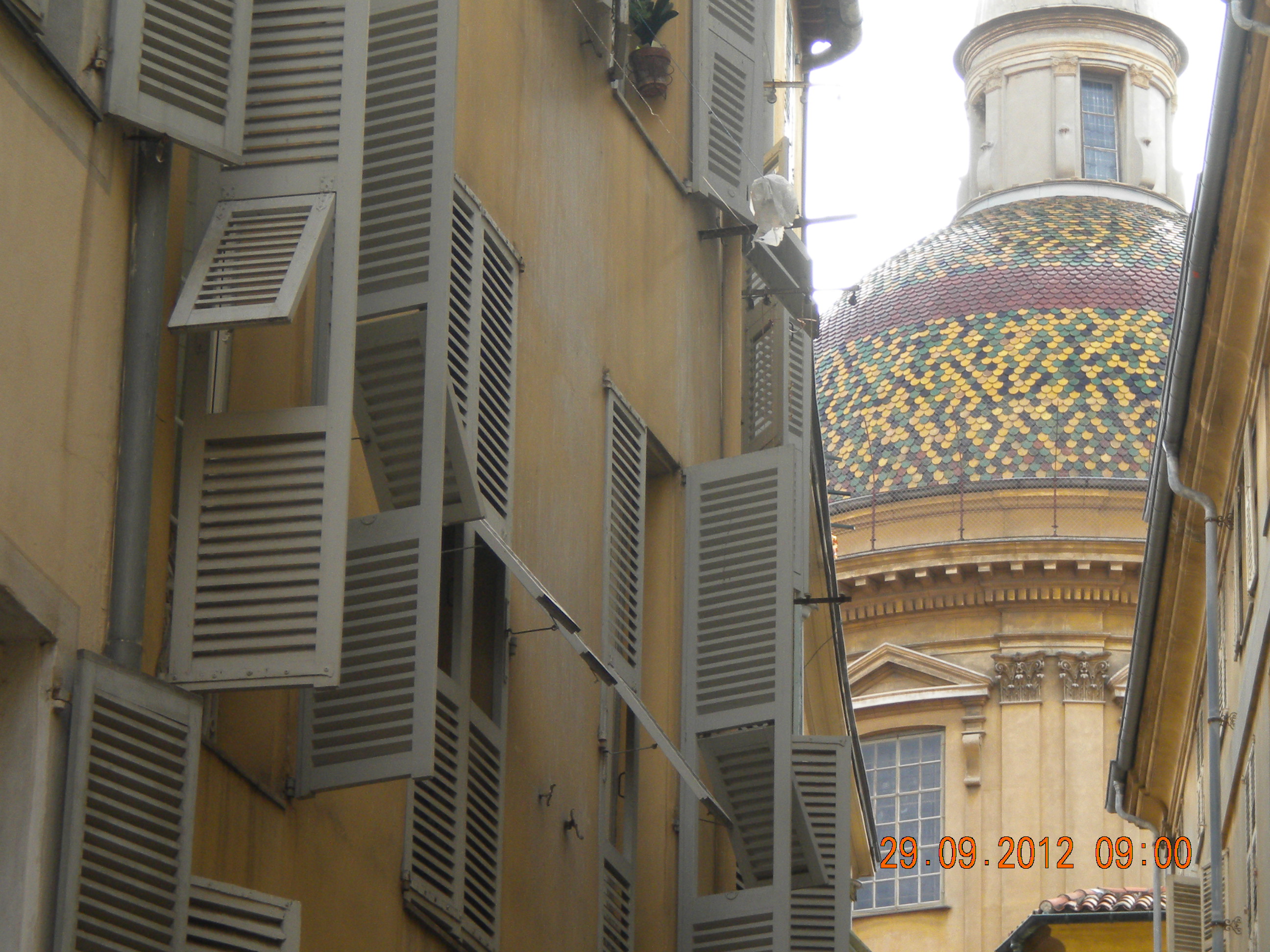
Elsewhere in 2012, I had wonderful holidays walking and writing in Swaledale, Yorkshire; and sea-bathing and eating in the south of France.

DSCN1512

Scar

On the slant of Kisdon Hill
the song of a robin sears the whole air
substantial as the drystone walls
that   brand the fields of Thwaite austere
and  project their shadow on the meadow
– here  angular, rectilinear, there
in  a random,  crazed geometry –
while underground levels invisibly divide
the land’s inside into seams and veins
directed at the artery
of this damaged country.

Yet along the inroads to the moor
stones from smelt-mill and lead-mine
crumble and return to screes
on the sides of  Surrender’s* shallow valley
and in  the steep ravine of Gunnerside Ghyll
where land formed from human hand
and the structures carved by nature
resolve in mutual cohabitation.

* The Surrender Mining Company is one of several that operated commercially  in Swaledale in the eighteenth century. ‘Surrender’ is also a legal term internationally associated with the handing over of mining rights and land.

DSCN1632
DSCN1630

The former trip took place in the mini-heatwave at the end of March and the latter in the season of Alpine storms. In between the two, I watched more sport on TV than I ever thought imaginable. It started with the Tour de France, which I discovered on ITV 4 for the first time. Cycling + scenery = my kind of sport. Catching the mountain stages live in the afternoons was what I imagine playing a video game is like. Vicarious thrills, vicarious holiday, vicarious summer. The Tour was, of course, followed by the Olympics and Paralympics.  I overcame my initial cynicism to treasure the winning smiles of Nicola Adams, the first woman to win an Olympic medal for boxing; Katherine Grainger,  the rower who finally took gold after three games’ worth  of silver, and Adam Hills on Channel 4’s The Last Leg. The night after it was all over, Will Self, interviewed by Jeremy Paxman, remained unconverted: ‘the Selfs are not welcome at the court of King Coe’. Airing that, then, was maybe an editorial misjudgment on the part of Newsnight.

On t’medals table
if Yorkshire wer a country
it’d ‘a come twelfth.